A cold glass leaves a ring on a polished bar, a boardroom table or a wedding reception setting. It is a small problem, but it is exactly where drink coasters earn their place: protecting surfaces while putting a name, logo or message directly in front of the person holding the drink.
For Australian venues, businesses and event organisers, a coaster is not just a table accessory. It is a useful piece of branded merchandise that works quietly throughout a meeting, meal, function or casual drink. Unlike a flyer that is quickly set aside, a well-made coaster has a clear job to do – and that gives your branding more opportunity to be noticed.
Why custom drink coasters make commercial sense
The strongest promotional products are practical enough to stay in use. Coasters protect tables from moisture, heat and marks, help staff maintain a tidy service area, and add a finished look to a bar, café, restaurant or event space. Add a logo, campaign artwork, venue details or a personalised design and they become part of the customer experience.
They also suit a broad range of buying situations. A hospitality operator may need durable coasters that cope with constant service. A marketing team may want a cost-effective giveaway for a product launch. A club could use branded coasters to reinforce its identity at the bar, while a couple planning a wedding may choose personalised designs that guests can take home.
The value is in repetition. Every time a drink is placed down, the design is seen again. That makes coasters particularly useful for logos, short messages, QR-ready artwork, event dates and sponsorship branding. The print area is compact, so the best results usually come from clear artwork rather than a design crowded with too much detail.
Choosing the right material for the job
There is no single best coaster material. The right choice depends on where it will be used, how often it will be handled, the finish you want and the budget available. Material selection should come before finalising artwork, as each surface has different strengths in print, colour, durability and feel.
For high-volume promotions and events
Cardboard coasters are a practical option for bars, festivals, functions and one-off promotions. They are lightweight, affordable and well suited to larger quantities, especially when the aim is broad brand exposure over a short period. They can be printed with vibrant full-colour artwork and are easy to distribute at point of service.
Their trade-off is lifespan. Cardboard is designed for regular use over a limited period, not for years of heavy handling. For a busy venue running frequent promotions, this may be exactly what is needed. For a corporate gift or premium event, a longer-lasting material may better support the occasion.
For venues and brands needing durability
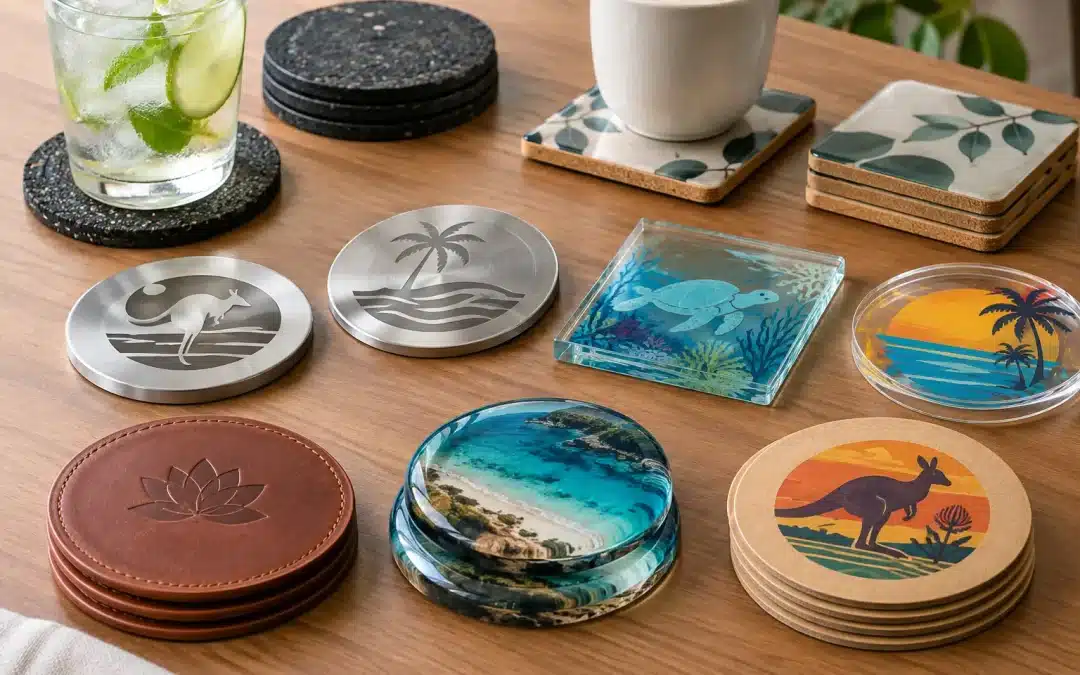
Rubber, PVC rubber, stainless steel, aluminium and acrylic coasters bring a more substantial feel. They suit hospitality settings, corporate merchandise and branded gifts where repeated use matters. Recycled tyre rubber drink coasters are particularly appealing for businesses looking for a tough, practical product with a distinctive recycled-material story.
Metal coasters can create a refined, professional presentation, while acrylic offers a clean contemporary finish and allows for striking colour or clear effects. PVC rubber is flexible, durable and useful for bold moulded designs. These materials generally carry a higher unit cost than cardboard, but their longevity can make them a better investment for a permanent venue fit-out or a quality-focused campaign.
For a natural or premium finish
Cork, bamboo, leather, glass and resin coasters are chosen as much for their appearance as their function. Cork and bamboo work well for cafés, eco-conscious brands, breweries and businesses with a natural aesthetic. They provide warmth and texture that can soften a polished corporate setting or complement rustic event styling.
Leather offers a premium feel for executive gifts, boardrooms and boutique hospitality. Glass and resin can suit detailed designs, special occasions and presentation-led applications. With these materials, it pays to consider the surface they will sit on, how they will be cleaned and whether the finish suits the wider brand environment. A beautiful coaster that is not practical for the venue will not deliver its full value.
Design details that improve branded drink coasters
A coaster is a small canvas, so good design needs discipline. Start with the main purpose: should it build brand recognition, promote a specific offer, carry event information or become a keepsake? That decision determines what belongs on the face of the coaster.
For most business orders, a logo should be immediately recognisable at a glance. Strong contrast between the background and artwork helps, particularly in low-lit bars or busy function rooms. Fine lines, very small text and pale colours can lose impact depending on the chosen material and print method. A simple layout with a clear logo, a short line of supporting text and enough breathing room is often more effective than trying to include every service, phone number and social handle.
Shape can also do useful work. Round and square coasters are familiar and efficient for packing and service, while custom shapes can create extra attention when they directly reflect a product, logo or theme. A custom shape is not automatically the right choice, though. It can involve different production requirements and may not suit every budget or lead time.
Before production, ask for a free digital proof. It gives you the chance to check logo placement, spelling, colours, trim area and overall balance before the order is made. This is especially valuable when multiple stakeholders need to approve artwork or when coasters form part of a wider campaign with established brand guidelines.
Matching quantity, budget and turnaround
Ordering custom coasters is easier when the practical details are clear at the beginning. Quantity affects the unit price, but the best order size is not always the largest one. A venue with steady usage may benefit from ordering enough stock to cover a season, while an event organiser might need only the quantity required for guests, tables and a sensible contingency.
Lead time should be discussed early, particularly for launches, conferences, weddings and end-of-year functions. Custom manufacturing involves artwork approval, production and delivery, and specialised materials or finishes may require more time. Leaving the decision until the final week can limit material options or force unnecessary compromises.
A useful brief includes the required quantity, preferred material, intended use, delivery date, artwork files and budget range. If you are unsure about any of these, an experienced supplier can help narrow the options. At Drink Coaster, the focus is on matching the product to the job, with design support, free digital proofs and clear communication throughout the order.
Where coasters create the most value
Hospitality is the obvious fit, but custom coasters have a wider role. Real estate agencies can use them in settlement packs. Trades and service businesses can include them in client gifts. Sports clubs can feature sponsors at the bar. Distilleries, breweries and wineries can use them to reinforce their tasting-room presentation. Corporate teams can add them to welcome packs, conferences or client hampers.
For private events, personalised coasters can carry names, dates, monograms or a simple message that ties the table setting together. They are particularly effective when the artwork relates to other event elements, such as invitations, menus or signage. The result feels considered without needing to overdecorate the room.
The best coaster orders start with a straightforward question: where will people use them, and what should they remember when they do? Answer that clearly, choose a material that suits the setting, and give the artwork room to do its job. A small item on a table can leave a far more lasting impression than its size suggests.