A coaster gets noticed at the exact moment a customer settles in with a drink. On a busy bar table, at a corporate lunch or beside a coffee station, it has a job to do – protect the surface while putting your brand directly in front of people. The strongest promotional coaster trends are therefore less about novelty for its own sake and more about choosing useful, well-made products that reflect the setting, audience and life of the campaign.
For Australian venues, clubs, marketing teams and event organisers, the opportunity is clear. A branded coaster can support a premium customer experience, carry a time-sensitive promotion or become a practical takeaway that keeps working long after the event. The material, finish and artwork need to work together.
Promotional coaster trends are becoming more material-led
Generic cardboard coasters still have a place, particularly for high-volume hospitality promotions, tastings and one-night events. They are lightweight, cost-effective and easy to distribute. But buyers are increasingly selecting materials that create a more deliberate brand impression.
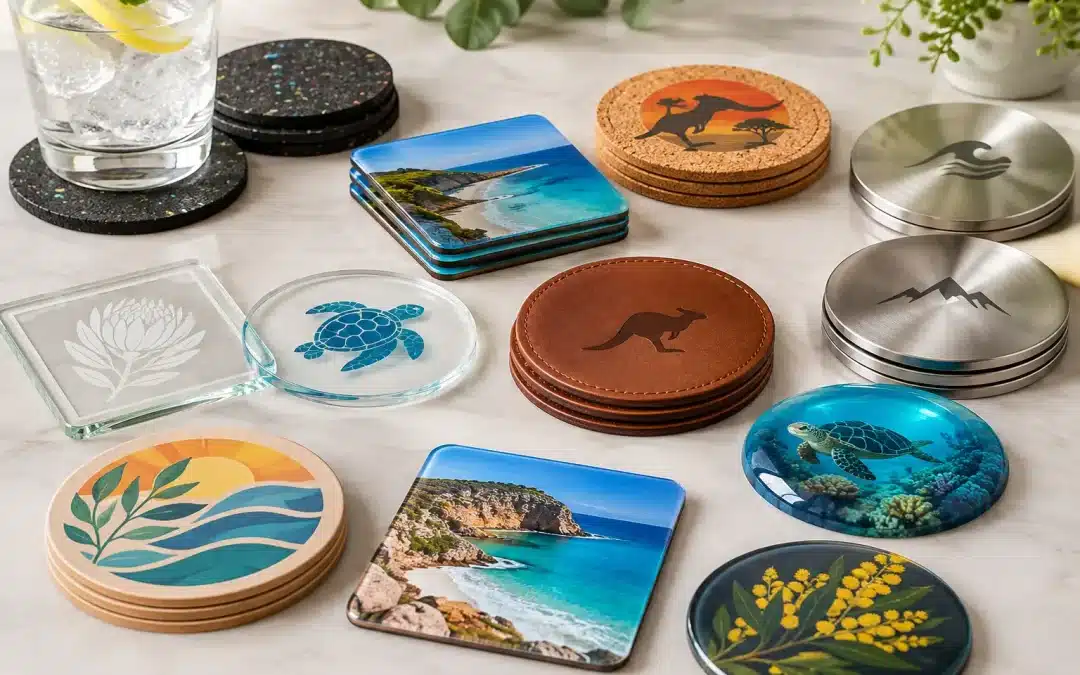
Cork and bamboo are popular where a natural, warm presentation suits the business. They work especially well for wineries, breweries, cafés, accommodation providers and brands with an organic visual identity. Their texture adds interest without needing an overcomplicated design. A simple logo, restrained colour palette and clean message often look more considered on these materials than a crowded artwork file.
Recycled tyre rubber coasters are another practical choice gaining attention. They are durable, grippy and built for repeated use, making them suitable for pubs, sporting clubs, automotive businesses and outdoor settings. The recycled material story can also support brands looking to reduce reliance on short-life promotional items. That said, sustainability claims should be specific to the product and material rather than broad marketing language. Buyers should consider the full purpose of the coaster, expected quantity and how long it is likely to remain in use.
For a sharper corporate or premium hospitality look, acrylic, glass, stainless steel, aluminium, leather and resin options offer a different level of finish. These products are more likely to be retained on desks, in meeting rooms, at home bars or in guest accommodation. They generally suit lower-volume campaigns where presentation and longevity matter more than the lowest unit cost.
Lower-waste choices need to stay practical
Lower-waste promotional merchandise is no longer limited to one material or one design style. The better approach is to match the coaster to how it will actually be used. A high-volume cardboard run may be the sensible answer for a large festival where drink service moves quickly. A reusable rubber, cork or metal coaster may be the stronger choice for a venue fitting out tables for everyday trade.
Durability matters because a coaster that stays in circulation keeps delivering brand visibility. It also matters because a poorly matched product can create waste, even if the material sounds environmentally preferable. For example, a premium glass coaster may be ideal for a boardroom gift set but less practical at a crowded outdoor event. A cardboard coaster may suit a short campaign perfectly but is unlikely to meet the needs of a restaurant wanting a lasting tabletop solution.
Artwork can influence this decision too. One or two spot colours and a clear logo can be highly effective on natural materials, while full-colour printing may be better suited to photographic artwork, detailed campaigns or event branding. Starting with the intended use helps narrow the field quickly.
Tactile finishes are doing more branding work
Digital marketing is crowded. Physical items stand out when they feel good to handle, not simply when they display a logo. This is why texture is becoming a bigger part of promotional coaster selection. The soft grip of PVC rubber, the grain of cork, the weight of metal and the polished feel of resin each communicate something different before the customer even reads the branding.
For a hospitality venue, tactile coasters can make a table setting feel more intentional. For a real estate agency, financial firm or professional services business, a refined leather-look or metal coaster can bring more presence to client gifts and meeting spaces. For a product launch, PVC rubber or LED styles can create a bolder, more contemporary result.
The trade-off is that distinctive materials need artwork designed for the production method. Fine text, very small details and complex gradients may not reproduce equally well across every substrate. This is where a free digital proof is valuable: it gives buyers a clear view of layout, scale and overall impact before production begins.
Event coasters are becoming part of the experience
At weddings, milestone celebrations, conferences and brand activations, personalised coasters are increasingly being used as functional event styling. They can carry names and dates, table messages, sponsor branding, menu prompts, QR-ready campaign details or a short call to action. The key is to avoid asking one small coaster to communicate everything.
A good event coaster usually has one primary job. It might identify the event, reinforce a theme or encourage a guest to redeem an offer. When the artwork is clear, the coaster becomes part of the atmosphere rather than visual clutter on the table.
For corporate events, consider what happens after guests leave. A well-made coaster can become a useful desk item, which gives the campaign a longer shelf life than many disposable handouts. For private celebrations, it can become a keepsake. This is where premium materials such as cork, acrylic, bamboo or glass may justify the added spend.
Local relevance and fast turnaround remain important
Australian buyers are often working to fixed event dates, venue openings, seasonal campaigns and approval deadlines. Trend-led product selection only helps if the production process is reliable. Material availability, decoration method, artwork readiness and freight timing all affect the final schedule.
Planning ahead gives more freedom to choose a custom shape, specialised finish or premium material. However, fast turnaround options can still be achievable when the brief is clear and the artwork is supplied in a usable format. The most efficient process is to confirm quantity, delivery deadline, intended use and budget early, then select materials that genuinely fit those requirements.
Working with an Australian owned and operated supplier also makes communication easier when details change. Drink Coaster supports this process with material choice, design guidance and free digital proofs, helping customers make a confident decision before production starts.
How to choose between current promotional coaster trends
Rather than selecting a coaster because it is currently popular, start with the environment. A bar with constant drink service needs absorbency, durability and branding that remains clear in busy conditions. A corporate gift campaign may prioritise weight, finish and presentation. A wedding or private party may focus on colour matching, personalisation and minimum order quantities.
Next, consider the campaign lifespan. Is the coaster intended for one evening, one season or several years? This question often determines whether cardboard, cork, recycled tyre rubber, acrylic, metal or another material is the best fit. It also helps set a realistic budget. The lowest upfront price is not always the best value if the product will be used every day, while a premium coaster may be unnecessary for a single high-volume service period.
Finally, keep the design disciplined. Strong logos, readable type and a clear hierarchy will usually outperform crowded artwork. If you need to include a website, offer or event detail, make sure it can be read easily from a table. A coaster is a small format, and confident simplicity tends to look more professional.
The right coaster should feel at home in the hands of the people receiving it. Choose the material and finish that suit the occasion, allow enough time for a proper proof, and let practical quality carry your brand message well beyond the first drink.