A leather coaster with a pale coffee ring or tacky spill can make an otherwise well-presented table look neglected. The good news is that most marks are manageable when you clean leather coasters gently and avoid treating them like plastic, glass or rubber. Leather is a natural material with a protective finish that can be damaged by too much water, heat or harsh cleaning products.
For hospitality venues, offices and event settings, regular care also protects the professional appearance of branded coasters. For personalised sets at home, it helps preserve the colour, texture and any embossed or printed detail that made the coasters worth choosing in the first place.
Why leather coasters need a gentler approach
Leather absorbs moisture to varying degrees. Some coasters have a sealed, smooth surface that resists minor spills, while others have a softer, more natural finish that can darken when wet. Genuine leather, bonded leather and faux leather can all look similar at a glance, but they should not automatically be cleaned in the same way.
The main risk is saturation. A coaster left soaking in water may dry stiff, curl at the edges or develop an uneven finish. Strong household sprays, alcohol-based wipes, bleach and abrasive scrubbing pads can strip colour, leave dull patches or affect a logo. This matters particularly for custom leather coasters, where an engraved mark, foil finish or printed branding is part of the product’s value.
A quick response is usually better than a stronger cleaner. Blot spills as they happen, then deal with any remaining residue using the mildest method that works.
What you need before you start
Keep the cleaning process simple. Use a soft microfibre cloth, lukewarm water and a small amount of mild, pH-neutral soap. A second dry cloth is useful for removing surface moisture. If the coaster is genuine leather and beginning to feel dry, a leather conditioner designed for finished leather may be appropriate, but use it sparingly.
Before cleaning a full set, test your method on the underside or an inconspicuous edge. This is especially worthwhile with dyed leather, light-coloured coasters or products carrying detailed printing. If colour transfers to the cloth or the test patch darkens noticeably, stop and allow it to dry before deciding whether professional cleaning advice is needed.
How to clean leather coasters step by step
Start by removing loose dust, crumbs or grit with a dry microfibre cloth. Small particles can scratch the surface when rubbed into damp leather.
Next, lightly dampen – do not soak – a clean cloth with lukewarm water. Wring it out thoroughly, then wipe the coaster using gentle, even strokes. For ordinary water marks or fresh drink residue, this may be all that is required.
If a sticky mark remains, add a tiny amount of mild soap to the damp cloth rather than applying soap directly to the leather. Work over the affected area softly, without scrubbing. Take care around printed artwork, foil decoration and edges, where moisture can be more likely to affect the finish.
Wipe again with a separate cloth that has been dampened with clean water to remove any soap residue. Then pat the coaster dry with a soft, absorbent cloth. Leave it flat in a well-ventilated room until completely dry.
Do not place leather coasters on a radiator, use a hairdryer or leave them in direct sun to speed up drying. Rapid heat can cause leather to shrink, harden or fade. Keeping the coaster flat also helps prevent warping.
For coffee, tea and soft drink rings
Fresh rings are generally surface moisture and are easiest to remove. Blot first, then follow the light damp-cloth method. Avoid rubbing in circles with pressure, as this can create a larger visible patch, particularly on matte leather.
Older rings can be harder to shift because moisture has already moved into the material. Repeated gentle cleaning is safer than one aggressive attempt. If the mark does not improve, it may be preferable to accept a small patina rather than risk damaging the coaster’s surface.
For oily food residue
Oil needs a different response. First, blot the area with a dry cloth without pressing too hard. Do not add water immediately, as this can spread the oil. A small amount of cornflour can be placed over an unprinted oily mark and left for several hours to draw out surface oil, then brushed away carefully.
This method is not suitable for every finish, so test first. Where coasters are branded or printed, it is usually safer to use a specialist leather cleaner after checking that it is compatible with the finish.
For pen, makeup or stubborn stains
Ink, lipstick and makeup are high-risk stains on leather. Avoid DIY solvents, nail polish remover, methylated spirits and alcohol wipes. They may remove the stain, but they can also remove dye, coating or branding.
For premium leather sets, custom corporate gifts or heavily branded coasters, specialist advice is often the sensible option. Replacing one coaster may be preferable to damaging an entire matching set with an unsuitable cleaner.
Products to avoid when you clean leather coasters
Leather responds poorly to shortcuts. Keep the following products away from your coasters unless the manufacturer has specifically approved them:
- Bleach, disinfectant sprays and harsh all-purpose cleaners
- Alcohol, hand sanitiser, methylated spirits and solvent-based stain removers
- Baby wipes and antibacterial wipes, which can leave residue or dry the surface
- Washing-up liquid used heavily or undiluted
- Scouring pads, stiff brushes and magic erasers
- Furniture polish, cooking oils and silicone sprays
It can be tempting to use a familiar household cleaner after a busy function or a spill during service. However, a clean-looking surface is not worth a faded logo, patchy finish or weakened leather. Mild cleaning takes a little more care, but it is the reliable option.
Conditioning leather without making it slippery
Conditioning is not needed after every clean. In fact, over-conditioning can leave leather coasters greasy, darkened or more likely to attract dust. Consider it only when genuine leather feels dry, looks faded or has lost its supple finish.
Use a very small amount of a suitable leather conditioner on a soft cloth and apply it in a thin, even layer. Let it absorb, then buff lightly with a clean dry cloth. Keep conditioner away from embossed details, printed areas and stitching where possible.
Faux leather and PVC-based products usually do not need conditioner. A damp cloth and mild soap are generally enough. If you are ordering coasters for high-turnover hospitality use, this lower-maintenance option may suit the environment better than natural leather, even if leather offers a more premium look and feel.
Preventing marks in commercial and home settings
Good maintenance starts before a stain appears. Encourage staff to wipe coasters at the end of each shift rather than allowing sugary spills to dry overnight. For venues, keeping a clean, soft cloth at the bar or service station makes this easy to manage without adding a complicated task.
At home or at an event, do not stack coasters while they are damp. Store them flat or in a holder away from direct sunlight and humid areas. Rotate coasters where practical so the same pieces are not constantly exposed to hot mugs, condensation and food spills.
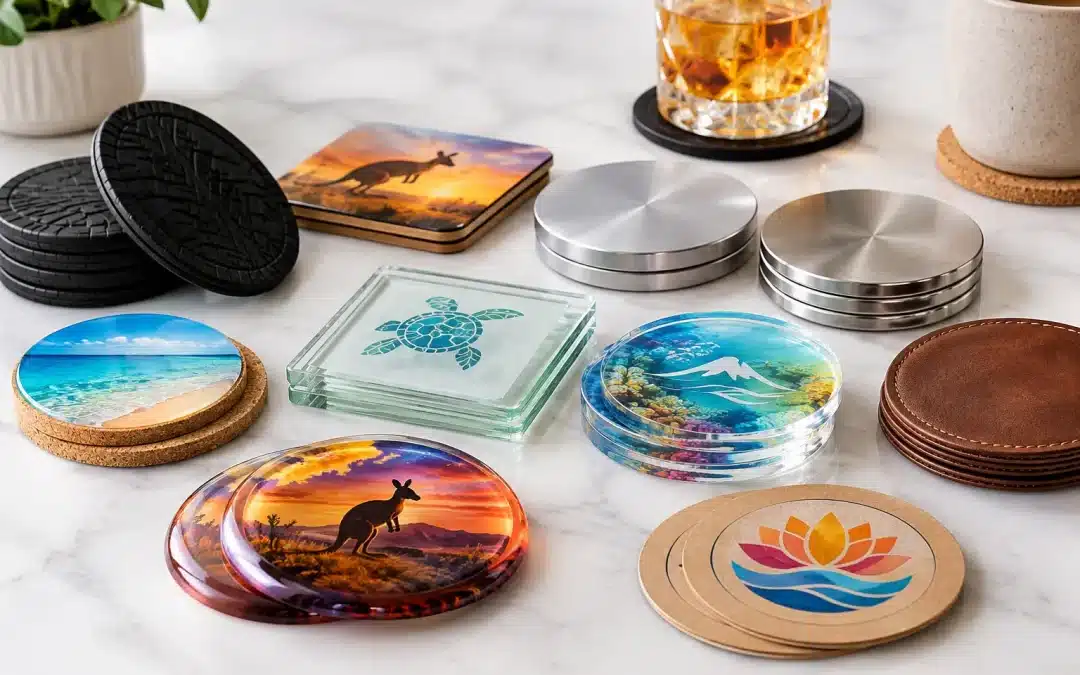
Consider the intended use when selecting a material as well. Leather coasters work well for boardrooms, corporate gifting, restaurants, weddings and premium retail presentation. For outdoor activations, children’s events, high-volume bars or wet areas, rubber, cork, acrylic or stainless steel may be a more practical choice. The best coaster is not simply the most expensive one – it is the material that suits the brand, setting and maintenance capacity.
Looking after branded and personalised leather coasters
Custom decoration adds another consideration. Debossed and engraved designs are typically more durable than surface print, but all finishes benefit from gentle cleaning. Avoid soaking branded coasters, as moisture can affect inks, metallic foils and adhesives depending on the production method.
When ordering custom coasters, ask about the material finish and recommended care for the selected decoration. A free digital proof helps confirm how artwork will look before production, while clear care instructions help the finished product stay presentation-ready after it reaches your venue, workplace or event.
Drink Coaster works with organisations and individuals who need practical, polished custom coaster options across a wide range of materials. Choosing the right finish at the quoting stage can make ongoing care far easier.
A well-used leather coaster will develop character over time, and a little natural ageing is part of its appeal. Treat spills promptly, use a soft hand when cleaning, and your coasters can continue to protect surfaces while presenting your brand or occasion with care.