A cold drink on a sunny terrace creates condensation within minutes. At a festival bar, wedding reception or club fundraiser, that moisture can quickly turn tables sticky, soften paper stock and leave branded surfaces looking less polished than planned. Well-chosen coasters for outdoor events solve a small but highly visible problem: they keep drinks, furniture and presentation under control while putting your name in front of guests repeatedly.
For Australian organisers, the right choice comes down to more than adding a logo. Sun, wind, spills, grass, poolside settings and changing weather all affect how a coaster performs. Selecting the material and print finish to suit the event environment gives guests something useful and gives your branding a more professional presence.
Start with the event setting
Outdoor events are not all exposed to the same conditions. A covered brewery courtyard has different needs from a beachside product launch, and a formal wedding under a marquee needs a different finish from a community sports day. Before selecting a coaster, consider where drinks will be served, the style of furniture in use and how long guests are likely to keep their drink in hand.
If tables are exposed to rain, pool splashes or heavy condensation, water-resistant materials should be the priority. For events with dry weather, short service periods and a high volume of drinks, absorbent cardboard coasters can be an economical and effective option. They are familiar, easy to distribute and well suited to one-day promotions, venue activations and large hospitality runs.
Wind is another practical consideration. Lightweight cardboard works well on a stable table, but can move around at an open waterfront venue. Heavier rubber, cork, bamboo or metal styles offer more weight and a stronger tactile impression. The best option depends on whether the coaster is intended for immediate use, as a take-home item, or both.
Materials that suit coasters for outdoor events
Material choice sets the standard for durability, appearance and budget. It also changes how guests perceive the item. A coaster handed out at a premium corporate function should feel considered, while a coaster used across busy outdoor bars may need to be simple, economical and easy to replace.
Recycled tyre rubber for high-use areas
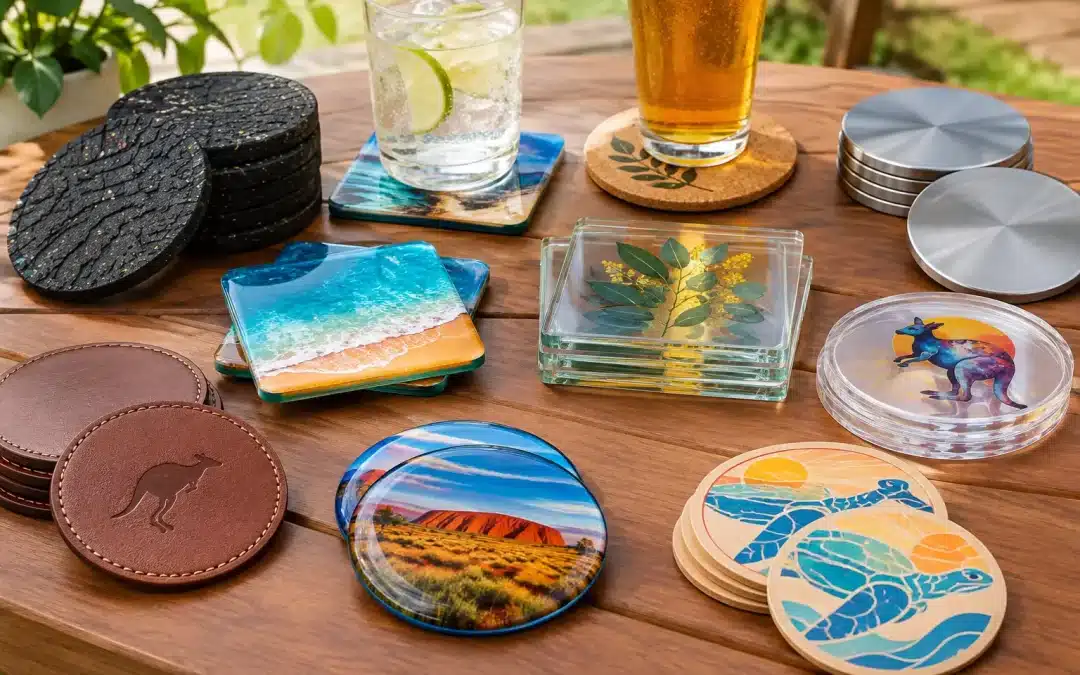
Recycled tyre rubber coasters are a practical choice for venues, clubs and recurring events where drinks are constantly being served. They are durable, non-slip and designed to cope with moisture. Their heavier feel helps them stay in place outdoors, while the recycled material adds a sustainability story that may suit organisations with environmental commitments.
Rubber also works especially well where glassware is used on hard tabletops, barrels or outdoor furniture. It protects surfaces, reduces sliding and holds up better than disposable options over repeated service. For a branded bar setup that will appear across several dates, this can offer better long-term value than replacing paper coasters each time.
Cardboard for volume and campaign flexibility
Cardboard remains a dependable option for festivals, pop-up bars, restaurant promotions and large functions. It is cost-effective for substantial quantities and gives ample room for full-colour artwork, campaign messages, event dates or sponsor branding.
The trade-off is durability. Cardboard is absorbent by design and performs best where it will be used once or over a short period. It is less suitable for rain-exposed tables or events where guests may reuse a coaster throughout the day. When the goal is broad reach at a controlled cost, however, it is hard to overlook.
Cork, bamboo and leather for a more considered finish
Cork and bamboo bring warmth to outdoor table settings, making them popular for weddings, wineries, garden parties and premium hospitality occasions. Both pair naturally with timber furniture, picnic styling and eco-conscious event themes. Cork is lightweight but stable, while bamboo has a more structured, lasting feel.
Leather-style coasters can create a refined look for VIP areas, corporate hospitality and formal functions. They are usually best kept in covered spaces, where their finish can be appreciated without unnecessary exposure to heavy weather. These materials may cost more than cardboard, but they can become part of the event styling rather than simply a service accessory.
Acrylic, metal and PVC for strong visual impact
Acrylic, stainless steel, aluminium, glass and PVC rubber offer a cleaner, more modern appearance. They suit branded launches, entertainment venues, sponsor lounges and events where a bold logo or contemporary colour palette matters. PVC rubber is flexible and durable, while acrylic and metal can deliver a crisp, premium presentation.
These materials are generally water-resistant and easy to wipe down, which makes them useful around outdoor bars and food service areas. Hard-surface coasters may not absorb condensation in the same way as cardboard or cork, so they are best selected where durability, reusability and visual impact matter most.
Design for quick recognition at a busy event
At an outdoor event, guests do not study branding in the same way they would read a brochure. Your artwork needs to work at a glance. A clear logo, high-contrast colours and enough open space usually make a stronger impression than trying to fit every message onto a small round or square surface.
Think about the coaster as part of the wider event presentation. It can match bar signage, staff uniforms, table numbers, menus or promotional giveaways. For sponsor-funded events, a coaster can also give key partners visible placement without adding another banner to the venue.
Double-sided printing may suit campaigns that need more space. One side can carry the primary brand mark, while the reverse can feature a QR code, offer, event hashtag or responsible service message. This is useful when the coaster is likely to be picked up and kept, but the design should still feel uncluttered.
Artwork should be prepared with the chosen material in mind. Fine detail, very small text and subtle tonal changes may reproduce differently across rubber, cork, cardboard and metal. A free digital proof is valuable because it lets organisers review layout, scale and colour treatment before production begins. It is the point to check that the design works on the actual coaster shape, not just on a screen mock-up.
Plan quantities around service, not just attendance
Ordering one coaster per guest sounds logical, but it does not always reflect how an event operates. At a seated dinner, one per place setting may be appropriate. At a standing festival, coasters can be moved, lost or used by several people over the course of the day. A busy bar may need additional stock behind the counter even if tables are limited.
Consider the number of serving points, expected drink turnover and whether the coasters will be placed in advance or handed out with drinks. If they are part of a promotional campaign, allowing extras for staff, sponsors and post-event follow-up can be worthwhile.
For reusable materials, quantity may be lower because they remain at the venue. For disposable cardboard, the order may need to be higher to maintain a clean, consistent bar presentation throughout service. This is where a supplier experienced in promotional products can help align material, quantity and budget with the way the event will actually run.
Give production enough time
Outdoor events often involve many moving parts: permits, caterers, marquees, entertainment, signage and weather contingencies. Coasters can seem like a minor detail until they are needed for a branded bar setup or table layout. Leaving enough time for artwork approval, proofing and production avoids rushed design decisions and limited material choices.
A clear brief makes quoting faster. Include the required quantity, event date, preferred material, coaster shape, number of print colours and whether you have finished artwork. If you are still deciding, describe the setting, audience and budget range instead. A good supplier can recommend options that fit the purpose rather than pushing every event towards the same product.
Australian-owned service can be particularly useful when deadlines are tight and communication needs to be straightforward. Drink Coaster provides custom material options, design support and free digital proofs, helping event organisers move from an idea to a production-ready order with greater confidence.
Make the coaster part of the guest experience
The most effective event merchandise is useful before it becomes promotional. A coaster protects a surface, gives a drink a designated place and helps a bar or table setting look organised. The branding then earns attention naturally, each time a guest sets down a glass or takes a photo of the table.
Choose a coaster that respects the conditions of the venue and the standard of the event. A practical material, clear artwork and realistic production plan will do more for your presentation than a complicated design ever could. When every detail has a job to do, even the item under the glass can leave a lasting impression.