A coaster is a small item with a very public job. It sits beneath every coffee, beer, wine glass or cocktail served, protecting the table while putting your logo directly in front of customers. That makes coaster materials more than a production choice. The right material affects how your brand feels, how long the coaster lasts, how well artwork reproduces and whether the order suits your budget.
For a busy pub, a once-off launch event and a premium corporate gift, the best answer will not be the same. A practical coaster starts with the environment it will be used in, then balances presentation, durability and quantity.
Choosing coaster materials for the job
Before selecting a finish or shape, consider where the coasters will be used. Single-use or short-run event coasters need to be economical and easy to distribute. Hospitality venues often need a surface that handles regular spills, cleaning and high turnover. For boardrooms, client gifts or premium merchandise, weight and long-term presentation can matter more than the lowest unit price.
Artwork is equally relevant. Some materials suit bold one-colour logos exceptionally well, while others support detailed full-colour imagery. Fine type, gradients and photographic designs should be considered early, not after a material has been chosen.
At Drink Coaster, a free digital proof helps confirm that the chosen material, print method and artwork work together before production begins. It is a simple step that can prevent disappointing results, particularly when colour accuracy or small logo details are important.
Cardboard coasters: economical and made for service
Cardboard remains a popular choice for bars, clubs, breweries, functions and promotional campaigns. It is lightweight, absorbent and cost-effective at volume. A well-designed cardboard coaster also gives venues a fresh, branded surface at the point of service without adding washing or storage requirements.
This option is particularly effective for short-term promotions, product launches, beer gardens and large events. It can carry logos, campaign messages, QR-style calls to action and event details, provided the artwork is designed with the printable area in mind.
The trade-off is lifespan. Cardboard is intended to absorb moisture, so it will eventually soften or mark with extended use. That is often exactly what a high-turnover venue needs, but it is less suitable when guests are expected to take the coaster home as a keepsake.
Cork and bamboo: natural texture with practical appeal
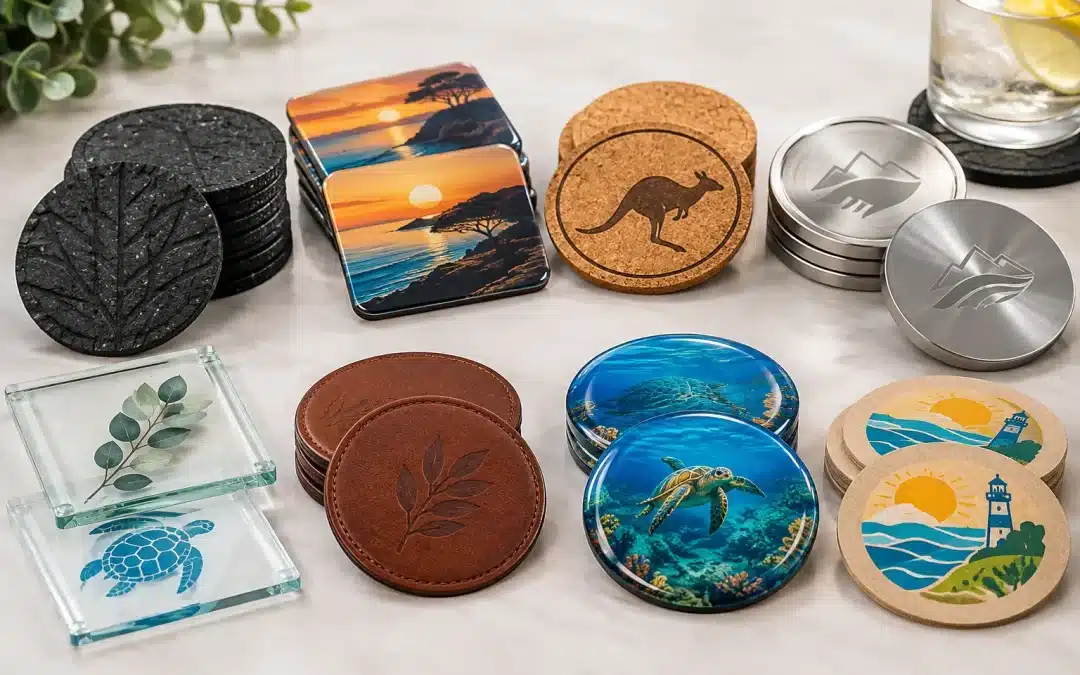
Cork offers a warm, recognisable natural finish that works well for cafés, wineries, wellness brands, homewares and events with an organic or understated style. It is naturally absorbent, light in the hand and helps protect surfaces from heat and condensation. Engraved or simple printed branding can look particularly effective against cork’s textured surface.
Bamboo brings a cleaner, more structured timber look. It suits premium gifts, office packs, hospitality settings and brands that want a natural material with a more polished finish. Because every piece of natural material can vary slightly in grain and tone, it is best to treat those variations as part of the product character rather than expect a perfectly uniform surface.
Both options are strong choices when material story matters. However, highly detailed artwork may not reproduce as crisply as it does on smooth acrylic or metal. Bold logos and uncluttered layouts generally deliver the best result.
Rubber and PVC: built for wet, busy spaces
Rubber coasters are a reliable option for venues, outdoor entertaining, sporting clubs and brands that need grip and durability. Recycled tyre rubber coasters add a distinctive industrial feel while giving existing material another purpose. Their weight helps keep them in place, and their hard-wearing surface is well suited to repeated use.
PVC rubber styles can be moulded with raised details, colour sections and shaped edges. This makes them useful for mascots, badge-style logos, automotive branding and campaigns where the coaster should feel more like a collectable item than a flat printed product.
Rubber is not the first choice for fine photographic artwork, and detailed colour matching may require a more considered production approach. In return, it offers practical performance where wet glasses, outdoor tables and frequent handling are part of the brief.
Acrylic, glass and resin: a sharper premium finish
Acrylic coasters have a clean, contemporary appearance and provide a smooth base for detailed branding. Clear acrylic can create a layered visual effect, while coloured options offer a strong, modern frame for logos and artwork. It is a good fit for salons, professional services, offices, retail displays and branded gift sets.
Glass has visual weight and a refined feel that suits restaurants, venues, real estate settlements and executive gifting. It can be printed, etched or paired with an underside design, depending on the desired finish. Glass needs sensible handling and packaging, so it is generally better for controlled indoor environments than large, high-energy events.
Resin allows for a glossy, substantial coaster with a decorative or custom-made appearance. It works well for artistic branding, commemorative items and special occasions such as weddings. The finish can look impressive, but lead times and costs may be less suited to a simple high-volume giveaway.
Stainless steel and aluminium: durable promotional value
Metal coasters signal permanence. Stainless steel is strong, sleek and appropriate for corporate gifts, hospitality fit-outs, home bar accessories and premium branded merchandise. It can support engraving, etching or print treatments, giving businesses options ranging from subtle and executive to bold and promotional.
Aluminium provides a lighter metal alternative. Its clean surface works well with contemporary branding and can be an effective choice for event packs, automotive businesses, technology companies and outdoor-focused promotions.
Metal surfaces are less absorbent than cork or cardboard, so consider whether the coaster will need a backing or textured base to protect the table and reduce slipping. They also sit at a higher price point, which is justified when longevity and perceived value are key to the campaign.
Leather: considered, classic and gift-ready
Leather and leather-look coasters are well suited to boardrooms, clubs, accommodation providers, premium retail and client appreciation packs. They bring texture and a classic finish that pairs naturally with debossed or engraved logos.
For a corporate identity built around quality and service, leather can say more with a discreet mark than a large full-colour print. It is not usually the right choice for a loud promotional message or a last-minute mass event order. It is, however, an excellent option when the aim is a useful item that remains on a desk, coffee table or bar cart long after the first interaction.
LED coasters for activation and nightlife
LED styles are designed to get noticed. They can add light beneath glasses or bottles and create an immediate visual feature for nightclubs, product launches, festivals and hospitality activations. When the setting is dark and the campaign needs an element of theatre, an LED coaster can become part of the experience rather than just table protection.
This is a specialist choice, not an everyday venue staple. Battery requirements, operating conditions and the intended event duration should be discussed at the quoting stage. For the right activation, though, the impact can be difficult to match.
Match the print to the material
A coaster can only perform as well as the combination of material and decoration method. Full-colour printed designs suit smooth surfaces such as cardboard, acrylic and some metal finishes. Engraving, debossing and etched marks are often more appropriate for cork, bamboo, leather and stainless steel. Moulded rubber suits simplified artwork with distinct shapes and colours.
Keep the logo readable at coaster scale. Fine lines may close up, small text can disappear, and a busy design can compete with the glass placed on top. A strong logo, clear contrast and adequate spacing usually create a better branded result than trying to fit every campaign message onto one small surface.
Getting the order right from the start
A clear brief makes quoting faster and more accurate. Include the quantity, preferred material, coaster shape and size, artwork files, delivery deadline and whether the coasters are for indoor, outdoor, hospitality or gifting use. If you are working to a fixed budget, say so early. There may be a material or decoration option that achieves the same brand impact more efficiently.
Allow time for the digital proof and production approval, especially for custom shapes, moulded products, specialty finishes or event deadlines. Fast turnaround is valuable, but a proof checked carefully is still the best protection against an avoidable artwork issue.
The best coaster does not simply carry a logo. It feels right for the venue, stands up to the way it will be used and gives people one more reason to remember the brand in their hand.