A strong restaurant coaster branding example is rarely the loudest item on the table. It is the coaster that looks like it belongs there: under a cold schooner at a relaxed pub, beneath a carefully made cocktail in a hotel bar, or beside coffee and cake at a busy local café. It protects the table, supports service standards and puts your venue’s identity in front of every guest, often more than once during a visit.
For restaurant owners, venue managers and marketing teams, that small piece of branded merchandise can do more than display a logo. It can reinforce the quality of the experience, promote a signature offer and give customers a detail worth remembering.
Restaurant coaster branding example: a considered venue design
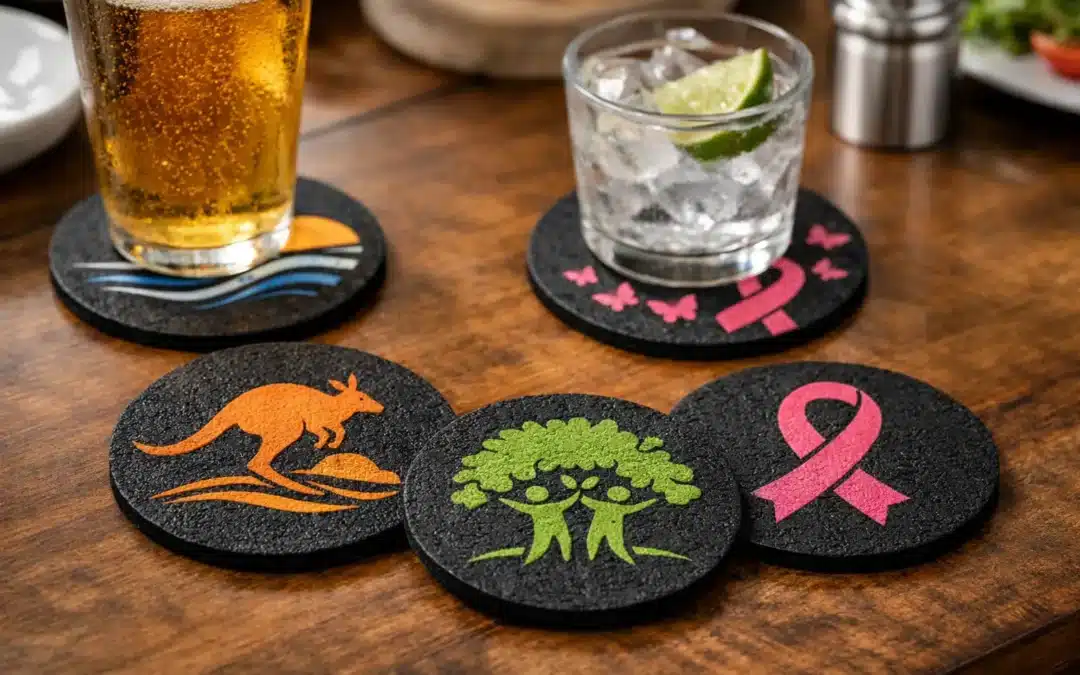
Picture a modern Australian bistro with warm timber tables, a seasonal menu and an emphasis on local producers. Rather than placing a large logo in the middle of a generic beer coaster, the venue uses a thick recycled tyre rubber coaster in charcoal. Its mark is debossed in one corner, while the reverse carries a short line: “Good food. Better company.” The colour, texture and restrained layout reflect the fit-out and menu without competing with the food or drink presentation.
That is an effective restaurant coaster branding example because it does three jobs at once. The coaster is durable enough for regular service, the brand is visible without feeling promotional, and the material makes a quiet statement about the venue’s practical approach to sustainability. A guest may not consciously analyse each choice, but they notice when the details feel consistent.
The same approach could look very different in another setting. A beachside bar might choose bright PVC rubber coasters with a bold illustrated icon. A wine bar may prefer cork with a one-colour print and vintage-style type. A family restaurant could use absorbent cardboard coasters featuring a children’s menu offer on one side and a clear logo on the other. Good branding is not about choosing the most expensive coaster. It is about selecting a format that suits the way your venue operates and the impression it needs to create.
Start with the service environment
Before choosing artwork, consider where the coaster will be used and how often it will be handled. This is where many branded coaster projects either become genuinely useful or turn into a short-lived design exercise.
Cardboard drink coasters suit high-volume venues, festivals, launches and promotional campaigns. They are absorbent, economical and easy to refresh with seasonal messages, limited-time menus or event branding. They work particularly well where customers are likely to take photos, write on the coaster, or see a new promotion with each round.
For restaurants with table service and a more permanent fit-out, rubber, cork, leather, bamboo, acrylic, aluminium, stainless steel or glass may be more appropriate. These materials can provide a more substantial feel and withstand repeated use. They need a different design mindset, though. With a long-life coaster, the logo and message should remain relevant long after a campaign has finished.
There is a trade-off between durability and flexibility. A reusable coaster can support a premium presentation and reduce replacement frequency, while a disposable cardboard coaster gives your team more freedom to change promotions. The right choice depends on your service model, cleaning process, budget and how often you update your offers.
Match material to the brand promise
Material sends a message before anyone reads the print. Recycled tyre rubber is a practical choice for busy bars, breweries and casual dining spaces where grip and durability matter. Cork and bamboo bring a natural, approachable finish that suits cafés, wine venues and restaurants with a local or produce-led story.
Leather-look or genuine leather options can complement private dining rooms, premium steakhouses and members’ clubs. Acrylic, metal and glass can create a sharper contemporary look, especially where the venue’s interior uses clean lines, reflective surfaces or a strong colour palette. LED styles can work for nightclubs, launches and entertainment venues, but they are a specialised choice rather than an everyday restaurant solution.
The best result comes from treating the coaster as part of the table setting, not an isolated promotional item. Consider its relationship with glassware, napkins, menus, plates and even the lighting in the room.
Put more than a logo on the coaster
A logo is essential, but it does not have to occupy every millimetre of the surface. Restaurant guests are looking at the coaster at close range, often while waiting for food or talking over a drink. That makes it useful space for a short, relevant message.
One side might carry the main venue logo and a distinctive visual element, such as a pattern, illustration or brand colour. The other can support a practical callout: a weekday special, a QR code for bookings or functions, a reminder about a loyalty programme, or a signature cocktail name. Keep the message focused. A coaster is not a menu, and crowded artwork can look untidy once condensation and glasses are added.
For example, a neighbourhood Italian restaurant could print its logo on one side of a round cardboard coaster and use the reverse for “Tuesday pasta night” with a simple booking prompt. A brewery restaurant could feature a rotating beer illustration series, encouraging customers to collect different designs across several visits. A wedding venue may use branded coasters for tastings, then offer personalised versions to couples hosting their reception.
There is also value in designing for social sharing without forcing it. An attractive coaster can become part of a table photo, particularly when it frames a colourful cocktail or distinctive glass. Clear type, a recognisable mark and a colour palette that works under warm indoor lighting are more effective than a busy slogan trying to do too much.
Keep artwork clear at coaster scale
Coasters have a limited printable area. Fine lines, long web addresses, small legal text and complex photographic details often lose impact at this size. A design that looks excellent on a laptop screen can become difficult to read once printed, especially on textured materials.
Prioritise one central visual idea. This might be a logo, monogram, illustrated mascot, venue name or campaign line. Use high-contrast colours where possible, and allow breathing room around the artwork. If the coaster will be used in dim lighting, avoid low-contrast colour combinations such as dark grey type on black rubber.
Shape can also help carry the brand. Round coasters suit classic and versatile applications, while square and rounded-square styles can feel more contemporary. Custom shapes are useful when they relate directly to the venue identity, such as a bottle silhouette for a brewery or a citrus slice for a cocktail bar. They should still stack, store and clear easily during a busy shift.
Professional artwork support and a free digital proof are worth using before production. A proof lets you check logo placement, spelling, print colours and the relationship between the artwork and the coaster shape. It is a straightforward step that can prevent costly surprises, particularly when ordering for multiple venues or a major event.
Build campaigns around real moments of service
The strongest coaster promotions fit naturally into the customer journey. A lunch venue may use coasters to promote corporate catering when office workers are dining. A restaurant with a function space can include a discreet private-events message on coasters used during dinner service. A sports club might use different designs to support membership renewals, finals screenings and sponsor activations.
Seasonal campaigns are another good fit for cardboard coasters. Rather than redesigning your entire menu or signage, a new coaster can announce a winter drinks list, a summer spritz promotion or a limited collaboration with a local producer. The change is visible at every table and does not interrupt service.
For permanent branded coasters, aim for a message with staying power. Your venue name, founding year, location, house motto or an illustrated feature of the building can remain useful for years. Avoid printing prices, dates or offers that will quickly become outdated unless the coaster is intended for one-off use.
Plan quantities, turnaround and replacement
A coaster order should be planned around more than the number of seats in the venue. Consider how many tables turn over each service, whether coasters are collected and washed, the number of bars or dining areas in use, and whether you need stock for functions or off-site activations.
A restaurant using disposable cardboard coasters may need a larger run to cover daily service and promotional distribution. A venue investing in reusable rubber or cork options may order enough for each place setting plus a practical replacement allowance. If your branding is being updated, it can be sensible to begin with a smaller test run before committing to a large quantity.
Working with an experienced Australian supplier such as Drink Coaster helps simplify the process. Material choice, artwork preparation, digital proofs, pricing and turnaround can be discussed upfront, so the finished coasters suit both the brand and the demands of service.
A well-made coaster does not need to demand attention to earn its place. When the material feels right, the design is clear and the message suits the moment, it becomes part of the hospitality your guests remember.