A cold glass leaves a ring on a bar, boardroom table or café counter within minutes. A well-made branded coaster protects that surface while putting your logo, message or event detail directly in front of the person holding the drink. So, are custom coasters worth it? For many Australian businesses and event organisers, they are – provided the material, artwork and order quantity suit the way they will actually be used.
Unlike a flyer that is glanced at and discarded, a coaster has a job to do. It can stay on a table for the length of a meeting, be reused at home, or work through a busy service period in a venue. That practical value is what makes it a credible promotional product rather than decoration alone.
Are custom coasters worth it for business promotion?
Custom coasters are most worthwhile when your audience is likely to have a drink in hand and time to notice what is in front of them. Hospitality venues are the obvious example, but the use case extends much further: corporate functions, product launches, trade stands, sporting clubs, accommodation providers and client gift packs can all benefit from a useful branded item.
The key advantage is repeated, low-pressure exposure. A logo printed on a coaster does not interrupt a conversation or ask for attention. It simply remains visible as people eat, drink and talk. For a restaurant, brewery or club, that can reinforce the brand experience at every table. For a business hosting a client event, it helps the setup feel considered and professionally presented.
That does not mean every coaster order delivers the same return. If the design is crowded, the print is difficult to read, or the material is poorly matched to the environment, the item can look inexpensive and be quickly forgotten. The value comes from making a few deliberate choices before production, rather than selecting the lowest unit price without considering the end use.
The material changes the value
A coaster is not one product. Materials affect perceived quality, lifespan, print finish and budget, so the best option depends on where the coaster will live after it is handed over.
Cardboard coasters are a sensible choice for high-volume promotions, pubs, festivals and short-term campaigns. They are light, cost-effective and easy to distribute. They also offer plenty of print area for a promotion, menu message or event branding. Their limitation is durability: they are made for regular replacement, not years of use.
Cork and bamboo have a natural, warm appearance that suits cafés, wineries, eco-conscious brands and wedding tables. These materials can make a simple logo feel more tactile and premium. Because natural surfaces vary slightly, they work best with clean artwork and an expectation that each piece has some individual character.
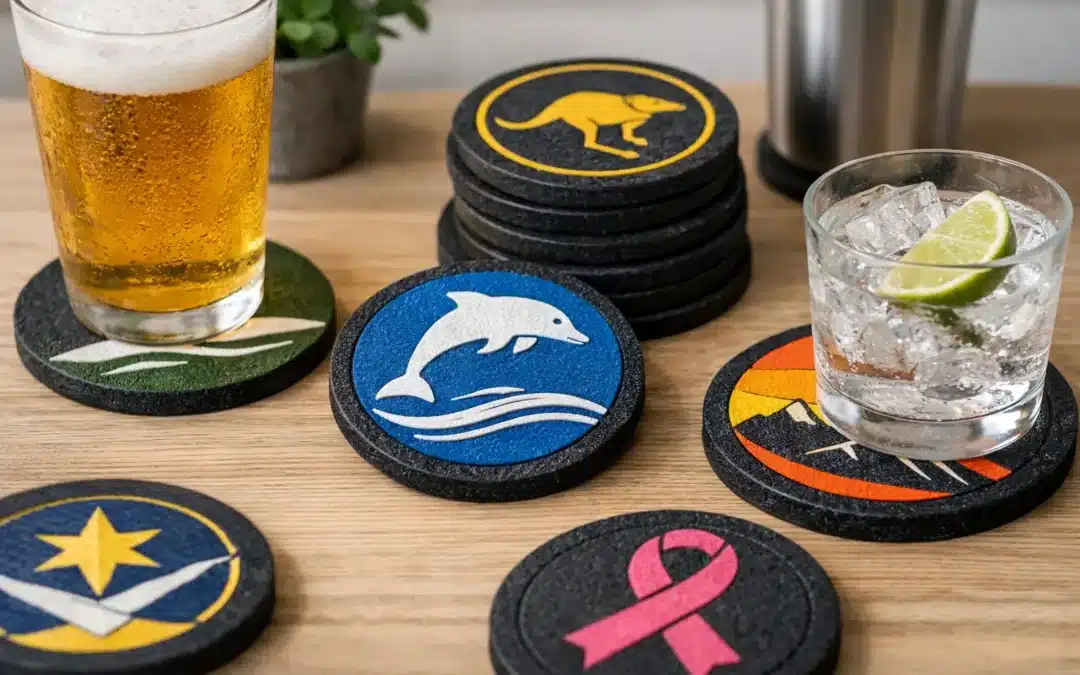
Recycled tyre rubber coasters are a strong fit for venues, workshops, automotive businesses and brands wanting a hard-wearing option with a sustainability story. They grip surfaces well, cope with frequent handling and offer a noticeably different feel from disposable promotional products.
Acrylic, glass, aluminium and stainless steel can lift the presentation for corporate gifts, boardrooms, premium hospitality settings and long-term promotional use. They are durable and polished, but usually command a higher investment. Leather, resin and LED options can also create a distinctive result for particular campaigns or special occasions. The question is not which material is universally best. It is whether the material supports the experience your brand wants people to remember.
When a lower-cost coaster is the smarter buy
There is no benefit in ordering a premium coaster for an event where thousands of guests may use it once and leave it behind. In that situation, cardboard can deliver more reach for the same spend. A seasonal promotion, a new drink launch or a club fundraiser may need volume and clear messaging more than a keepsake-quality finish.
Lower-cost does not need to mean low quality. It means matching the product to its purpose. A clean one-colour design on an absorbent cardboard coaster can look sharp, particularly when the message is simple. It also allows businesses to refresh their campaign regularly without holding excess stock from an old promotion.
The reverse is true for coasters intended as gifts or permanent venue accessories. A thin, short-life product may cost less upfront but can weaken the perceived standard of a premium brand. If the goal is to equip a meeting room, send a thank-you gift to valued clients or create tableware for an upmarket venue, investing in a durable material is often more economical over time.
Design determines whether people notice it
The most effective coaster designs are clear from across a table. Your business name or logo should be the first thing a person sees, followed by a short supporting message if needed. Fine print, long web addresses and too many competing colours often disappear once a glass is placed on top.
Think about the coaster as a working surface. A standard round coaster may have much of its centre covered by a drink, while a square shape can offer different placement options for your branding. Artwork can be designed around that reality, using a border, a repeated pattern or strong corner positioning. For event coasters, a date, hashtag or brief call to action can work well, but only when it does not compete with the main visual.
Colour selection matters too. Dark logos on light backgrounds are generally easier to read in dim venues. If you are using brand colours, ask for a free digital proof before production so you can check scale, spacing and contrast. A proof is particularly useful when printing on textured cork, recycled rubber or natural bamboo, where the final appearance can differ from a flat screen image.
Order quantity and reuse affect the real cost
Custom manufacturing usually becomes better value as quantities increase. Setup and printing costs are spread across more units, which can make a larger order more attractive on a per-coaster basis. However, ordering more than you can use is not a saving. Promotional merchandise only works when it reaches the right people in good condition.
Start with an honest estimate. A restaurant may calculate tables, service turnover and how often coasters are replaced. An event organiser can work from guest numbers, bar stations and a modest contingency. A marketing team ordering for client packs should consider whether one set of four is more useful than handing out individual pieces.
Reusable coasters add another dimension. A quality coaster that remains on a customer’s desk or coffee table can provide visibility long after an event. In those cases, the price should be assessed over the life of the item, not only against a one-day campaign budget. A practical, well-designed coaster can outlast many paper-based giveaways.
Are custom coasters worth it for weddings and events?
For weddings, milestone celebrations and private functions, personalised coasters are worth considering when they contribute to the table setting or serve a second purpose as a keepsake. Names, dates, monograms and a simple illustration can tie in with invitations, menus and signage without overwhelming the room.
They are less essential if the budget is already stretched across higher-priority items such as catering, photography or venue styling. A smaller run for the bridal table, gift packs or a cocktail area may be a better compromise than trying to place a personalised coaster at every setting. For a large event, cardboard designs can provide the customised look while keeping the overall cost controlled.
For commercial events, coasters are particularly useful when they support a clear outcome. A sponsor logo on a function table, a QR code that leads to a competition, or a product message at a tasting station can all be effective. Test any code at the finished size and leave enough clear space around it. A clever idea is only valuable if guests can use it easily.
How to make the investment worthwhile
Before requesting a quote, decide what success looks like. Is the priority protecting venue furniture, improving table presentation, promoting a special offer, supporting sponsors or leaving clients with a useful gift? That answer will guide the material, print method, quantity and budget.
Provide the best artwork you have, preferably a high-resolution logo or vector file, and be upfront about your deadline. An experienced supplier can recommend practical options, prepare a digital proof and identify concerns before production begins. At Drink Coaster, that guidance is part of making a custom order straightforward, whether you need promotional cardboard coasters for a campaign or a more durable material for ongoing use.
Custom coasters earn their place when they are treated as part of the customer experience, not an afterthought. Choose a material people will want to use, give the design room to be seen, and order for a real purpose. The result is a small branded item that keeps working long after the first drink is poured.