A busy Saturday service can turn a good-looking coaster into a soggy, curled mess before the second round reaches the table. For pub operators, choosing from the top coaster materials for pubs is not simply a design decision. It affects table presentation, cleaning time, replacement costs and how consistently your brand appears in customers’ hands.
The right choice depends on your venue’s service style. A high-volume public bar needs something affordable and easy to replace. A boutique gastropub may want a material with more weight and texture. Function matters, but so does the impression left behind when a customer puts down their schooner.
What Pub Coasters Need to Handle
Pub coasters work hard. They encounter condensation, beer spills, wine rings, sticky mixers and frequent handling. They also need to sit flat, protect tables and remain readable under low lighting. A coaster that looks excellent in a digital mock-up but fails after one drink is not good value.
Before selecting a material, consider how long you expect each coaster to stay in use. Disposable options suit promotions, launches and fast-moving venues. Reusable materials are better suited to permanent branding, table service and venues aiming for a more considered fit-out.
Your artwork also plays a part. Fine logo details, photographic imagery and full-colour campaigns perform differently across absorbent card, textured cork and hard surfaces such as metal or acrylic. Matching the material to the message avoids compromises later in production.
Top Coaster Materials for Pubs Compared
Cardboard: practical for volume and promotions
Cardboard beer coasters remain a pub staple for good reason. They are absorbent, lightweight and cost-effective for larger quantities. Properly produced pulpboard coasters soak up condensation rather than allowing moisture to pool beneath a glass, helping protect timber tables and bar tops.
They are particularly effective for beer launches, sports screenings, seasonal menus, trivia nights and sponsor campaigns. A pub can refresh the artwork regularly without committing to a long-life item that may date quickly. Full-colour printing gives operators room for specials, QR-based menus, event dates and brand messaging.
The trade-off is lifespan. Cardboard is designed for short-term use and will eventually soften or mark during a busy session. That is often acceptable, even useful, when the goal is broad distribution and repeated campaign exposure rather than a permanent tabletop accessory.
Cork: warm, absorbent and naturally distinctive
Cork brings a relaxed, premium feel that works well in craft beer venues, wine bars and pubs with timber furnishings or a more natural interior style. It is absorbent, provides good grip and helps prevent glasses sliding across smooth tabletops. Its soft texture also reduces noise when drinks are set down.
Branding on cork has an understated quality. Simple logos, bold linework and single-colour designs tend to look especially effective because they complement the material rather than compete with its natural grain. Cork can also support sustainability messaging when that is relevant to the venue’s values.
It is not the best option for highly detailed photographs or artwork requiring perfectly flat, bright colours. Cork’s organic texture is part of its appeal, but it means every piece may have slight visual variation. For many pubs, that character is a benefit rather than a drawback.
Recycled tyre rubber: made for hard-wearing service
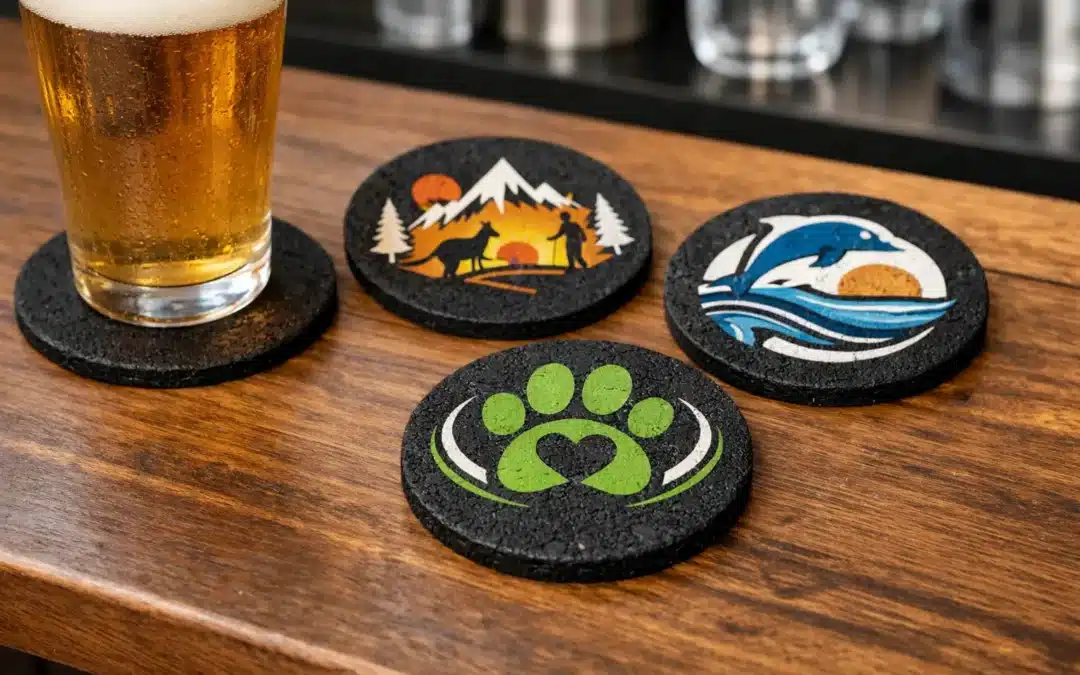
Recycled tyre rubber coasters are a strong choice for venues needing durability, grip and practical performance. They are water-resistant, substantial in the hand and well suited to outdoor beer gardens, gaming areas, counters and high-turnover tables. Their non-slip surface is valuable where spills and movement are unavoidable.
For pubs looking to make a visible environmental statement, recycled tyre rubber offers a practical story alongside a long working life. It suits bold logos and high-contrast branding particularly well. The material’s darker finish can give a venue a more industrial or contemporary look.
Rubber is generally more of an investment than cardboard, so it makes the most sense when coasters will be collected, cleaned and reused. It is less suited to one-night promotions where low unit cost is the priority.
PVC rubber: flexible branding with dimensional detail
PVC rubber is another durable option, often selected when a pub wants a raised, moulded logo or a more tactile branded item. The material can reproduce shaped edges, layered colours and distinctive designs that are difficult to achieve with a printed coaster alone.
This makes PVC rubber useful for breweries, clubs and venues with an established identity they want customers to recognise immediately. It is washable and water-resistant, which supports long-term use in bar areas and outdoor settings.
The material is best reserved for bold artwork. Tiny type and intricate design details can be lost in a moulded treatment, so a clean logo with strong shapes will produce the most professional result.
Stainless steel and aluminium: sleek but selective
Metal coasters create a polished, modern presentation. Stainless steel is highly durable and suits premium bars, corporate function spaces and venues with a contemporary interior. Aluminium offers a lighter alternative while still delivering a crisp, refined appearance.
These materials are water-resistant and easy to wipe down, and they can work beautifully with etched, engraved or printed branding. They are a smart option where the coaster is intended to feel like part of the venue’s permanent tableware rather than disposable promotional stock.
However, metal is not absorbent. A condensation-heavy glass can leave moisture on the surface unless the coaster includes a suitable backing or design feature. It can also feel out of place in a casual suburban pub where a softer, more traditional material better fits the atmosphere.
Acrylic and glass: high-impact presentation
Acrylic and glass coasters are chosen for visual impact. Clear or coloured acrylic can showcase modern graphics and bright branding, while glass gives a more luxurious finish for private dining rooms, cocktail-focused spaces or special functions.
Both are easy to clean and support reusable service, but neither is naturally absorbent. They are best for controlled table settings rather than wet, fast-paced bar service. Glass also requires more care in storage and handling, particularly in venues where breakage is a consideration.
For a limited-run VIP event, a wedding reception held at a pub venue or a premium package offering, these materials can lift the perceived value of the setting. For everyday pint service across dozens of tables, they are rarely the most practical choice.
Leather, bamboo and resin: materials for a specific look
Leather-look and genuine leather coasters bring a classic, club-style feel. They suit whisky bars, members’ lounges and venues seeking a darker, more traditional finish. Debossed branding can look particularly sharp, although these coasters need sensible care to maintain their appearance.
Bamboo offers a clean, natural alternative for venues with a sustainability-led or coastal aesthetic. Resin gives the greatest flexibility for custom shapes, embedded design effects and distinctive finishes. Both are more specialised choices, best selected because they suit a clear design direction rather than simply because they are different.
Match the Material to Your Service Style
A high-volume pub with regular promotions will usually get the best return from branded cardboard coasters. They are economical, absorbent and easy to update as menus, sponsors and campaigns change. Ordering enough stock to refresh tables during service keeps the venue looking professional.
For a pub with a beer garden, heavy foot traffic or a permanent branded table setting, recycled tyre rubber or PVC rubber is often a better fit. Both handle moisture well and provide the durability needed for regular reuse.
Where the goal is a more premium customer experience, cork, stainless steel, acrylic or leather can add texture and perceived quality. The key is to ensure the choice fits the venue rather than chasing an expensive material that does not suit everyday operations.
Branding Details That Make Coasters Earn Their Place
A coaster should do more than carry a logo. Use the available space to support the next action you want customers to take: try a featured tap beer, book a function, join a loyalty programme or remember an upcoming event. Keep core information clear and avoid packing every message onto one small surface.
Contrast is essential in low-lit pubs. Dark logos on pale backgrounds, or light designs on darker materials, are easier to recognise across a table. If your brand has detailed artwork, ask for a Free Digital Proof before production so sizing, placement and print method can be checked properly.
Drink Coaster helps Australian venues select materials around artwork, budget, quantity and turnaround requirements, rather than forcing a one-size-fits-all product. That guidance matters when a coaster needs to survive real service, not just look good in a catalogue.
A well-chosen coaster is a small detail customers touch repeatedly throughout a visit. Choose one that protects your tables, supports your staff and keeps your pub’s name visible until the last drink is cleared.