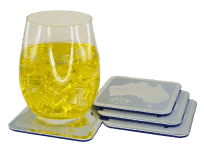
A timber tabletop can look perfect at the start of service, then pick up pale drink rings, sticky marks and heat damage before the evening is over. So, can coasters protect timber? Yes, provided they are the right material, large enough for the glass, and used consistently. A coaster is a simple barrier, but it does valuable work where moisture, heat and daily wear meet a timber surface.
For cafés, bars, clubs, boardrooms and homes, coasters are a practical way to protect furniture while improving presentation. When customised with a logo, event artwork or venue branding, they also put a brand in front of guests at the exact moment they are relaxing with a drink.
How coasters protect timber surfaces
The main job of a coaster is to stop condensation, spills and heat transferring directly from a drink vessel to the timber. Cold drinks are often the bigger culprit. Moisture forms on the outside of a glass, runs down the sides and pools underneath. If that water sits on timber, it can leave a dark mark, a cloudy ring or a roughened patch in the finish.
Hot mugs create a different problem. Heat can soften or discolour some finishes, particularly lacquer, wax and older varnishes. A coaster adds an insulating layer that reduces the direct heat reaching the tabletop. It will not make a delicate antique table invincible, but it can substantially reduce everyday damage.
Coasters also catch small drips that occur when someone lifts a glass, swaps drinks or carries a cup from the counter. In a busy hospitality setting, these minor spills add up. Keeping moisture off the surface helps maintain the timber’s appearance and reduces the cleaning workload between sittings.
What coasters cannot prevent
Coasters are protective, not magic. A coaster cannot fully protect timber if a drink is tipped over, a wet bottle sits beside it, or a guest puts a steaming saucepan straight on the table. It also cannot repair water stains that have already penetrated an unsealed or poorly maintained surface.
The condition of the timber matters. Properly sealed hardwood is more resistant to moisture than raw timber, but even sealed furniture can be marked if liquid is left for long enough. Re-oiled, waxed or refinished pieces may need extra care while the finish cures.
Placement matters as well. A coaster needs to sit flat and remain under the drink. Tiny coasters that only support the middle of a large tumbler may still allow condensation to run over the edge. For maximum protection, choose a format with enough surface area to contain the base of the glass and any moisture around it.
Choosing the right coaster material for timber
Different materials suit different environments. The best choice depends on whether you need strong absorbency, reliable heat resistance, easy cleaning, premium presentation or a balance of all four.
Cork and cardboard for absorbency
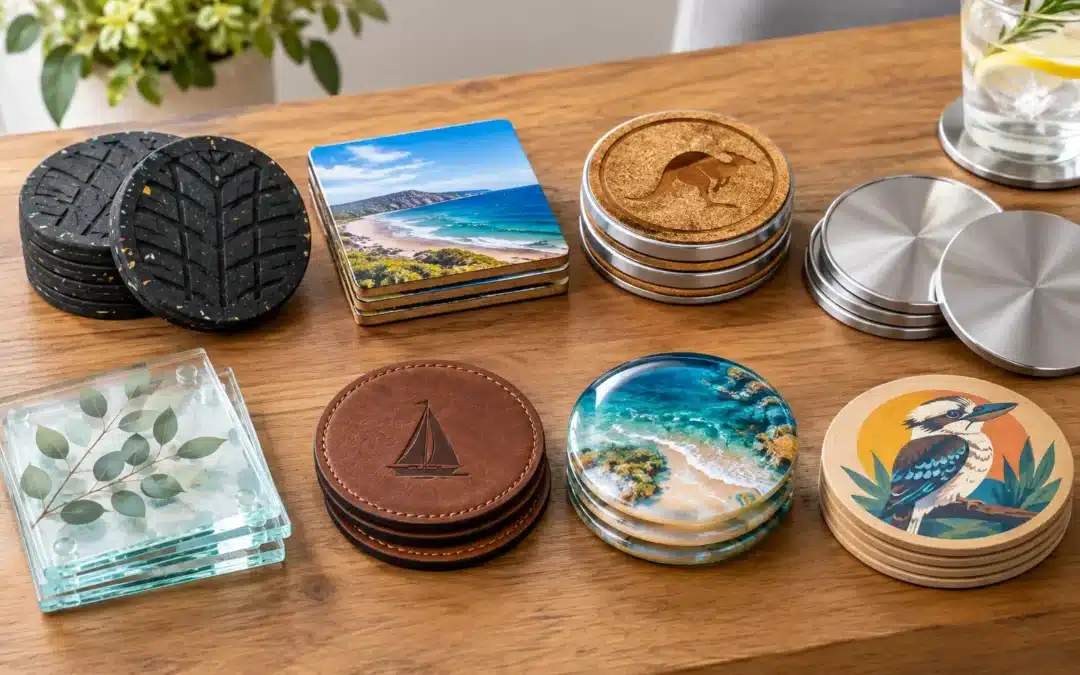
Cork is naturally absorbent and works particularly well beneath cold glasses. It grips the table, feels warm and natural, and suits venues or brands with an organic, relaxed look. Cardboard coasters are also highly absorbent and are a cost-effective option for functions, beer gardens, launches and high-volume promotions.
The trade-off is lifespan. Cardboard is generally intended for shorter-term use, especially when it is repeatedly exposed to moisture. Cork lasts longer but can stain over time. Both are effective choices when the priority is managing condensation rather than creating a wipe-clean surface.
Rubber and PVC for grip and durability
Rubber coasters, including recycled tyre rubber options, are durable, non-slip and well suited to busy venues. Their raised or textured surfaces can help manage moisture, while the flexible material reduces movement on polished timber tables. They are also easy to wipe down between uses.
PVC rubber delivers similar practical benefits and can be moulded into detailed custom shapes. These options are ideal when a business needs a harder-wearing branded coaster for repeat use. They do not absorb as much water as cork or cardboard, so a design with a raised rim or recessed centre is useful for containing condensation.
Leather, bamboo and timber-look options
Leather coasters offer a refined finish for boardrooms, restaurants, accommodation venues and corporate gifting. They help shield the table from light moisture and moderate warmth, although spills should still be wiped promptly. Quality leather or faux leather can be branded cleanly and provides a polished, premium feel.
Bamboo suits natural interiors and can provide good separation between a drink and the tabletop. As with any hard coaster, it is best for managing contact and modest condensation rather than soaking up large amounts of water. A backing material can improve grip and minimise the chance of a rigid coaster scratching delicate furniture.
Acrylic, metal, glass and resin for presentation
Acrylic, stainless steel, aluminium, glass and resin coasters make a strong visual statement. They suit contemporary venues, display areas, corporate events and campaigns where colour, shine or a precise design is the priority. Many are easy to clean and can handle regular use.
However, hard materials need thoughtful finishing. A coaster with an abrasive underside can scratch a soft timber finish when dragged across the table. Non-slip feet, cork backing or a soft protective base are worthwhile details. Metal can also transfer heat if a very hot drink is placed directly on it, so it is not always the best choice for tea and coffee service.
Size, shape and construction make a difference
The most attractive coaster is not necessarily the most protective one. Start with the drinkware. A standard round coaster should comfortably exceed the diameter of the glasses and cups being used. Square, rounded-square and custom-shaped coasters can work well too, as long as the drink base stays within the coaster’s edge.
Thickness contributes to insulation. Thicker cork, rubber or layered board generally provides better separation from heat and feels more substantial in the hand. For hard coasters, a recessed centre or raised rim gives condensation a place to collect instead of letting it run onto the tabletop.
For hospitality operators, consistency is often more useful than a novelty shape that does not fit the glassware. For weddings and events, a personalised shape may be a great visual feature, but it should still support the drink securely. Good design balances brand impact with everyday function.
Simple habits that keep timber looking better
Coasters perform best when they are part of normal table service, not an afterthought. Place them before drinks arrive, particularly on timber bar tops, communal tables and meeting-room furniture. If water appears on the coaster, replace or wipe it rather than allowing it to overflow.
Staff can help by using trays for multiple drinks and quickly clearing empty glasses. At home, it is worth keeping coasters within easy reach of lounges, desks and outdoor entertaining areas. Guests are far more likely to use a coaster when it is already on the table and looks like it belongs there.
Cleaning matters too. Wipe reusable coasters according to their material, and do not stack them wet against finished timber. Check the underside from time to time for grit, damaged pads or lifted backing. A well-made coaster should protect the table without becoming a source of scratches itself.
Branded coasters are practical protection with staying power
For a business, custom coasters solve two jobs at once. They protect timber furniture and create repeated brand exposure. A guest may set down a drink dozens of times during a meal, meeting or event. That makes a coaster a useful, low-pressure way to keep a logo, message or promotion visible.
Material choice can also support the setting. Absorbent cardboard works well for a one-night activation. Recycled rubber suits an environmentally minded venue looking for a durable option. Leather or metal can lift a premium client gift or executive boardroom. The right choice should reflect the furniture, drink service, budget and expected frequency of use.
Drink Coaster provides material options and free digital proofs so businesses and event organisers can check that the artwork, sizing and finish suit the intended use before production begins.
Timber furniture earns its character over time, but water rings and heat marks are not the kind of character most venues or homeowners want. Choose coasters that suit the drinkware and setting, keep them within reach, and let a small protective detail preserve the table beneath every pour.