A guide to coaster order quantities starts with a practical question: how many hands, tables and drinks will your brand reach? Ordering too few can leave a venue or event looking underprepared. Ordering far too many can tie up budget in stock that is not suited to the next campaign. The right quantity sits between those two outcomes, based on how the coasters will actually be used.
For hospitality venues, branded coasters are part of the service experience. For marketing teams, they are a useful promotional item with repeated brand exposure. For weddings and private events, they can be a polished finishing touch or a keepsake. Each purpose calls for a different approach to quantities, materials and reordering.
Start with the purpose of the order
The most reliable way to set a coaster quantity is to define whether the order is for daily use, a one-off event, a promotion or a gift. A café, pub, club or restaurant needs enough coasters to cover busy service periods, washing cycles where relevant, and replacements. A conference organiser needs enough for every attendee, plus a sensible buffer for spillages, extra registrations and multiple refreshment areas.
Promotional campaigns need a wider view. If coasters are being handed out at a trade show, included with product orders or delivered to selected clients, the number should match the distribution plan rather than the total audience you hope to reach. It is better to have a clear allocation for each channel than to order a large quantity with no practical way to distribute it.
For weddings, birthdays and milestone celebrations, guest numbers are the starting point. Personalised coasters may be placed at each setting, set out at bars, or packaged as favours. Those uses can require very different quantities, even for the same guest list.
A guide to coaster order quantities by use case
Hospitality venues and clubs
For everyday venue use, calculate from peak capacity rather than average trade. Begin with the number of seats, bar positions and outdoor tables likely to be occupied during your busiest service. Then allow for turnover. A table that serves three groups across an evening may need more than one disposable coaster per seat, while a durable rubber, cork or stainless steel coaster may be reused throughout the shift.
A practical starting allowance for disposable cardboard coasters is two to four per expected guest visit, depending on drink volume and whether food service is involved. Wet or heavily used coasters are commonly replaced during service, particularly in pubs and busy beer gardens. If your venue runs special events, live music or game-day trade, include the expected uplift rather than relying on a standard weekday figure.
For reusable coasters, match the initial order to active capacity and add replacement stock. Many venues keep an additional 10 to 20 per cent for breakages, loss, cleaning rotation and a sudden increase in covers. The exact figure depends on the material. Glass and ceramic-style options need more care, while recycled tyre rubber and PVC rubber are well suited to high-use environments where grip and durability matter.
Corporate events, conferences and launches
For a seated event, order one coaster per attendee plus a 10 to 15 per cent buffer. That buffer is not wasteful. It covers late additions, damaged items, extra staff, speakers and display tables. If drinks are served in multiple areas, such as a registration desk, seminar room and networking space, allocate coasters to each area before production begins.
Where the coaster is designed as a take-home branded item, order for every attendee and include extras for sales staff, VIP packs and future prospect meetings. A well-made coaster can continue working long after the event, particularly when the design is clean and the material suits a desk, home bar or meeting room.
For larger events, it can be helpful to divide the total into cartons or venue zones. This makes bump-in simpler and reduces the chance that all stock is placed behind one bar while another service point runs short.
Trade shows and promotional giveaways
Trade show quantities should be based on meaningful conversations, not foot traffic alone. If your team expects to speak with 300 qualified visitors, 300 to 400 coasters may be appropriate when every conversation receives one. If the coaster is part of a premium gift pack, the quantity may be lower and the material more substantial.
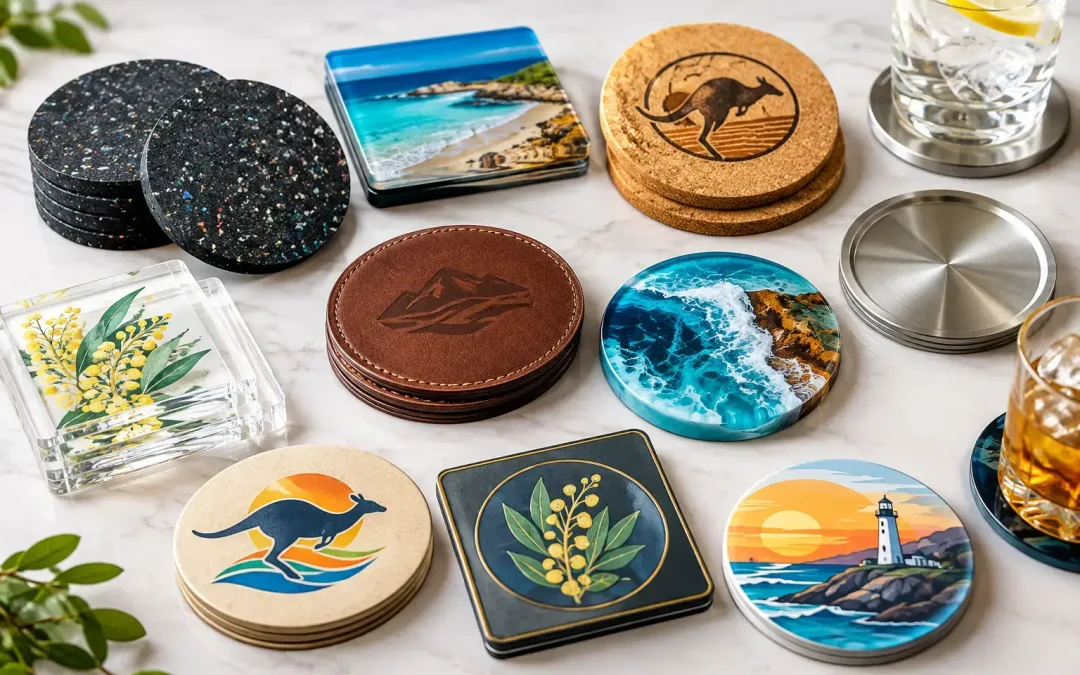
A giveaway does not need to be given to everyone. Branded cork, bamboo, acrylic or leather coasters can feel more considered than a brochure, but they are best reserved for prospects, clients and partners who are likely to value the gesture. Cardboard coasters may suit broad sampling, hospitality sponsorships and high-volume promotional distribution.
Weddings, parties and personal occasions
For coasters used at place settings, order for the full guest count plus 10 per cent. For example, a 100-person wedding would usually call for around 110 coasters. This provides spares for last-minute guests and protects against small setup mishaps.
If the coasters are party favours, order one per guest or one set per household, depending on how they will be packaged. If they are simply placed around a drinks station, calculate from the number of guests likely to be drinking at one time, then add a buffer for replacements. Personalised designs are most effective when names, dates and colours remain easy to read, so allow enough time for a digital proof and any design refinements before production.
Match material to quantity and budget
Quantity affects unit pricing, but the lowest unit price is not always the best buying decision. A large run of cardboard coasters can be ideal for a festival, campaign or busy venue promotion. A smaller run of engraved bamboo, cork, leather or metal coasters may make better commercial sense for executive gifts, premium client packs or a boutique venue.
Think about lifespan as well as purchase price. A disposable coaster may be used once, yet reach hundreds of people in a high-turnover bar. A durable recycled tyre rubber coaster may remain on a table for months. Both can offer strong value when matched to the right setting.
Artwork also matters. Detailed logos, fine text and full-colour designs can influence the most suitable print method and material. Ordering a quantity that supports a clear, professional result is more valuable than squeezing a complex design into the cheapest possible option. A free digital proof helps confirm that branding, colour placement and sizing are working before production proceeds.
Allow for minimums, lead times and repeat orders
Custom production often has minimum order quantities, and these vary by material, shape, decoration method and supplier. Rather than treating the minimum as an obstacle, use it to assess whether the extra stock has a future purpose. Could it support a second event, a seasonal promotion, new staff packs or client gifts? If the answer is yes, a larger run may reduce your overall cost per coaster without creating unnecessary surplus.
Timing can also shape the quantity decision. Rush orders leave less room for artwork changes, delivery delays or last-minute increases in guest numbers. Where possible, finalise event quantities early and set aside a modest contingency. For a national campaign or multi-site venue group, consider ordering enough stock for staged distribution rather than placing several small orders with different production windows.
Repeat orders are easiest when the original artwork, material and size are clearly recorded. Keep a note of what worked: the quantity consumed, the event attendance, the feedback from staff and the rate at which stock moved. This turns the next order from a guess into a more accurate purchasing decision.
Avoid the common quantity mistakes
The first mistake is ordering to the exact headcount. Exact numbers look efficient on paper, but events change and coasters get damaged, misplaced or used in unexpected areas. A modest buffer is usually cheaper than an urgent top-up order.
The second is using one quantity rule for every material. A disposable coaster needs turnover stock. A durable coaster needs coverage and replacements. A premium gift coaster needs a precise recipient list. Treating them all the same can lead to either shortages or excess stock.
The third is overlooking storage. Before ordering a large volume, confirm where cartons will be held and how stock will be protected from moisture, heat and crushing. This is particularly relevant for cardboard products and for venues with limited back-of-house space.
At Drink Coaster, the right order starts with your intended use, artwork and deadline, then works back to a quantity that suits your budget and presentation. A clear brief, a sensible buffer and the right material will give every coaster a better chance to be used, noticed and remembered.