A coaster does more than protect a tabletop. In a busy pub, a client meeting room or at a wedding reception, it sits directly beneath every drink and keeps your name, message or event detail in view. That is why choosing between popular coaster finishes is not simply a styling decision. The finish affects how your artwork prints, how the coaster feels in the hand, how well it copes with moisture and how it supports the standard of your venue or brand.
For Australian businesses and event organisers, the best choice is usually the one that matches the setting first, then the budget and artwork. A sharp logo for a large promotion may call for a very different finish from an upmarket cellar door, a club bar or a once-off celebration.
What a coaster finish changes
The term finish can describe both the material itself and the final surface treatment. Cork has a natural, textured finish. Acrylic and glass offer a clean, polished appearance. Cardboard can be absorbent and practical, while rubber is designed for grip and repeated use. Some materials can also be supplied with gloss, matte, clear, frosted, metallic or textured surface effects.
There is no single premium option for every order. A highly polished coaster may look impressive in a boardroom, but it can show fingerprints and water marks more readily than a matte alternative. A disposable pulpboard coaster is not intended to last for years, yet it is often the most effective choice for high-volume hospitality promotions because it absorbs condensation and keeps the bar service moving.
Start by considering where the coasters will be used, how often they will be handled and what you need the printed design to achieve. A finish should make the artwork easier to see and the product more useful, not merely look good in a product photo.
Popular coaster finishes and where they work best
Cardboard and pulpboard: absorbent and campaign-ready
Cardboard coasters remain a popular option for pubs, breweries, clubs, festivals and product launches. Their uncoated or lightly finished surface is designed to absorb moisture, which helps reduce drips and protects tables during busy service. They are lightweight, cost-effective at quantity and well suited to campaigns where coasters will be distributed freely or changed regularly.
This finish gives designs a familiar hospitality feel. Bold logos, event dates, menu messages and QR code artwork can work well when supplied clearly. Fine detail and very pale colours need more care, as the absorbent surface can produce a softer result than a glossy plastic or acrylic coaster. For short-run promotions and high-volume venue use, that trade-off is often worthwhile.
Cork: warm, natural and easy to style
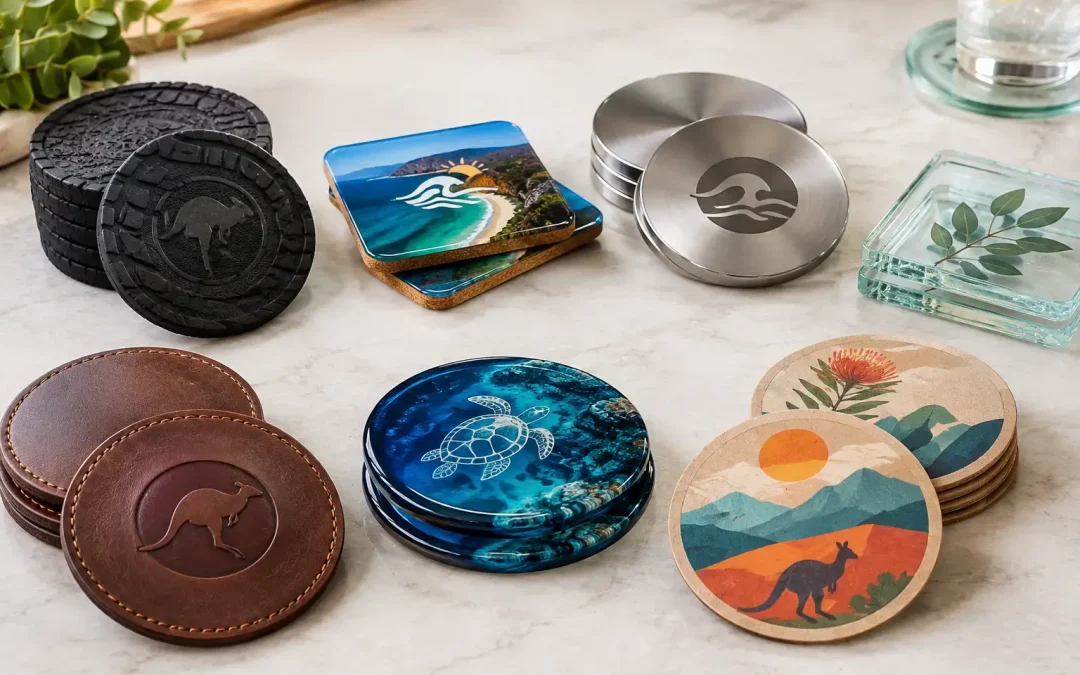
Cork brings a natural texture that suits cafés, wineries, wellness brands, environmentally minded campaigns and relaxed event styling. It provides good grip on a table and has a warm appearance that works especially well with simple logos, line art and darker print colours.
Because cork is textured, ultra-fine artwork and large areas of solid light colour may not reproduce as crisply as they do on a smooth surface. Rather than forcing a detailed design onto the material, use the texture to your advantage. A clean brand mark, monogram or short message often looks more considered and premium on cork than a crowded layout.
Recycled tyre rubber and PVC rubber: durable with real grip
Rubber finishes are practical choices for bars, outdoor areas, workshops, sporting clubs and brands that want a durable, tactile item. Recycled tyre rubber offers a hard-wearing, industrial character while helping give a repurposed material a new purpose. PVC rubber can be moulded for raised details and distinctive shapes, creating a more dimensional branded result.
These finishes are less absorbent than cardboard, so they are ideal where coasters need to be wiped down and used repeatedly. They also stay in place well on smooth tables. The main consideration is design complexity: bold shapes, clear lettering and strong contrast generally deliver the best outcome, particularly for moulded or raised branding.
Acrylic: crisp, modern and highly visual
Acrylic coasters have a smooth, contemporary finish that suits corporate gifts, retail counters, salons, reception areas and modern hospitality spaces. Clear acrylic can create a layered effect around the artwork, while coloured or frosted options provide a more controlled background for logos and graphics.
The surface supports detailed full-colour artwork well, making acrylic a strong option for designs with photography, gradients or precise brand colours. It is not absorbent, however, so it is better suited to controlled indoor environments than venues that rely on a coaster to soak up substantial condensation. Adding protective pads to the underside can also help prevent sliding and protect polished furniture.
Glass: polished presentation for premium settings
Glass creates a refined, weighty finish that immediately lifts table presentation. It suits restaurants, property settlement gifts, executive packs, special events and brands with a premium positioning. Frosted effects, colour printing and etched-style artwork can all create a sophisticated look when the design is kept purposeful.
The trade-off is practical. Glass is heavier to transport, requires more careful handling and is less suited to fast-moving, high-volume bar use. It is a strong choice where presentation, longevity and perceived value matter more than lowest unit cost. For an elegant result, avoid filling every available space with text. Give the logo or event mark room to stand out.
Stainless steel and aluminium: sleek, strong and contemporary
Metal coasters offer a cool, precise finish that works well for corporate branding, automotive businesses, technology companies, modern bars and promotional gift sets. Stainless steel has a more substantial premium feel, while aluminium can provide a lighter-weight alternative. Brushed, polished and coloured metal effects can change the mood of the final piece considerably.
Engraved or laser-marked artwork can be particularly effective on metal, as it creates a permanent-looking result without relying on a broad field of printed colour. This is not always the right approach for photographic artwork or complex colour palettes. If brand recognition relies on a specific bright colour, a printed acrylic or resin option may provide a closer match.
Leather and leather-look finishes: tailored and gift-focused
Leather and leather-look coasters offer a softer, more traditional finish for executive gifts, clubs, accommodation providers and high-end hospitality. Debossing, foil details or subtle printed branding can look professional without being overly promotional.
This is a finish where restraint pays off. A small centred logo, initials or a short brand message often feels more premium than a large, busy design. Leather-style products may also need more careful cleaning than rubber or metal, so they are best used where a quality tabletop accessory is valued and cared for rather than treated as disposable bar stock.
Bamboo, resin and LED: finishes built to be noticed
Bamboo offers a clean timber look with natural grain variation, making every coaster slightly individual. It suits sustainable-looking brand presentations, cafés, homewares and event gifts. Resin provides a glossy, high-impact finish that can encapsulate colourful artwork or decorative elements, while LED coasters add light and movement for nightclubs, launches and entertainment events.
These options are best selected for a specific visual reason. Bamboo may not be ideal if exact surface consistency is essential. Resin can look striking but is more decorative than absorbent. LED coasters create attention in low light, though they are unnecessary for a daytime conference or standard corporate mail-out. The finish needs to earn its place in the brief.
Match the finish to your artwork and order purpose
Before approving a design, look at it against the actual material rather than judging it only on a white screen. A detailed logo may need a smooth acrylic, glass or metal surface to retain its fine lines. A bold one-colour identity can look excellent on cork, recycled rubber or bamboo. For venues, consider whether the coaster needs to absorb condensation, withstand regular cleaning or be replaced frequently.
Quantity also affects the sensible choice. Cardboard is often the practical option for a major event or hospitality run. Cork, rubber and PVC can offer greater reusability for everyday branded service. Glass, metal, leather and resin are better positioned as keepsakes, gifts or presentation pieces where a higher perceived value supports the investment.
A free digital proof is valuable at this point. It gives you the chance to check logo placement, contrast, copy and print area before production begins. It is also the right time to flag any must-have brand colours, double-sided requirements, shaped coaster ideas or delivery deadline.
Getting a finish that performs after delivery
The most successful custom coaster orders are planned around use, not just appearance. Let your supplier know whether the coasters are for a busy bar, outdoor function, trade show, client gift, wedding or internal promotion. Share the artwork in the best available format and be clear about numbers, deadline and budget from the beginning.
Drink Coaster can help Australian customers compare material options, prepare artwork and approve a free digital proof before production. With the right finish, a small table accessory becomes a practical brand touchpoint people will keep noticing with every round.