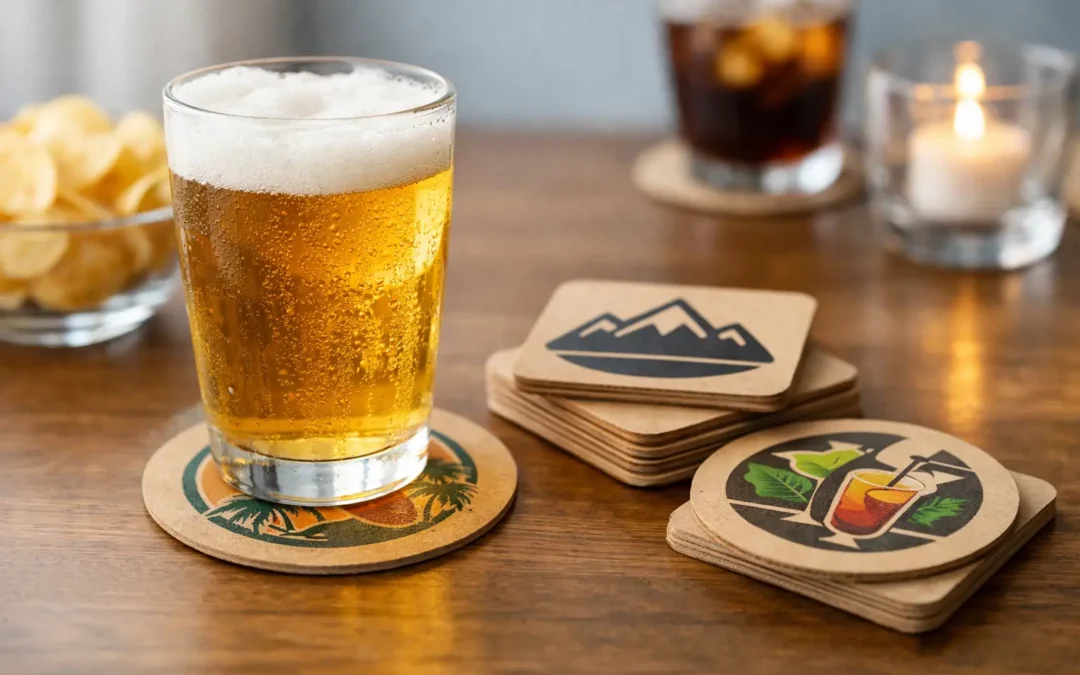
A coaster gets noticed in a way plenty of promotional products do not. It sits under every drink, stays on the table through the conversation, and keeps your brand in clear view without asking for attention. That is why cardboard drink coasters remain one of the most practical choices for venues, events and promotional campaigns across Australia.
For buyers comparing materials, cardboard often wins on the points that matter most – cost, print impact, speed and flexibility. It is not the premium option for every setting, and it is not meant to be. What it does offer is strong day-to-day value for businesses that need reliable branded merchandise that looks professional, performs well and fits the budget.
What makes cardboard drink coasters a smart choice
Cardboard coasters are built for volume use. If you run a pub, club, bar, café, brewery launch, corporate event or festival activation, you usually need more than a handful. You need stock that is affordable enough to order properly, practical enough to use confidently and presentable enough to support your brand.
This is where cardboard stands apart. It is light, economical to produce and easy to customise with logos, campaign artwork, event details or sponsor branding. For businesses ordering in quantity, those factors matter. A coaster can be doing two jobs at once – protecting surfaces and reinforcing brand recognition – without pushing the total spend too far.
There is also a reason cardboard remains a staple in hospitality. It suits the pace of service. Staff can set it down quickly, replace it easily and keep presentation consistent across tables, bars and function spaces. If the goal is dependable branded coverage rather than a decorative keepsake, cardboard is a very sensible material.
Where cardboard coasters work best
The right material always depends on the setting. Cardboard is particularly well suited to short-to-medium term use where strong branding and cost control carry more weight than long-term durability.
For bars, pubs and clubs, cardboard coasters are ideal for regular trade, seasonal promotions and supplier campaigns. Beverage brands often rely on them because they can be distributed widely and refreshed often. If you are promoting a new release, a limited menu or a sponsorship tie-in, it makes sense to use a coaster that supports fast rollout.
For events, cardboard is often the easiest fit. Weddings, conferences, trade shows, sporting functions and community events usually need custom print in set quantities, often on a clear timeline. In those cases, buyers want a product that looks polished, carries the artwork cleanly and arrives without complication. Cardboard handles that brief well.
For marketing teams, it is also useful when campaigns change regularly. You may not want to commit to a more expensive material if the artwork, offer or message is likely to shift in a few months. Cardboard gives you room to stay agile.
Print quality, branding and design flexibility
One of the biggest advantages of cardboard drink coasters is how well they support visual branding. A good design does not need a large surface area to make an impression. A logo, brand colour, tagline or event mark can be enough when the print is clean and the layout is balanced.
Cardboard works well for simple branding, but it can also carry more detailed designs when the artwork is prepared properly. Full-colour printing, promotional messages, QR-style campaign layouts and sponsor placements can all be incorporated depending on the brief. The result is a product that feels purposeful rather than generic.
That said, good artwork still matters. A coaster is small, so crowded designs can lose impact quickly. In most cases, the strongest outcome comes from a clear hierarchy – brand first, message second, extra detail only if it serves a practical purpose. Buyers often get better results when they treat the coaster as a branding surface, not a brochure.
This is also where supplier support makes a difference. A free digital proof and straightforward design guidance can save time and prevent costly production errors, especially when multiple stakeholders need to approve artwork before print.
Cost matters, but so does value
Procurement teams and venue operators are usually not asking for the cheapest option. They are asking for the option that makes commercial sense. Cardboard performs well here because it keeps unit pricing manageable while still delivering visible branding and everyday utility.
If you need a high-volume order for a national campaign, chain venue rollout or major event, material cost has a direct effect on what is possible. A more expensive coaster may look impressive, but if it reduces your order quantity or stretches the budget beyond reason, it may not be the right choice. Cardboard allows many buyers to order at the scale they actually need.
That does not mean every cardboard coaster is the same. Thickness, absorbency, finish and print method all influence the final result. A well-made coaster feels substantially different from a rushed low-grade version. That is why experience in custom production matters. Small material and print decisions can affect how the coaster performs during service and how the brand is perceived on the table.
The trade-offs to understand before ordering
Cardboard is practical, but it is not universal. If you need a long-life premium coaster for executive gifts, boardrooms or permanent branded table settings, acrylic, cork, leather, bamboo or metal may suit better. Cardboard is more disposable by nature, and that is part of its value proposition.
It is also worth considering the environment in which the coaster will be used. In high-moisture situations or where drinks sit for extended periods, performance depends on stock quality and absorbency. A busy pub using coasters for standard table service may find cardboard ideal. A luxury venue wanting a heavier, more permanent feel may choose another material.
The key is not whether cardboard is better in absolute terms. It is whether it matches the job. For promotions, events, brand awareness and high-turnover service environments, it often does. For long-term premium presentation, another option may be worth the investment.
What to look for when buying cardboard drink coasters
The best buying process is simple, but it should not be vague. You want clear communication around size, shape, print area, artwork setup, quantity breaks and turnaround. If you are ordering for a campaign or venue group, consistency matters just as much as price.
Start with the intended use. Are the coasters for daily hospitality service, a one-off event, a product launch or a branded giveaway? That decision affects material weight, print requirements and quantity planning. It also helps determine whether standard round or square formats are enough, or whether a custom shape would better support the campaign.
Next, think about branding priorities. If the goal is strong logo visibility, keep the design clean. If the goal is event styling, coordinate colours and finishes with the broader look and feel. If the coaster includes sponsor recognition or promotional messaging, make sure the layout remains readable once printed at actual size.
Then consider timing. Fast turnaround is often essential, especially for events and seasonal promotions. Working with an experienced Australian supplier can make that process more predictable, particularly when digital proofs, artwork checks and production updates are handled properly. Businesses like Drink Coaster understand that for many buyers, reliability is not an extra – it is the purchase decision.
Why they continue to deliver for Australian businesses
There is a reason cardboard coasters have stayed relevant while so many promotional items come and go. They are useful, familiar and easy to distribute. They suit hospitality, events and branded environments without feeling forced. Most importantly, they do their job at the exact point where customers are sitting, drinking and spending time with your brand.
For venues, they help maintain presentation while adding supplier or house branding. For event organisers, they offer a simple custom detail that makes tables look considered. For marketers, they provide repeat visual exposure at a cost that usually makes sense. That combination is hard to ignore.
If you need a coaster that is practical, customisable and commercially realistic, cardboard remains one of the strongest options available. The best results come from matching the material to the setting, preparing the artwork properly and working with a supplier that values clear service as much as finished quality.
A good coaster does not need to be complicated. It just needs to show up, look right and keep working from the first pour to last drinks.