A coaster is a small item with a big job. It protects tables, keeps your brand in front of customers and can make a bar, boardroom table or event setting look considered rather than improvised. A clear custom coaster design process helps ensure that the finished product does all three – without costly artwork changes, unsuitable materials or delays to your event date.
For a hospitality venue, the right coaster needs to withstand regular use and match the atmosphere of the space. For a marketing team, it needs to carry a logo clearly and earn repeated brand exposure. For a wedding or private event, it should fit the colours, message and overall styling. The starting point is understanding what the coaster needs to achieve before choosing how it looks.
Start the Custom Coaster Design Process With the Purpose
The first decision is not the print colour or shape. It is the setting in which the coasters will be used. A high-volume pub needs a different product from a corporate gift pack, and a one-night function has different priorities from an ongoing promotional campaign.
Consider who will use the coaster, how often it will be handled and whether it needs to be kept or simply perform well during an event. Disposable cardboard coasters are a practical choice for launches, venues and festivals where quantity and value matter. Cork, bamboo, leather, acrylic, glass and metal can create a more premium, long-lasting impression for offices, client gifts, clubs or retail merchandise.
This is also the time to confirm quantity, deadline and budget. Larger quantities often create better unit value, while specialised materials, custom shapes and detailed finishes may require more production time. Setting these parameters early allows the design to be tailored to what is genuinely achievable, rather than creating artwork that must later be simplified or reworked.
Match the Material to the Experience
Material affects more than price. It influences the print method, the level of detail that can be reproduced and the way a customer experiences the product.
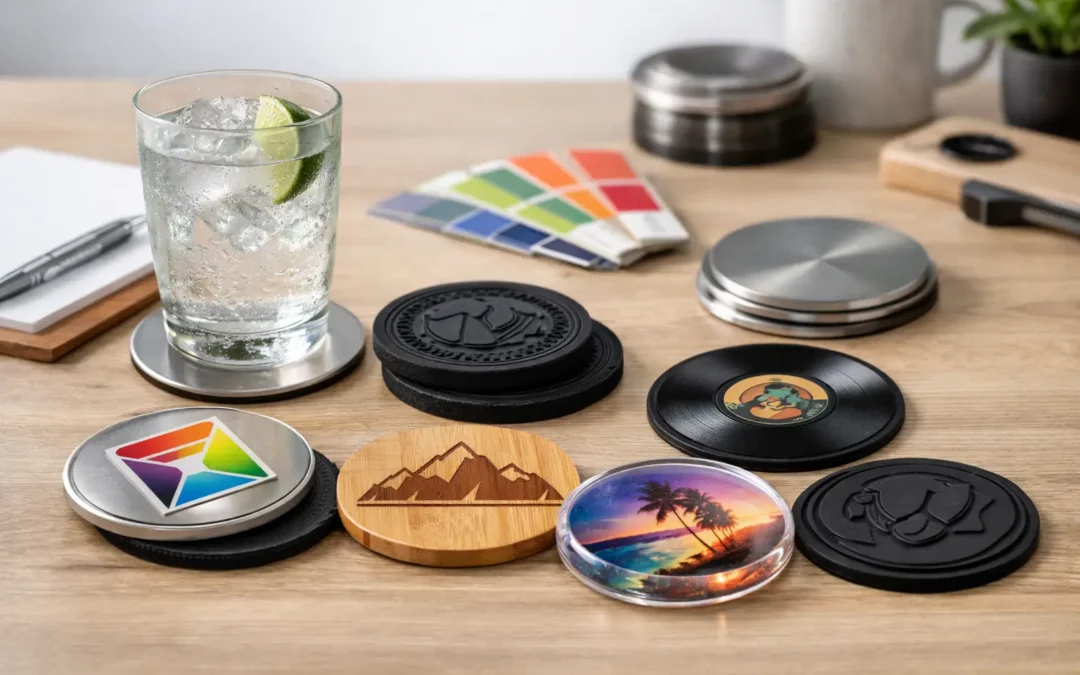
Cardboard and pulpboard are absorbent and familiar in hospitality. They suit colourful branding, campaigns and regular replacement. Cork brings a natural look and is well suited to cafes, eco-conscious brands and relaxed event styling. Bamboo offers a similar organic feel with a more substantial finish.
Acrylic, glass, aluminium and stainless steel suit sharper contemporary branding and can work particularly well for corporate gifts or venue presentation. PVC rubber is durable, flexible and effective for bolder designs with raised details. Leather and resin can offer a premium result, although the artwork may need to be adapted to suit engraving, embossing or the material’s natural texture.
There is no single best material. A coaster that looks impressive on a meeting table may not be the most practical choice for a busy beer garden. The strongest choice balances appearance, durability, absorbency and cost.
Build Artwork That Reads at Coaster Size
A coaster provides limited space, so clear communication matters. Many logos that work well on signage or a website need adjustment when reproduced at around 90 to 100 mm wide. Fine text, thin lines and crowded layouts can lose impact once printed or engraved.
Start with one key message. For many businesses, that will be the logo. A short tagline, website address, QR code or campaign message can be included where useful, but each extra element competes for attention. If someone picks up a drink, the design should be recognisable in a moment.
Contrast is equally important. Dark artwork on a light base, or light artwork on a dark base, is usually easier to read than similar tones placed together. This is particularly relevant with cork, bamboo and leather, where the base material has its own colour and texture. A design that appears crisp on a computer screen may need a bolder treatment in production.
Provide original vector artwork where possible, such as AI, EPS or PDF files. Vector files allow logos and text to scale cleanly without becoming blurry. High-resolution PNG or JPEG files can sometimes be used, but they need to be large enough for the intended print size. Supplying the correct file at the outset can save time and preserve the professional finish of the final coaster.
If your artwork is not production-ready, design assistance can make the process far easier. A simple adjustment to line thickness, spacing or logo placement can be the difference between an acceptable result and a coaster that looks properly branded.
Think Beyond the Front Design
Both sides of a coaster can be useful. The front may carry the main logo, while the reverse can feature contact details, a promotion, loyalty message or event date. For venues, the back can support a rotating offer without changing the primary brand design.
This depends on the material and the job’s purpose. Double-sided printing adds value when both surfaces will be seen, but it is not always necessary. A premium single-sided engraved coaster may feel more refined than a design overloaded with information. Good design is often about knowing what to leave out.
Review the Digital Proof Carefully
Before production begins, a free digital proof gives you the opportunity to check the layout, spelling, colours, dimensions and positioning of the artwork. This is one of the most valuable stages of the custom coaster design process because it turns an idea into a clear production reference.
Review the proof as if you were seeing the coaster for the first time. Is the logo large enough? Can the contact details be read? Does the background interfere with the main message? Are event dates, phone numbers and web addresses correct? It is much simpler to make a change at proof stage than after manufacturing has started.
For branded colours, provide Pantone references where colour consistency is essential. Screen colours can vary between devices, and some materials or print methods may produce a slightly different appearance from a digital display. A supplier can advise when exact colour matching is practical and when a close printed equivalent is the sensible option.
Approval should come from the person responsible for the final brand or event decision. This prevents last-minute feedback from multiple stakeholders after the order is already underway.
Allow for Production, Packing and Delivery
Fast turnaround is valuable, but good planning remains the safest way to protect your deadline. Production timing can vary according to material, quantity, printing method, custom shape requirements and the complexity of the artwork. A straightforward cardboard coaster run may have different lead times from individually engraved stainless steel or LED coasters.
If your coasters are for a trade show, wedding, opening night or seasonal promotion, work backwards from the date you need them in hand. Allow time for artwork preparation, proof approval, manufacturing and freight. Build in a buffer where possible, particularly for major events or regional delivery locations.
It also helps to think about how the coasters will be distributed. Will they sit on every table, be included in a welcome pack, handed out at a tasting, or used as a promotional insert? This can influence the quantity, packaging and material selection. A coaster designed to travel in the post needs different protection from one supplied directly to a venue.
Give Your Supplier a Useful Brief
Clear communication shortens the quoting and proofing stages. When requesting pricing, include your preferred material, approximate size, shape, quantity, print colours, artwork status and required delivery date. If you are unsure about any of these details, explain the intended use and budget range instead.
For example, a venue might brief a supplier with: round cardboard coasters for table service, full-colour logo on one side, 10,000 units and delivery before a menu launch. A corporate buyer may need square cork coasters with laser engraving, boxed as a client gift. Both are custom jobs, but they require very different recommendations.
An experienced supplier should ask practical questions, explain the trade-offs and provide a recommendation that aligns with the job rather than simply offering the most expensive option. At Drink Coaster, that support includes material guidance and a free digital proof, so customers can approve their design with confidence before production.
The best custom coasters feel effortless to the person using them. That result starts well before print day: with a clear purpose, suitable material, readable artwork and enough time to approve the details. Bring those elements together, and a humble table accessory becomes a useful piece of brand presentation people notice every time they set down a drink.