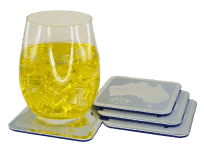

A coaster that is too small looks like an afterthought the moment a pint glass lands beside it. One that is oversized can crowd a café table, use more material than necessary and dilute the impact of your artwork. So, what size should coasters be? For most Australian venues, events and promotional campaigns, 90 mm to 100 mm is the practical sweet spot – but the best choice depends on the drinkware, the material and how much branding needs to be seen.
The right dimensions do more than protect a table. They help your logo stay visible, give guests a polished experience and make the finished product feel intentional. Choosing size early also makes artwork preparation, pricing and production more straightforward.
What Size Should Coasters Be for Everyday Use?
A round coaster with a 90 mm or 95 mm diameter is a widely used standard for good reason. It comfortably supports most glasses, bottles, cans and standard mugs without taking up excessive room on a table. For promotional cardboard coasters in pubs, clubs and restaurants, this is often the most efficient option because it balances coverage, print area and cost.
A 100 mm round coaster gives you a little more presence. It suits venues using wider tumblers, larger beer glasses or generously sized ceramic mugs, and it creates extra space for a detailed logo, event date or sponsor message. That additional 5 mm to 10 mm can make a noticeable difference when the artwork includes fine text or several brand elements.
Square coasters are commonly supplied at 90 x 90 mm or 100 x 100 mm. A square format gives artwork a more structured, contemporary presentation and is particularly effective for logos that sit naturally in a horizontal or rectangular layout. It also offers slightly more printable area than a similarly sized round coaster, especially around the corners.
Start With the Base of the Drinkware
The coaster should be larger than the base of the glass, not simply equal to it. Allowing around 5 mm to 10 mm of visible coaster around the drink creates a neater look and gives condensation somewhere to collect. It also means guests do not need to position their drink perfectly every time.
Most wine glasses, schooners, middies, bottles and mugs work well with a 90 mm to 100 mm coaster. Larger cocktail glasses, stemless wine glasses, tankards and oversized mugs may need a 105 mm or 110 mm option. If your venue serves broad-based glassware, ordering the smallest standard coaster can lead to glasses sitting right on the edge – not the impression most hospitality operators want.
It is worth measuring the widest base in your usual glassware range before approving a size. This simple check is especially useful for cafés and bars that use custom-branded glasses, as their proportions can differ from standard stock. For weddings and private events, think about what guests will actually be drinking from: champagne flutes may look fine on a smaller coaster, while water tumblers usually need more room.
Choose a Size That Gives Your Branding Room to Work
A coaster is a compact branding surface, so every millimetre has a job to do. A simple logo, monogram or bold one-colour graphic can look excellent on a 90 mm coaster. Detailed illustrations, menus, QR codes, sponsor logos or event information generally benefit from 100 mm or larger.
The key is not to fill every part of the surface. Good coaster design leaves breathing space around the logo and important wording. When artwork is pushed too close to the edge, it can look crowded and may be affected by normal production tolerances. A clear border also makes the branding easier to recognise when a drink is sitting on the coaster.
For round coasters, central designs are usually the safest and strongest option. For square or rectangular styles, you have more freedom to use a landscape logo, a pattern or text arranged in sections. Custom shapes can be effective when they relate directly to a brand – such as a product silhouette, badge or distinctive icon – but they need enough overall width to remain useful under a glass.
If you are including a QR code, avoid going too small. The code should remain clear after printing and be easy for a customer to scan in real venue conditions, where lighting, condensation and movement are part of the picture. A larger format or a clean one-sided design may produce a better result than trying to fit a logo, offer and code onto one small face.
Material Changes How the Size Feels
Dimensions are only one part of coaster selection. Thickness, weight and surface finish affect whether a particular size feels premium, practical or promotional.
Disposable cardboard and pulpboard coasters are commonly chosen in the 90 mm to 100 mm range. They are well suited to high-volume hospitality promotions, product launches and events because they are absorbent, easy to distribute and provide a generous print surface. At this size, they are large enough for most drinks while remaining economical for bigger quantities.
Cork, bamboo and leather coasters often feel more substantial, so 100 mm can be an excellent choice for boardrooms, client gifts, cellar doors and premium hospitality settings. Their natural textures bring character to the product, but fine artwork may need to be simplified depending on the decoration method.
Acrylic, glass, resin, aluminium and stainless steel coasters can support sharper visual detail and are often selected for long-term use. Because these materials are durable and more visible on a table, a 100 mm square or round format can give the design appropriate presence. For hard coasters, consider protective feet or backing as well, particularly where timber, stone or glass tabletops are involved.
PVC rubber coasters are flexible and can be moulded into custom shapes. Here, the overall footprint matters more than a standard diameter. Keep the usable section under the drink close to 90 mm to 100 mm, even if the outer shape extends further for a logo feature or raised border.
Match the Size to the Setting
For busy pubs, bars and sports clubs, standard 90 mm round cardboard coasters are usually a dependable choice. They stack easily, fit crowded tables and make replacement simple during service. If drinks include lots of pints, cocktails or large water glasses, moving to 100 mm may be worthwhile.
Restaurants, hotels and corporate venues often prefer a more permanent coaster at 100 mm. It feels considered beneath a wine glass or coffee cup and gives a refined area for a venue logo. A matching set of coasters can also reinforce the quality of the broader table presentation.
For trade shows and promotional giveaways, choose a format that people will keep. A 100 mm cork, bamboo or acrylic coaster has greater perceived value than a smaller disposable version, provided it aligns with your campaign budget. On the other hand, a large-volume one-night activation may be better served by practical 90 mm cardboard coasters with direct, high-impact artwork.
Weddings, birthdays and special occasions allow more room for personality. A 90 mm round coaster suits a minimal monogram, while a 100 mm square or custom shape gives space for names, a date and a design theme. Consider how the coaster will be used after the event: a timeless design in a versatile size is more likely to stay on a coffee table than in a drawer.
Avoid the Common Sizing Mistakes
The smallest option is not always the best-value option. A coaster that does not suit the glassware can create spills, ring marks and a poor presentation, which costs more in guest perception than a modest increase in unit price.
Equally, bigger is not automatically better. Oversized coasters can dominate small tables, especially in cafés and function spaces where menus, plates and cutlery already compete for room. They may also add unnecessary material cost and make cartons bulkier for storage.
Do not select a size before considering the finished artwork. A highly detailed design that looks clear on a computer screen may become difficult to read when reduced to a 90 mm circle. Providing clean, high-resolution artwork and allowing for a safe margin will help ensure the final coaster matches the proof.
Get the Right Size Confirmed Before Production
The most reliable approach is to identify your largest regular glass, decide whether the coaster is disposable or designed for repeat use, then match the format to the artwork. A free digital proof is valuable at this point because it lets you assess proportions before anything is manufactured.
At Drink Coaster, custom coaster options can be tailored around material, shape, decoration, quantity and turnaround requirements, rather than forcing every project into one standard format. Sharing your logo, intended use and preferred drinkware gives the production team the information needed to recommend a practical size.
A well-sized coaster should quietly do its job while keeping your brand in view. When the drink sits comfortably, the artwork has room to breathe and the material suits the setting, it becomes a small detail that customers remember for the right reasons.