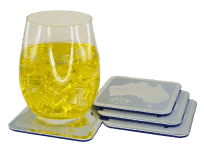
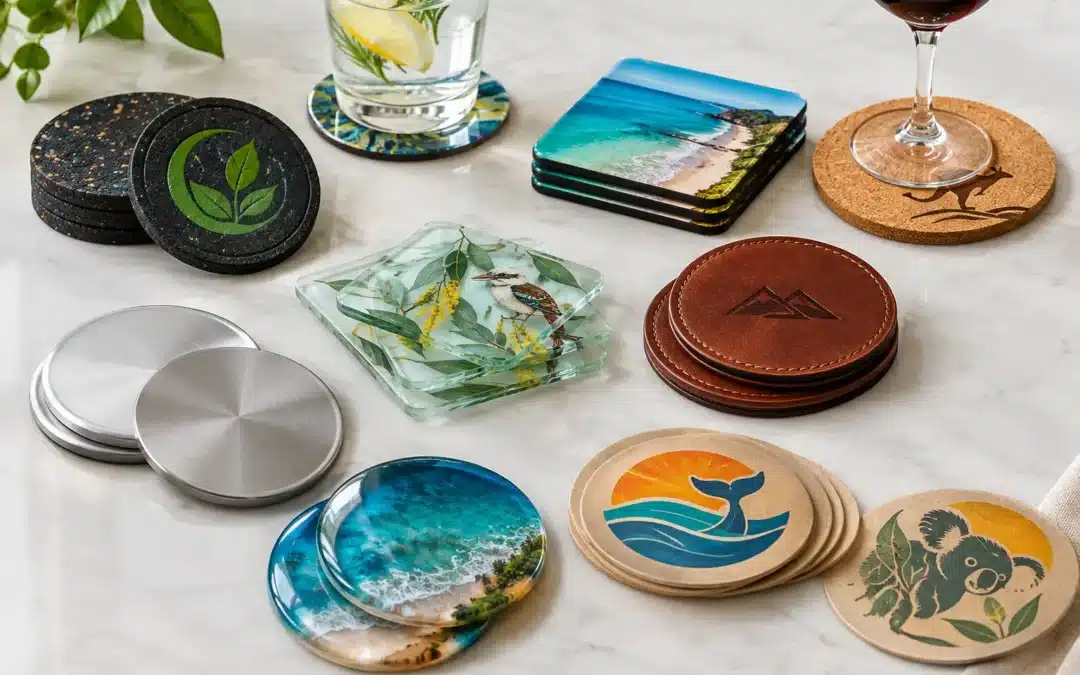
A coaster has a small footprint on a table, but it can carry a very visible part of your brand. When choosing aluminium vs glass coasters, the better option comes down to where they will be used, how they need to look, and what you need them to achieve over time. Aluminium offers a modern, hard-wearing promotional finish. Glass brings weight, clarity and a more elevated presentation.
For hospitality venues, corporate gifting, events and personalised occasions, both materials can create a polished custom product. The practical differences matter, though. A boardroom set may call for a different coaster to a busy bar, wedding reception or large-scale promotional campaign.
Aluminium vs Glass Coasters: The Key Difference
Aluminium coasters are lightweight metal coasters, usually finished with a printed or treated surface that supports custom branding. They have a clean, contemporary appearance and are well suited to logos, event artwork and promotional designs that need a crisp, professional edge. Their slim profile makes them easy to pack, distribute and store.
Glass coasters are heavier and naturally more decorative. They can be clear, frosted, coloured or printed, depending on the required finish. The material has a premium feel in the hand, which makes it particularly effective for client gifts, restaurant tables, home entertaining and special events where the styling of the table is part of the experience.
Neither material is automatically superior. Aluminium generally favours practicality, portability and a modern branded look. Glass favours visual impact and a more substantial finish. The best choice depends on the setting and the expectations of the person using it.
Appearance and Brand Presentation
Your coaster material should support the personality of your business or event. Aluminium has a refined industrial quality that works well for technology businesses, automotive brands, professional services, clubs and contemporary hospitality venues. It can make a simple logo look intentional and sharp without adding unnecessary decoration.
It is also a strong choice when you are working with bold brand colours, clean vector artwork or designs with a metallic theme. Depending on the printing method and finish selected, aluminium can deliver an eye-catching result while keeping the overall product neat and commercial.
Glass is often chosen when the desired impression is more elegant or premium. Its reflective surface catches light, and clear or frosted finishes can complement a carefully styled venue. A wine bar, boutique accommodation provider, wedding planner or property developer may prefer glass because it feels closer to a tableware item than a conventional giveaway.
For branding, consider the level of detail in your artwork. Fine text, subtle tonal elements and light-coloured logos need appropriate contrast to remain legible. A free digital proof is especially valuable here, as it allows you to review logo placement, print size and the way the artwork will sit on the coaster before production begins.
Think about the table, not just the logo
Coasters rarely sit alone. They share space with menus, glassware, candles, flowers, laptops or meeting materials. Aluminium tends to fit naturally into minimalist and corporate environments. Glass can become a visible styling feature, particularly where tables are intentionally dressed for guests.
If the coaster will be used as part of a premium welcome pack or presentation box, the additional weight of glass can add perceived value. If it will be handed out at a trade show, included in a large mailout or supplied across multiple venue locations, aluminium may be easier to manage.
Durability in Real-World Use
Aluminium is a sensible material for regular use because it is light, sturdy and not prone to shattering. It can still scratch or dent if treated roughly, and the printed surface should be protected from harsh abrasives, but it is generally well suited to frequent handling. For busy offices, promotional distribution and hospitality settings where stock is moved often, that resilience is a practical advantage.
Glass requires more care. Quality glass coasters are durable enough for normal table use, but they can chip or break if dropped onto hard flooring or knocked together during clearing and storage. This does not rule them out for commercial use, but it does make the venue and handling routine more relevant.
A restaurant with controlled table service may find glass completely appropriate. A high-turnover pub, outdoor activation or event with large crowds may prefer the lower breakage risk of aluminium. If safety and replacement costs are key concerns, aluminium will often be the safer decision.
Both options benefit from protective backing. Cork, felt or non-slip pads can help keep coasters stable, protect tabletops and reduce noise when they are placed down. Backing also changes the perceived quality of the final product, so it is worth discussing during the quote process rather than treating it as an afterthought.
Cleaning, Moisture and Everyday Maintenance
A coaster needs to cope with condensation, coffee drips and the occasional spill. Aluminium is straightforward to wipe clean with a soft damp cloth. Avoid abrasive scourers or aggressive cleaning chemicals, as these may affect the finish or printed artwork over time.
Glass is also easy to clean and has the advantage of a non-porous surface. It can look particularly fresh after a quick wipe, which is useful in venues where tabletop presentation is checked throughout service. However, fingerprints and water marks may be more noticeable on glass, especially on clear or high-gloss styles.
For either material, the expected use matters. If staff will clean and reset tables repeatedly through a service period, choose a finish that suits the cleaning products and routines already used on site. For home gifts or occasional event use, appearance may take priority over the demands of constant handling.
Budget, Quantities and Distribution
Budget is not simply the unit price. It includes how the coasters are packed, transported, stored and replaced. Aluminium is lighter than glass, which can help when orders need to travel around Australia or be distributed across branches, venues or event attendees. Lower weight can also make it a more practical option for large promotional runs.
Glass may carry a higher handling requirement because it is heavier and needs protective packaging. For smaller, high-value orders, that may be entirely worthwhile. A set of personalised glass coasters for a corporate milestone, executive gift or wedding favour can create a stronger sense of occasion than a lightweight promotional item.
Quantities also influence the decision. If you need thousands of coasters for a campaign, assess whether the product needs to survive transport in bags and cartons, or whether it will be placed directly on tables. Aluminium often makes sense for wide distribution. Glass is often best where the presentation is controlled and each piece is intended to be kept.
When Aluminium Is the Better Choice
Choose aluminium when your priority is a durable, contemporary coaster that is easy to distribute. It is particularly suitable for branded merchandise, staff gifts, conferences, outdoor events, club promotions and venues that want a neat metal finish without the breakage concern of glass.
It is also a good fit when freight, storage or frequent handling are part of the brief. The material can support strong branding while remaining practical for larger quantities and repeat orders.
When Glass Is the Better Choice
Choose glass when table presentation and premium feel are leading priorities. It works well for boutique hospitality, client appreciation gifts, weddings, special occasions, cellar doors and restaurants that want the coaster to feel like part of their serviceware.
Glass can also suit artwork that benefits from a crisp, polished background or a frosted decorative effect. The trade-off is the need for more careful packing, handling and storage, particularly in high-traffic environments.
Get the Material Decision Right Before Production
The most effective custom coaster is one that fits the way it will actually be used. Start with the venue or distribution plan, then consider the desired brand impression, artwork, quantity and available budget. A good supplier should ask these questions early, provide clear material options and supply a digital proof so there are no surprises once production starts.
Drink Coaster helps Australian businesses, venues and event organisers match the right material to the job, with tailored quoting and practical design support. Whether aluminium or glass is the right finish, a well-made coaster gives your brand a useful place at the table long after the first drink is served.