A tasting table can look carefully considered right up until the first chilled white leaves a ring on the timber. Coasters for wine tastings solve that practical problem, but their value goes further. They give every place setting a finished look, help guests follow the tasting order, and put your winery, venue or event branding directly in front of people while they are engaged with the experience.
For cellar doors, restaurants, clubs, corporate hosts and wedding planners, the best coaster is not simply the one that matches the décor. It is the one that suits the glassware, service style, tasting format, budget and quantity required. A well-selected custom coaster earns its place on the table from the first pour to the final tasting note.
Why coasters matter at a wine tasting
Wine tastings ask more of a table than an ordinary drinks service. Guests may move through several wines in quick succession, compare colours, refer to tasting notes and rest their glasses between pours. Condensation from sparkling wine, rosé and chilled whites can quickly affect menus, tablecloths, timber bars and printed collateral.
A coaster creates a defined spot for each glass. This makes shared tables feel more organised and reduces the small spills and water marks that distract from a polished service. At a guided tasting, a branded coaster can also make the setup easier to read, particularly when it includes tasting numbers, a subtle varietal cue or a simple prompt to scan a code supplied separately in the event materials.
There is also a commercial benefit. Unlike a flyer that may be set aside, a coaster stays under the guest’s hand and glass for much of the session. It can carry a logo, campaign line, venue name or event date without feeling intrusive. That repeated visibility is why coasters work well for wine launches, trade tastings, charity dinners, winery memberships and hospitality promotions.
Choosing coasters for wine tastings by material
The right material depends on whether your priority is absorbency, presentation, reuse or a distinctive brand statement. There is no single best option for every tasting.
Cardboard for high-volume tastings
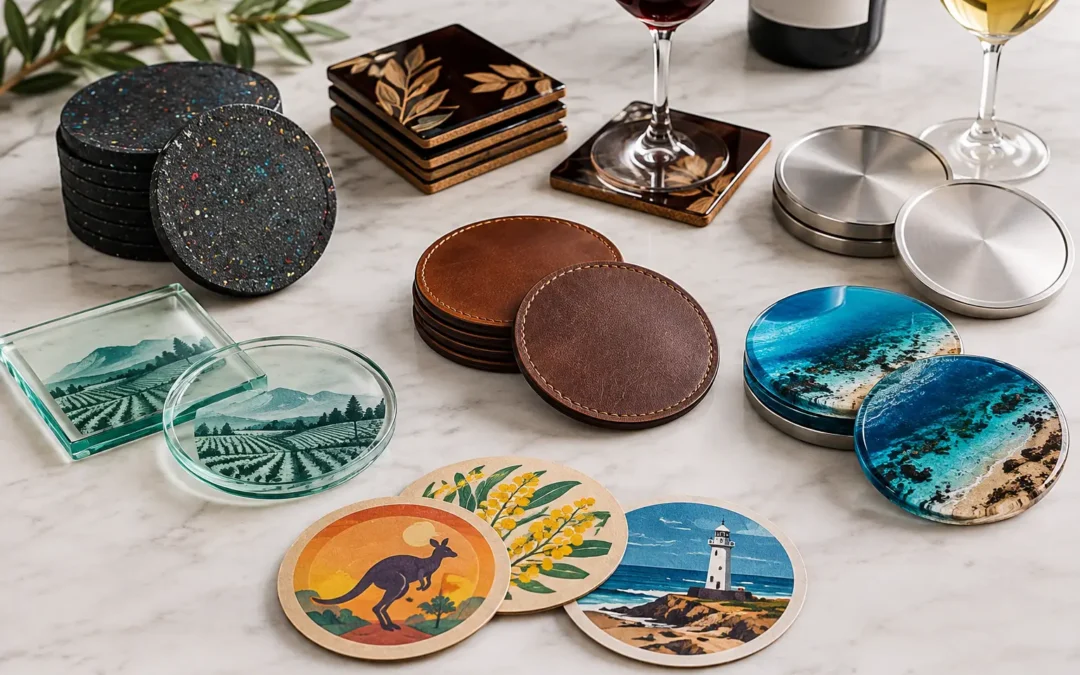
Printed cardboard coasters are a practical choice for busy cellar doors, festivals, functions and promotional tastings. They are lightweight, economical and well suited to full-colour artwork. Absorbent board helps manage condensation, which matters when tables will carry chilled glasses throughout the day.
Cardboard is particularly useful when each event needs its own branding or when you plan to refresh creative regularly. It is not designed for years of repeat use, but that is often a sensible trade-off when quantities are high and the event is short. A quality print and clear artwork can still give cardboard a professional finish.
Cork and bamboo for a natural setting
Cork and bamboo coasters suit wineries, artisan producers and venues that want a warm, natural texture on the table. Cork has a familiar tactile feel and handles casual tasting environments well. Bamboo offers a firmer, more structured look that can complement contemporary fit-outs and gift packs.
These materials work especially well with restrained branding. A clean logo, winery name or simple mark can feel more premium than a crowded design. Keep in mind that fine detail and large areas of colour may reproduce differently across natural materials, so a digital proof is valuable before production begins.
Rubber for durability and grip
Recycled tyre rubber and PVC rubber coasters are made for repeat use in active hospitality settings. They offer good grip, cope well with frequent handling and are less likely to slide on a busy bar. Recycled tyre rubber also brings a practical sustainability story to a branded item that may otherwise be overlooked.
Rubber is a strong option for winery clubs, bar tastings, outdoor events and venues that want coasters to remain in service long after a campaign finishes. Its heavier feel can signal durability, although it may not suit a formal fine-dining setting where a lighter or more refined material is preferred.
Acrylic, glass and metal for premium presentation
Acrylic, glass, stainless steel and aluminium coasters can lift the perceived value of a private tasting, corporate gift or high-end launch. They suit venues where the table setting is part of the brand experience and where reusable pieces are likely to be kept.
These materials are less absorbent than cardboard or cork, so they are best selected with the service conditions in mind. For a flight built around room-temperature reds, presentation may be the priority. For sparkling wine on a humid summer afternoon, a more absorbent material could be the better operational choice. Premium does not always mean most suitable.
Design a coaster that supports the tasting
The most effective tasting coaster design is clear at a glance. It should not compete with the wine label, tasting sheet or table styling. Start with the purpose: is the coaster mainly protecting surfaces, promoting a brand, helping guests identify a wine sequence, or serving as a keepsake?
For a single-producer tasting, a logo and concise brand message may be all that is needed. For a structured flight, numbered positions or small printed identifiers can help guests and staff keep track of the order. If several wines will sit on the table at once, consider whether a larger mat-style coaster or a set of coordinated individual coasters will make the experience easier to manage.
Artwork needs enough contrast to remain visible beneath a glass. Fine text, pale colours and intricate lines can disappear once condensation or reflections are involved. Strong logos, legible type and a considered use of negative space generally perform better than trying to fit every product detail into a small circle or square.
A free digital proof should be part of the process. It gives you the chance to check logo placement, spelling, colours, dimensions and print suitability before the order moves ahead. For event-specific coasters, confirm the date and venue details with the same care you would give an invitation or menu.
Match the coaster to the service format
A seated wine dinner, casual cellar door tasting and trade showcase have different demands. At a seated dinner, coasters need to complement the tableware and remain discreet as glasses change through the courses. At a cellar door, they may need to withstand frequent wiping and repeated use across multiple sessions. At a trade tasting, they should be easy to distribute, affordable at volume and noticeable enough to reinforce the exhibitor brand.
Outdoor tastings require extra thought. Wind, uneven tables and colder drink temperatures can all affect performance. Heavier rubber, cork or bamboo options may be more stable than lightweight board, while a coaster with a non-slip base can reduce movement on polished surfaces.
For weddings and private celebrations, personalisation can turn a functional item into part of the occasion. Names, dates, a monogram or a small illustration can work beautifully, provided the design remains easy to read. If guests are expected to take them home, invest in a material that feels worth keeping.
Plan quantities, timing and budget early
Order quantity should account for more than guest numbers. Consider spare tables, breakages, staff use, multiple sessions and a small buffer for last-minute additions. If the tasting includes several tables or venues, packing coasters by group can make setup faster and reduce confusion on the day.
Lead time also affects the choices available. Custom manufacturing involves artwork approval, production and delivery, so leaving the decision until the final week can limit material and finish options. Fast turnaround may be possible, but an early brief gives more room to compare prices and choose the best fit rather than the only option available.
When requesting a quote, provide the intended quantity, preferred material, coaster shape or size, artwork requirements and required delivery date. Mention how the coasters will be used. A supplier can give more useful guidance when they know whether the job is for a one-night corporate tasting, a year-round cellar door program or a gift pack for members.
Make the table feel considered
The strongest wine tastings make practical details feel effortless. A coaster protects the surface, gives each glass a place and carries the brand without interrupting the conversation about the wine. With the right material, clear artwork and realistic production timing, it becomes a small but highly visible part of a professional tasting experience.
Drink Coaster can help Australian venues, organisers and businesses select custom coasters that fit the occasion, budget and brand presentation, supported by clear communication and a free digital proof before production.