A coaster can carry a logo for years, or look tired after a single busy service. That difference often comes down to the finish, not just the artwork. This guide to branded coaster finishes explains how surface texture, print protection, edges and material work together, so you can specify custom coasters that suit your venue, campaign or event rather than simply choosing the lowest unit price.
For a pub, café or club, the right finish needs to handle moisture, wiping and constant glass movement. For a conference, wedding or product launch, presentation and colour impact may matter more than long-term reuse. Getting clear on that purpose first makes every later decision easier.
What a coaster finish actually changes
A finish is the final surface treatment and presentation of the coaster. It affects how the product feels in the hand, how artwork appears under venue lighting, how well it resists marks, and whether it looks formal, natural, premium or promotional.
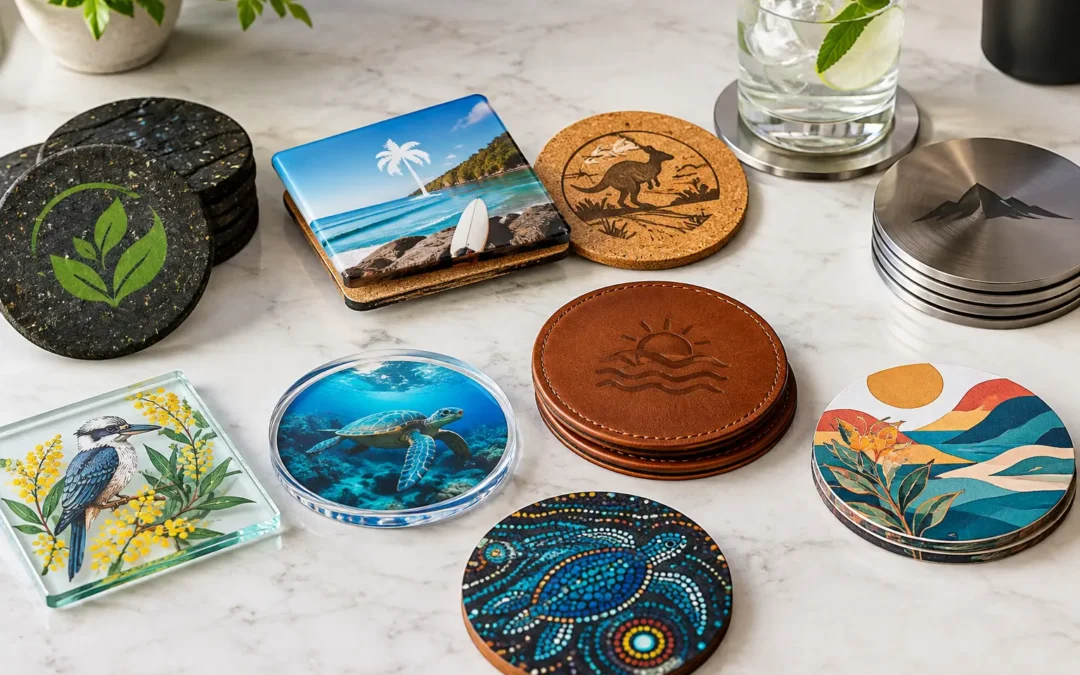
The same logo can look very different on a matte cardboard coaster, a gloss acrylic coaster or an engraved leather piece. Gloss makes colours appear more vivid and polished, while matte reduces reflections and gives fine text a calmer, more contemporary appearance. A natural finish on cork, bamboo or recycled tyre rubber brings texture into the design, which can support an environmental, rustic or industrial brand direction.
Finish should not be treated as an afterthought. It needs to match the material, decoration method and expected use. A highly detailed photographic design may be better suited to a smooth printed surface, for example, while a bold one-colour mark can look excellent when debossed into leather or engraved onto metal.
Start with the way the coaster will be used
Commercial hospitality use places different demands on coasters than a one-night function. Consider how often they will be handled, whether staff will wipe tables between sittings, how much condensation they will encounter, and whether customers are likely to take them home.
Cardboard or pulpboard coasters are a practical choice for promotions, large events and high-volume bar service. They provide a familiar absorbent surface and can be printed with strong branding, but they are generally designed for shorter-term use. Their finish is about print clarity and absorbency rather than being waterproof.
For reusable venue coasters, rubber, PVC, acrylic, stainless steel, aluminium, glass and resin options offer greater durability. These materials can withstand repeated cleaning when correctly produced, though each has a distinct look and feel. Recycled tyre rubber is especially suited to busy bars and casual venues because it is grippy, substantial and forgiving of regular use. Acrylic and resin can create a cleaner, more decorative presentation, while metal and glass suit premium settings where weight and detail are part of the experience.
Personalised coasters for weddings, milestone celebrations and gifts sit somewhere in between. They often need a polished appearance and a finish that photographs well, without requiring years of commercial wear.
Matte, gloss and natural textures
Matte finishes for understated branding
A matte finish has little shine, reducing glare from overhead lights and making it easier to read detailed copy. It works well for corporate identity systems, minimalist artwork, dark colour palettes and venues with a refined or modern fit-out.
Matte surfaces can show scuffs differently from gloss, particularly on pale colours, so the material still matters. On cardboard, a matte print can look considered and tactile. On reusable materials, it may provide a softer, less promotional look. Ask for a digital proof that reflects the intended artwork placement, then discuss the material sample or finish expectation if colour matching is critical.
Gloss finishes for colour and impact
Gloss is often chosen when the artwork needs to be noticed quickly. It gives printed colours more visual energy and can make gradients, photographs and bright campaign designs feel sharper. This makes it a strong option for product launches, entertainment venues, beverage promotions and event sponsorships.
The trade-off is reflection. Under direct lighting, a gloss surface can catch glare, and fingerprints may be more visible on some hard materials. That is rarely a concern for a short-term promotional coaster, but it is worth considering for premium table settings and dark solid-colour designs.
Natural finishes that add character
Cork, bamboo, leather and recycled rubber have inherent variation. Their grain, pores and texture are part of the result, not a production fault. These options make an effective choice for brands that want warmth, sustainability cues or a more handcrafted presentation.
Natural materials are not always best for small, intricate artwork. Fine lines and tiny reversed text can lose definition against a textured surface. Simplifying the logo, increasing line weight or using a single strong mark usually produces a better result than forcing detailed artwork onto the wrong finish.
Print and decoration methods affect the final result
The decoration method is closely tied to the finish because it determines how the artwork sits on the coaster. Printed designs usually offer the widest colour range and are best when you need logos, photographs, multiple brand colours or campaign messaging. The quality of supplied artwork has a direct effect on edge sharpness and colour consistency.
Screen printing is well suited to bold spot-colour designs, especially where solid colours and repeatable branding are the priority. Digital printing is useful for detailed, full-colour artwork and shorter-run designs where variation is required. Depending on the coaster material, other options may include UV printing, laser engraving, embossing, debossing or raised moulded branding.
Engraving creates a permanent, restrained finish on materials such as metal, bamboo and leather. It does not reproduce full colour, but it can look more premium than a printed logo and holds up well in reusable applications. Debossing presses the design into the surface, creating depth you can feel. It is particularly effective for leather-style coasters, corporate gifts and hospitality settings where subtle branding carries more weight than a large promotional message.
Raised PVC rubber designs offer a different finish again. They create dimension, strong colour blocking and a tactile feel, making them useful for bold logos and casual campaigns. They are less suited to fine photographic detail, but they are highly visible and practical around drinks.
Protection, absorbency and cleanability
There is no single ‘best’ protective finish because waterproof and absorbent are opposing requirements. A cardboard coaster needs to absorb condensation so the glass does not slide and water does not run across the table. A coated hard coaster repels moisture and can be wiped clean, but it will not absorb spills in the same way.
For high-turnover hospitality venues, choose based on your operating routine. If coasters are disposable or replaced regularly, absorbent cardboard is efficient and cost-effective. If tables are cleaned throughout service and the coaster is intended to stay in use, a wipe-clean rubber, acrylic, metal, glass or resin finish is usually more practical.
Check the underside as well. A smooth hard coaster may benefit from a non-slip backing or a material with natural grip, particularly on polished timber, stone or glass tables. This detail protects furniture and helps prevent the coaster moving when a drink is placed down.
Edges, thickness and shape are part of the finish
Customers notice edges every time they pick up a coaster. Clean die-cut edges suit cardboard coasters, while rounded corners can soften a square design and reduce wear. On hard coasters, bevelled, polished or rounded edges create a more refined feel than a sharp profile.
Thickness also changes perceived value. A thin coaster can be ideal for a large promotional giveaway or mail-out. A thicker rubber, cork, resin or bamboo coaster feels more substantial and is better suited to repeat use, corporate gifting or a venue that wants its tables to look intentionally styled.
Round coasters remain the easiest fit for most drinkware, but square, rounded-square, hexagonal and custom shapes can reinforce a brand. Custom shapes should be used with care. They work best when the silhouette is recognisable and still provides a stable base for a glass. An elaborate shape may look memorable in a proof but be less practical during busy service.
How to choose the right branded coaster finish
Start with the setting and the expected lifespan, then work backwards to the material and decoration. A busy sports club may prioritise grip, easy cleaning and bold branding. A boutique hotel may prefer engraved metal, leather or polished resin. A conference organiser might choose full-colour cardboard coasters to carry sponsor messages at scale, while a wedding planner may favour cork or acrylic for a personalised keepsake.
Budget matters, but value is better measured by cost per useful impression. A low-cost coaster that is replaced after one use can be the right decision for a crowded event. A higher-cost reusable coaster can offer better value for a venue where guests see it every week. Quantity, artwork complexity, number of print colours, shape and turnaround time will all influence the final quote.
Provide vector logo files where available, along with any brand colour references and required wording. If your design includes small text, fine lines or a QR code, say so early. The artwork can then be assessed against the chosen material and finish before production. A free digital proof is the practical checkpoint for confirming layout, spelling, logo size and visual balance, but it should also prompt a conversation about real-world use.
A well-chosen coaster finish should make the branding feel at home on the table. Specify it around the setting, the drink service and the impression you want people to take away, then let the material and decoration method do the work.