When you are ordering hundreds or thousands of coasters, small decisions quickly become expensive ones. A logo that looked fine on screen may print too small. A material that suits a wedding may not suit a busy pub. That is why a clear guide to bulk coaster orders matters – not just for pricing, but for getting a finished product that works in the real world.
Bulk coaster buying usually starts with a simple question: how many do we need? In practice, that question sits alongside several others. Where will the coasters be used? How long do they need to last? Are they primarily for branding, protection, event styling, or all three? Once you answer those basics, the right product becomes much easier to specify.
What bulk coaster orders really involve
A bulk order is not only about volume. It is about matching quantity, material, print method and delivery timing to the job at hand. A nightclub running a national promotion has different requirements from a brewery launching a limited release, and both are different again from a couple ordering custom coasters for a wedding reception.
For hospitality venues, absorbency and presentation often matter most. Cardboard and pulpboard coasters are common because they are affordable, print well and suit high-turnover service environments. For corporate gifting, premium materials such as cork, leather, bamboo, acrylic or stainless steel can make more sense because the coaster is expected to last longer and carry a more polished brand impression.
This is where many buyers lose time. They compare prices before they have properly narrowed down the specification. The cheapest option on paper may not be the best value if it wears out too quickly, does not suit the venue, or creates artwork limitations.
A guide to bulk coaster orders by use case
The fastest way to get a better result is to choose the product around the use case rather than the unit price alone.
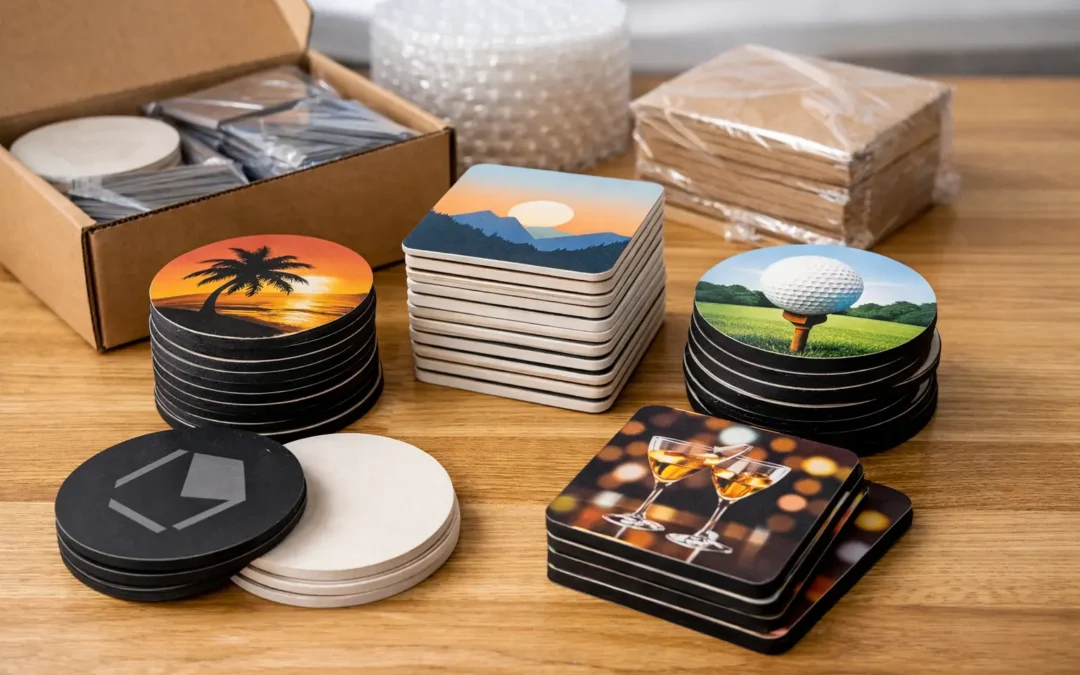
If you are ordering for pubs, bars, clubs or festivals, disposable or semi-disposable styles often make the most commercial sense. Cardboard coasters are cost-effective in higher volumes, easy to distribute and ideal for promotions where reach matters more than longevity. They also work well for campaign-based branding, seasonal messaging and event sponsorships.
If the order is for restaurants, hotels, boardrooms or premium client packs, reusable materials can justify the extra spend. Cork offers a natural look and solid practicality. Acrylic gives you a cleaner, more contemporary finish. Leather and bamboo tend to suit premium branding and venues where presentation is part of the experience. Glass, resin and metal styles can be striking, but they need more careful handling and a larger budget.
For weddings, milestone events and private functions, the decision often comes down to appearance and keepsake value. A personalised coaster that guests take home has a different role from one used for a one-night event and then discarded. That usually shifts the balance towards thicker stock, higher-end finishes or materials with more visual presence.
Choosing the right material for your order
Material selection affects price, print outcome, durability and freight. It also affects how your brand is perceived.
Cardboard remains one of the strongest options for large promotional runs because it is affordable and versatile. It is well suited to campaigns, venues and events where coasters are used heavily and replaced often. Cork provides a more premium natural finish while still being practical for regular use. PVC rubber is durable and useful for branded merchandise that needs to hold shape and resist spills over time.
Acrylic, aluminium and stainless steel create a more durable and refined product, but they are not always the right fit for high-volume service use. They can be excellent for corporate gifting, VIP areas, branded merchandise packs or special activations. Bamboo and leather sit in a similar category – strong on presentation, better suited to premium positioning, and generally more expensive per unit.
There is no universal best material. It depends on whether you are trying to maximise reach, create a lasting branded item, or strike a balance between the two.
Artwork can make or break bulk coaster orders
Bulk print runs reward clear, production-ready artwork. They do not reward guesswork.
The most common issue is overcomplicating the design. Coasters have limited space, and they are viewed quickly – often from arm’s length, on a dim table, with a drink already sitting on top of them. A simple logo, readable text and strong contrast usually outperform crowded layouts. If you are adding a QR code, event date or campaign line, spacing becomes even more important.
Print method and material also affect what is possible. Fine detail that works on smooth acrylic may not translate the same way on absorbent board. Metallic finishes may suit one brand perfectly and look excessive on another. Shape matters too. Round coasters feel classic and suit many hospitality settings, while square or custom shapes can help a promotion stand out. The trade-off is that custom shapes may affect tooling, cost and lead time.
This is why a free digital proof is valuable. It gives buyers a chance to check layout, sizing and branding before production starts. For larger orders, that step is not a formality. It is part of controlling risk.
Quantities, pricing and where the savings really are
Bulk pricing usually improves as volumes increase, but the best order quantity is not always the biggest one you can afford.
If you order too few, your unit cost may be higher and you may run out mid-campaign. If you order too many, you tie up budget, storage space and working capital in stock that may date quickly or sit unused. This is especially relevant for coasters tied to seasonal offers, event dates, venue refurbishments or product launches.
The better approach is to estimate usage honestly. A venue group may need split deliveries or repeat runs rather than one oversized order. An events team might build in a contingency quantity for breakage, walk-ins or sponsor extras. A marketing department may want one large run if the artwork is evergreen, but shorter runs if messaging changes regularly.
Good suppliers will help you compare those scenarios rather than push a one-size-fits-all quantity.
Lead times and planning for Australian buyers
Lead time matters more than many people think, particularly when artwork approval, freight and event deadlines all need to align.
For bulk coaster orders, timing often depends on the material, production method and quantity. Standard printed board coasters may move faster than premium custom-fabricated options. Special finishes, unusual shapes and higher volumes can all extend production time. Freight timing across Australia should also be part of the plan, especially for regional deliveries or multi-site rollouts.
The safest approach is to work backwards from the in-hand date, not the event date. If your launch is on a Friday, you do not want the stock arriving on Friday morning. Build in time for proof approval, production, dispatch and a sensible buffer. Fast turnaround is valuable, but only if the artwork and specifications are settled early.
What to ask before you request a quote
A good quote process should simplify the job, not make it harder. Before requesting pricing, it helps to have the main details ready: quantity, preferred material, size, shape, artwork status, delivery postcode and deadline. If you are unsure on any of those, say so. It is usually better to ask for guidance than guess and end up comparing unsuitable options.
This is also the stage to raise practical concerns. Will the coasters be used indoors or outdoors? Are they meant to be disposable or retained? Do you need one design or multiple versions? Is this a straightforward reorder or a first-time concept that needs more support? Clear answers lead to more accurate pricing and fewer production delays.
For many buyers, service matters as much as product range. Experience, responsiveness and local support become especially valuable when timelines are tight or requirements are still evolving. That is where an Australian supplier with broad material options and daily communication can make the process much more manageable.
A guide to bulk coaster orders without wasted budget
The strongest bulk orders are usually the simplest. They start with a clear purpose, choose a material that suits the actual use, keep the artwork clean and allow enough time for proofing and production. From there, pricing becomes easier to assess because you are comparing options that genuinely fit the brief.
At Drink Coaster, we see this every day across hospitality, events, clubs, corporate promotions and private functions. Buyers rarely need more complexity. They need a dependable process, honest guidance and a finished product that arrives on time and presents well.
If you are planning a large coaster order, the smart move is to make the early decisions carefully. A little clarity upfront usually saves far more than it costs, and it gives you a better result when the coasters are finally on the table.