A coaster gets handled, noticed and reused in a way most small-format promo items do not. That is why logo coasters remain one of the most practical branding tools for venues, events, offices and product launches. They protect surfaces, tidy up presentation and keep your brand in front of customers at the exact moment they are eating, drinking or settling into a conversation.
For hospitality operators and marketing teams, that matters. A branded coaster is not just a printed circle or square under a glass. It shapes how a table setting feels, how polished a bar looks and how consistently a brand shows up across the customer experience. When the material, print method and finish are chosen properly, coasters stop feeling like an afterthought and start working as part of the brand itself.
Why logo coasters still earn their place
Some promotional products disappear into drawers. Others are used once and forgotten. Coasters tend to perform better because they have an obvious job to do. In pubs, clubs, cafes, restaurants and function spaces, they are useful from the moment they hit the table. In offices and meeting rooms, they protect furniture and lift presentation without adding clutter. At weddings, launches and private events, they can carry names, dates, logos or messages in a way that feels considered rather than forced.
That utility gives coasters a different kind of value. The branding is seen repeatedly, often by more than one person, and usually in a social setting where people are already engaged. A coaster under a cocktail at a launch event or under a schooner at the local can do more for recall than many low-cost giveaways because it sits in front of people for longer.
There is also a practical buying advantage. Compared with larger branded products, logo coasters are generally cost-effective to produce, easier to distribute and simpler to tailor to specific campaigns. You can run them as a broad brand item, a seasonal promotion, a venue-specific piece or a short-run event accessory without overcomplicating the order.
Choosing the right logo coasters for the job
The best coaster is not always the cheapest one, and it is not always the most premium either. It depends on where it will be used, how long it needs to last and what sort of impression you want it to create.
Cardboard coasters are a strong option for bars, breweries, large events and campaign-based promotions. They are lightweight, economical and ideal when you need volume. They also suit short-term use where absorbency matters. If your focus is fast turnaround and broad reach, cardboard often makes sense.
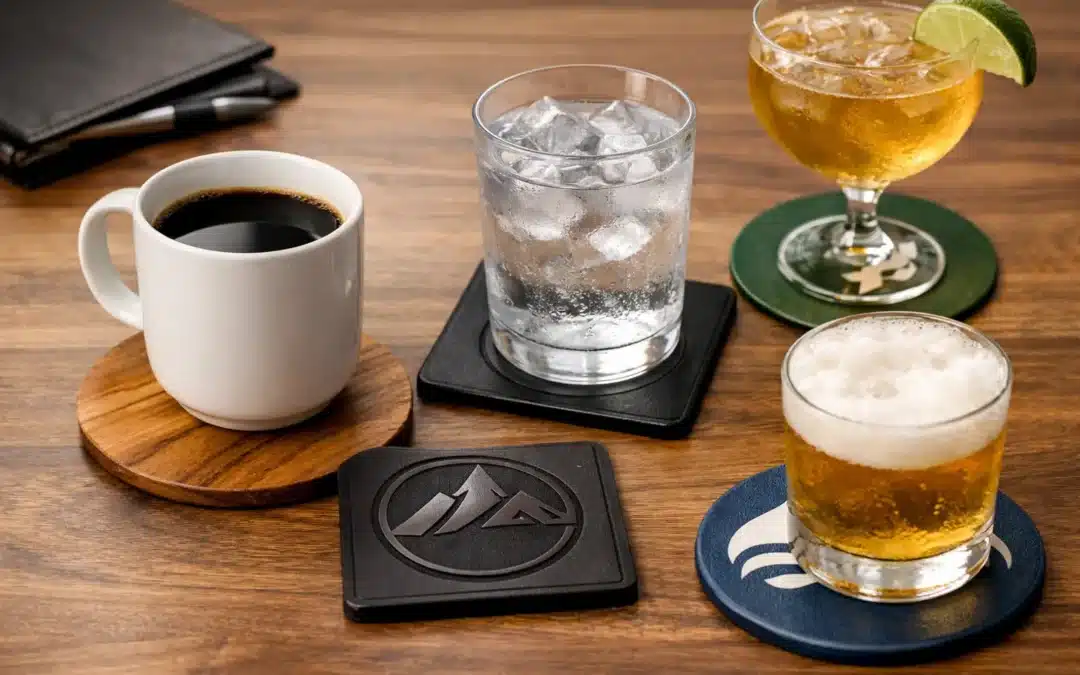
Cork, bamboo and leather sit at the other end of the scale. These materials feel more permanent and tend to suit corporate gifting, meeting rooms, cellar doors and higher-end hospitality settings. They send a more polished message, but they also come with a different price point. If your brand leans premium, that trade-off can be worthwhile.
Acrylic, stainless steel, aluminium and glass bring a cleaner, more durable look. These options work well where long-term reuse matters or where the visual finish needs to be sharp and modern. They are popular for branded office settings, clubs and promotional packs. The main consideration is fit for purpose. Hard-surface coasters can look impressive, but they may not suit every service environment, especially if absorbency is a priority.
PVC rubber and resin styles are useful when you want something more distinctive, durable or tactile. They can hold shape well, cope with repeated use and stand out in settings where a standard printed coaster may get overlooked. For clubs, sports promotions and branded merchandise ranges, they can offer a point of difference.
Material affects more than appearance
Buyers often start with the artwork, but material should be decided just as early. The same logo will present very differently on pulp board, bamboo or metal. Fine details, gradients and small text may reproduce beautifully on one surface and lose impact on another.
That is why a digital proof matters. A proper proof helps you see whether the logo needs resizing, whether the contrast is strong enough and whether the print area works with the chosen shape. It also reduces the risk of production surprises. For procurement teams and event organisers working to fixed timelines, this step is not optional. It is part of getting the result right the first time.
Durability is another factor that should be matched to use. If the coasters are for a one-night event, there is little value in paying for materials designed to last years. If they are for permanent use in a boardroom or premium venue, cheap stock can quickly look tired. The smartest approach is usually to align the finish with the environment rather than chasing the lowest unit price.
Design choices that improve results
Good coaster design is usually simpler than people expect. A strong logo, clear contrast and enough breathing room around the artwork will almost always outperform a crowded layout. The coaster itself is small, and it is viewed casually. That means the message needs to be immediate.
If the main goal is brand recognition, keep the logo prominent and avoid filling every corner. If the coaster is tied to an event, a launch or a seasonal campaign, a secondary line of text can work well, but only if it stays readable. Dates, taglines and contact details need restraint. Trying to force too much information onto a coaster often weakens the whole piece.
Shape also plays a role. Round coasters feel classic and are often the easiest choice for hospitality use. Square styles can look more contemporary and may suit corporate branding better. Custom shapes can be effective for campaigns or novelty value, but they should still stack, store and handle well. A smart-looking coaster that is awkward in service can become more trouble than it is worth.
Colour selection needs the same practical mindset. Brand colours should reproduce cleanly on the chosen material, and dark backgrounds or metallic finishes may change how logos appear. What looks perfect on a screen may need adjustment in production. This is another reason experienced design support is valuable, especially when multiple materials are being considered.
Where branded coasters make the biggest impact
Hospitality is the most obvious setting, but it is not the only one. Logo coasters work particularly well anywhere people gather around drinks, tables or waiting areas. That includes tasting rooms, reception spaces, conference rooms, promotional events, expo stands and gift packs.
For clubs and venues, they help create a more complete branded environment. For marketing teams, they provide a low-friction way to support a campaign or sponsorship. For event organisers, they can tie together styling, signage and table presentation without stretching the budget. Even for personal occasions such as weddings or milestone celebrations, custom coasters can lift the finish of the event while giving guests something practical to keep.
The key is relevance. A premium leather coaster may suit a corporate settlement gift, but it would be excessive for a high-volume festival bar. A disposable board coaster might be perfect for a beer launch, but underwhelming for a luxury brand activation. The right choice depends on context.
What to look for in a supplier
When ordering custom coasters, product range matters because one material rarely suits every brief. A supplier with multiple options can guide you towards what works for your budget, artwork and deadline rather than trying to force every job into the same format.
Responsiveness matters just as much. Many coaster orders are tied to opening dates, campaigns, venue launches and fixed event schedules. Slow quoting, unclear artwork advice or patchy communication can create unnecessary delays. A dependable supplier should be able to explain material options clearly, provide a free digital proof and keep the process straightforward from first enquiry through to production.
Experience is another advantage that buyers should not overlook. Coasters may seem simple, but there is a difference between placing a basic print order and managing a branded product properly. Artwork setup, print quality, finish selection and turnaround planning all affect the final result. An Australian-owned and operated supplier with long-standing promotional product experience can often spot issues early and help you avoid wasted time.
At Drink Coaster, that practical support is part of the value. Buyers are not just choosing from a catalogue. They are getting guidance on material, presentation and production so the finished coaster suits the application, not just the artwork file.
A small product with real commercial value
Logo coasters work best when they are treated as part of the brand experience rather than a cheap extra. They carry your identity into bars, boardrooms, events and homes in a format people actually use. That gives them staying power.
If you are planning a venue fit-out, campaign, event or branded merchandise run, start with the setting, the budget and the result you want the coaster to achieve. The right choice is usually clearer from there, and a well-made coaster will keep doing its job long after the first drink is served.