A coaster gets a few quiet seconds of attention every time a drink is set down. In a busy bar, at a corporate function, during a club fundraiser or on a wedding table, that small square or circle can do more brand work than people expect. Printed coasters are one of the few promotional products that sit directly in front of guests while serving a practical purpose, which is why they remain a smart choice for Australian businesses and event planners.
The value is simple. A well-made coaster protects surfaces, supports presentation and keeps a logo, message or design visible without feeling forced. That matters if you are fitting out a hospitality venue, planning an activation, ordering merchandise for a campaign or styling an event where details need to look polished.
Why printed coasters still earn their place
Some promotional products are easy to hand out but easy to forget. Coasters are different because they are used in the moment. In pubs, bars, restaurants and clubs, they become part of service. At conferences and launches, they help tie the whole table setting back to the brand. For weddings and private events, they can double as décor and keepsakes.
That practical role is what gives printed coasters staying power. People pick them up, move them, read them and often keep them on the table for the full event. Compared with disposable print that gets glanced at once, a coaster can hold attention for longer and in a more natural way.
There is also a cost advantage. If you need a branded item that works across large quantities, coasters can be budget-friendly without looking cheap. The result depends on material, print method and artwork, but there are options for both tight campaign budgets and premium presentation.
Choosing the right printed coasters for the job
The best coaster is not always the fanciest one. It depends on where it will be used, how long it needs to last and what impression you want to leave.
Cardboard for hospitality and promotions
Cardboard coasters are a strong choice for bars, breweries, pubs, festivals and high-volume events. They are absorbent, lightweight and economical, which makes them ideal when you need larger runs. They are also well suited to short-term promotions, seasonal campaigns and table service where stock moves quickly.
The trade-off is durability. Cardboard is designed to perform well during use, but it will not offer the same lifespan as harder materials. If your priority is repeated use over months or years, another option may suit better.
Acrylic, metal and glass for a premium finish
If you want coasters that feel substantial, acrylic, stainless steel, aluminium and glass create a more permanent impression. These materials work well in corporate settings, premium gifting, VIP areas and branded fit-outs where presentation matters as much as function.
Hardwearing materials can support crisp branding and a cleaner, more polished look. They are often chosen when the coaster is expected to become part of the venue or office environment rather than a one-off event item. The main consideration is budget, as premium materials usually come at a higher unit cost.
Cork, bamboo and leather for warmth and texture
Some brands need less shine and more character. Cork and bamboo bring a natural, tactile finish that suits cafés, boutique venues, eco-conscious campaigns and businesses that want a softer visual style. Leather offers a more refined look and can suit gifting, clubs and hospitality spaces aiming for a classic feel.
These materials can help a design stand out for the right reasons, but artwork needs to be prepared with the material in mind. Fine details, light colours or low-contrast logos may behave differently on textured surfaces.
PVC, resin and LED for novelty or impact
For promotions that need a more distinctive edge, PVC rubber, resin and LED coasters can create a stronger visual effect. These are often used for brand activations, themed venues, events and merchandise where memorability matters.
This is where purpose becomes especially important. A creative material can lift the concept, but only if it still feels aligned with the brand. If the audience is corporate and conservative, novelty may not land as well as a clean premium finish.
Good design makes the difference
A coaster has limited space, so artwork needs discipline. The strongest printed coasters usually keep the message focused. That might be a logo, a short tagline, event date, product name or QR-style visual cue if the design allows for it. Trying to fit too much onto a small format usually weakens the result.
Contrast matters. If the coaster will sit in dim venue lighting or under glassware with condensation, artwork needs to remain legible at a glance. Bold logos, clear typography and simple layouts generally perform better than busy designs.
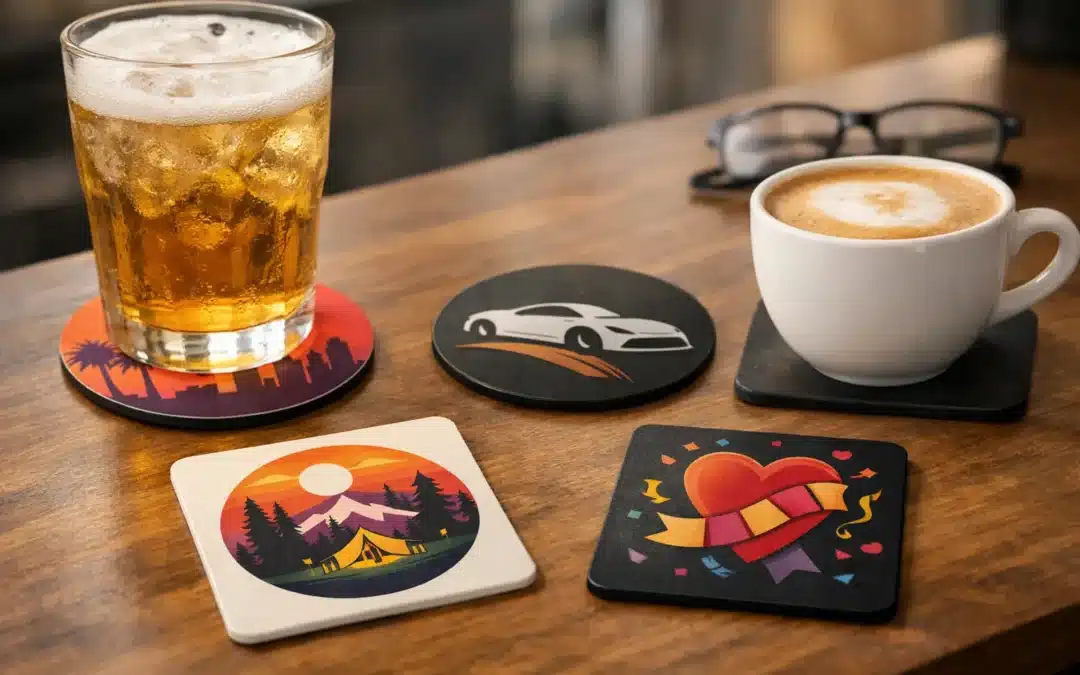
Shape and edge treatment also play a part. Round coasters feel familiar and versatile, while square designs can look sharper and more modern. Neither is automatically better. It depends on the brand identity, print area and how the coaster will be used alongside menus, table numbers or other promotional material.
This is where a free digital proof becomes valuable. It gives buyers a chance to check scale, spacing and readability before production starts. Small adjustments at proof stage often make a noticeable difference to the finished product.
Matching the order to your budget and timeline
For procurement teams and venue operators, the real question is rarely just which coaster looks best. It is which option fits budget, quantity and timing without creating unnecessary back and forth.
If you are ordering for a national campaign, a chain of venues or a major event, consistency matters. Material choice, print quality and colour accuracy need to be controlled properly across the full run. If you are ordering for a wedding, party or small business launch, flexibility and guidance may matter more than scale.
Fast turnaround is important, but so is getting the brief right the first time. Rushed artwork, unclear quantity planning or selecting a material that does not suit the use case can slow a project down later. An experienced supplier should help narrow the options early, not overwhelm you with every possible variation.
Australian buyers also tend to value straightforward service. Clear quoting, realistic lead times and regular communication can matter just as much as the product itself, especially when an event date is fixed and there is little room for delay.
Where printed coasters deliver the best return
Printed coasters perform best where people gather around drinks and tables, but the strongest return comes when they support a wider goal. In hospitality, they reinforce brand identity and improve presentation during service. In events, they help tie tables, bars and lounge areas back to sponsors or organisers. In corporate settings, they can turn a simple branded item into something staff and clients actually use.
For consumer occasions, the return is not always measured in sales. At weddings, milestone birthdays and private events, personalised coasters add finish to the setup and often become a keepsake. In those cases, appearance and material quality can matter more than promotional reach.
There is also a practical branding benefit that many buyers overlook. Coasters sit at eye level during conversations. That repeated passive exposure can support recall in a way that feels more natural than overt advertising. It is subtle, but effective.
What to ask before requesting a quote
Before placing an order, it helps to be clear on a few basics. Think about where the coasters will be used, whether they are disposable or reusable, what quantity you need, and how your artwork should appear on the chosen material. If your logo has fine detail or specific brand colours, mention that early.
It is also worth considering storage, transport and handling. Large hospitality runs need practical packaging. Event orders need delivery timed to setup schedules. Premium materials may need more care than cardboard stock. These details affect the buying decision more than many people expect.
For buyers who want support rather than guesswork, working with an experienced Australian supplier can simplify the process. Drink Coaster, for example, offers a broad material range, free digital proofs and tailored guidance for both commercial and personal orders, which helps take uncertainty out of custom production.
Printed coasters are small, but they are not minor. When the material suits the setting and the artwork is handled properly, they add value at the exact point people are already engaged – around a drink, at a table, in the middle of the experience. If you want branded merchandise that looks considered and gets used, this is one of the smartest places to start.