Spilled schooners, wet glass rings and a crowded service area can make a bar look tired fast. That is exactly where rubber bar runner coasters earn their keep. They are practical, hard-wearing and highly visible, which makes them a smart option for venues, clubs, breweries, events and branded promotions that need more than a standard paper coaster can offer.
For many buyers, the appeal is simple. A rubber bar runner gives you surface protection and brand exposure in one product. It sits where drinks are poured, served and collected, so your logo stays in sight while the bar stays cleaner and more organised. For hospitality operators, that balance matters. For marketing teams, it means a useful branded item rather than something that gets discarded after one use.
Why rubber bar runner coasters suit commercial use
Rubber products are chosen for a reason. In a busy venue, coasters and runners need to handle moisture, repeated handling and constant wiping down. Cardboard coasters still have a place, especially for one-off events and high-volume campaigns, but they are not designed for long-term bar service. Rubber is.
The key advantage is durability. A well-made rubber runner or coaster resists wear, holds its shape and keeps performing over time. It also has natural grip, which helps glasses stay steadier on the surface and reduces movement during service. That can make a real difference in bars, tasting rooms and function spaces where speed matters and presentation still counts.
There is also a branding benefit that often gets overlooked. Rubber has weight and texture, so it feels more premium in the hand and looks more permanent on the bar. That gives branded designs greater presence, especially when compared with disposable alternatives. If you are fitting out a hospitality space or preparing for a recurring event series, that extra perceived quality can support the overall look of the venue.
Where rubber bar runner coasters work best
Not every setting needs the same product, and that is where material choice becomes important. Rubber bar runner coasters are best suited to high-use environments where longevity and easy maintenance matter more than disposability.
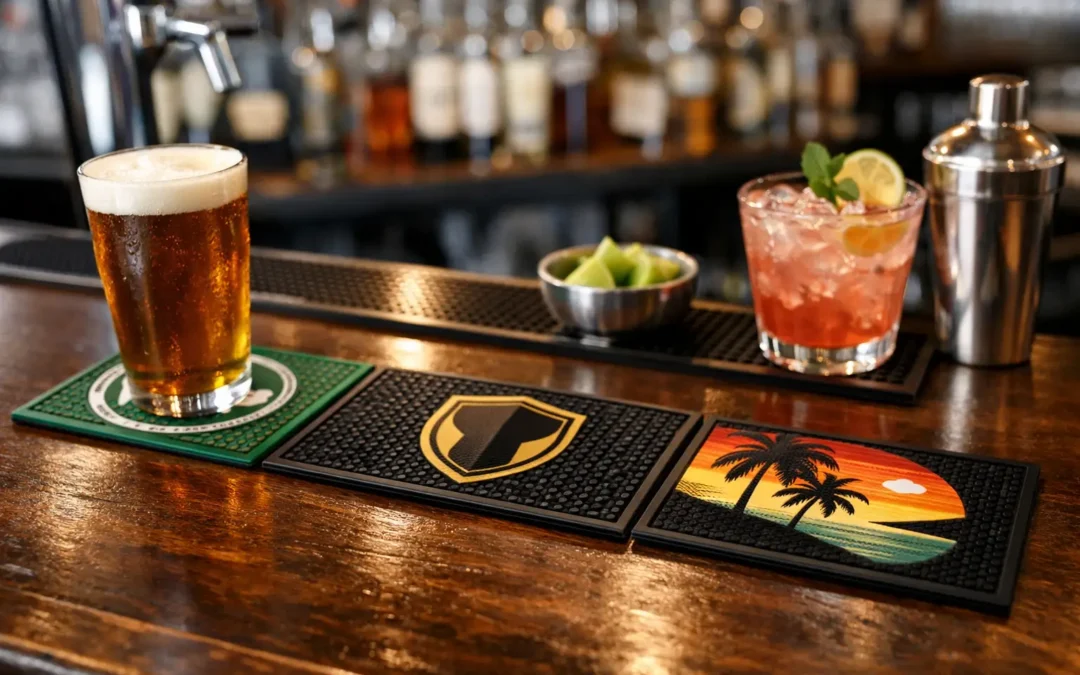
Pubs, bars and clubs are the most obvious fit. Service counters deal with regular spills, glassware condensation and constant cleaning, so a rubber runner helps protect the bench while keeping the branded area neat. Breweries and distilleries also use them well because they support both front-of-house branding and practical service needs during tastings.
They also suit corporate functions, sponsored events and promotional activations. In these cases, buyers often want something more substantial than a standard coaster because it becomes part of the display. A branded runner behind a portable bar or at a drinks station can help create a more professional setup without adding much complexity.
For private customers, the use case is a little different. Weddings, milestone birthdays and engagement parties can benefit from personalised rubber coasters or smaller runner formats if the goal is a polished finish that lasts beyond the day itself. The trade-off is cost. Rubber is typically a higher investment than cardboard, so it tends to make more sense when durability or presentation is part of the brief.
What to consider before ordering
Buying on price alone is usually where product disappointment starts. With rubber bar runner coasters, the better approach is to look at how and where they will be used, then match the specification to the setting.
Size matters first. A compact rubber coaster works well for individual place settings, tastings and table service. A longer bar runner is better for service counters, point-of-pour areas and promotional bars. If your bar area is tight, an oversized runner can get in the way rather than help. If it is too small, it may not provide enough branding impact or spill protection.
Design method matters too. Some rubber products use moulded or printed branding, and the right choice depends on the look you want and the level of detail in your artwork. Bold logos, simple text and strong contrast generally perform best. If the design is overly complex, fine details may not translate as clearly on textured rubber surfaces as they would on a smooth printed material.
Then there is cleaning and maintenance. Rubber is low fuss, but not every finish behaves the same way under heavy commercial cleaning. If your team wipes down surfaces repeatedly through service, you want a product built for that environment. It is worth asking about intended use, expected wear and how the branding will hold up over time.
Branding that looks good on the bar
The strongest branded products do not try to do too much. With rubber bar runner coasters, clear branding usually works harder than busy artwork. A strong logo, readable type and colours that align with your venue or campaign will have more impact than squeezing in every brand element at once.
This is especially true in hospitality. Customers see the bar in passing, often from a distance, and staff need a clean service area. That means the design should support visibility without making the product look cluttered. A professional digital proof helps here because it gives you a chance to check scale, placement and contrast before production starts.
Brand buyers should also think about context. A nightclub may suit darker tones and high-contrast branding, while a brewery taproom might favour earthy colours and a more understated finish. Event organisers often need coasters or runners that tie into broader signage, menus and promotional materials. Consistency across those touchpoints helps the whole setup look deliberate rather than pieced together.
Rubber versus other coaster materials
There is no single best material for every job. It depends on budget, purpose and expected lifespan.
Cardboard remains a strong option for campaigns, weddings and large event runs where absorbency and low unit cost are the priority. Cork offers a natural look and works well for gifting or lifestyle branding. Acrylic and metal suit premium presentation, particularly where a sleek, modern finish matters. PVC rubber sits in a practical middle ground for buyers who want custom branding with more resilience and everyday usability.
That is why many commercial buyers compare rubber against the actual setting rather than against a catalogue. If the product will see regular service, repeated cleaning and frequent customer contact, rubber often justifies the spend. If the need is short-term, highly price-sensitive or focused on absorbency at tables, another material may be better suited.
How custom ordering should work
Custom promotional products should not be hard to arrange. The best process is straightforward: discuss the use case, confirm artwork, review a digital proof, then move to production with clear expectations around lead time and finish.
For venues and procurement teams, responsive service is just as important as the product itself. Delays in proofing, vague material advice and poor communication can slow down launches, fit-outs and event schedules. That is why experienced suppliers matter. They can guide you on what will reproduce well, what fits your budget and what quantity makes sense for the job.
At Drink Coaster, this is where practical support makes the difference. Buyers often come in with a logo and a rough idea of what they need, but not always the final specifications. Good guidance helps turn that into a product that looks right, performs properly and arrives on time.
When rubber bar runner coasters are the right investment
If you want a coaster or runner that will be used once and thrown out, rubber is probably not the right fit. If you need a long-lasting branded product that can handle a commercial environment, it is a strong option.
Rubber bar runner coasters make the most sense when the product needs to work hard and still represent your brand well. They protect surfaces, improve presentation and stay visible in some of the busiest parts of a venue. For bars, clubs, breweries, events and branded hospitality spaces, that is not a small detail. It is part of how the whole service area comes together.
The right product should feel like it belongs behind the bar from day one. If your priority is a durable, professional finish with practical value, rubber is worth serious consideration.