A coaster that curls after one busy service, loses its print after a few wipedowns, or looks tired at the table does not represent your brand well. When buyers ask which coaster material lasts longest, the most reliable answer is stainless steel – but the right choice still depends on where, how often, and by whom the coaster will be used.
For a high-turnover bar, café, club or corporate boardroom, longevity means surviving moisture, cleaning, handling and repeated use while continuing to look professional. For a wedding or product launch, it may mean staying pristine throughout one event and giving guests a quality keepsake afterwards. Material matters, but so do finish, decoration method and the day-to-day conditions the coasters face.
Which coaster material lasts longest in real use?
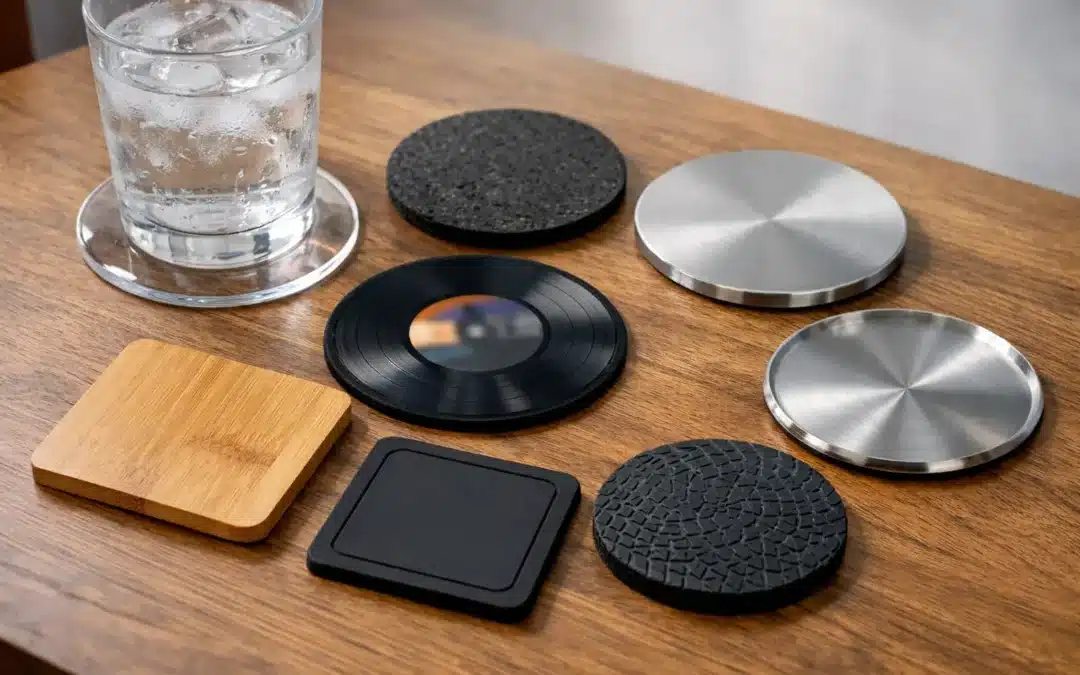
Stainless steel generally has the longest service life of the common reusable coaster materials. It resists rust, moisture, heat and regular cleaning, and it will not warp or soften when condensation builds up. A well-made stainless steel coaster can remain in service for years in hospitality, office and home settings.
That does not make it the automatic choice for every project. Stainless steel costs more than cardboard, cork or PVC rubber, and its premium feel may be unnecessary for a short campaign or a large event with a tight unit budget. It is also worth considering the tabletop surface: a steel coaster should have a suitable backing or non-slip base to help protect polished timber, glass and stone tables.
Durability is best judged against the actual job, not simply by choosing the hardest material available.
| Material | Expected durability | Best suited to | |—|—|—| | Stainless steel | Excellent for long-term repeated use | Hospitality, corporate gifts, premium promotions | | Aluminium | Very good, though more prone to dents | Branded campaigns and lighter reusable sets | | Acrylic | Very good indoors, with possible scratching over time | Offices, events and colourful custom designs | | Resin | Very good when properly finished | Premium gifts, decorative and bespoke projects | | PVC rubber | Very good grip and moisture resistance | Bars, casual venues and outdoor promotions | | Glass | Long-lasting if handled carefully, but breakable | Homeware, restaurants and premium gifting | | Leather | Long-lasting with appropriate care | Executive gifts and refined boardroom settings | | Cork or bamboo | Moderate to good for normal indoor use | Natural-looking hospitality and event branding | | Cardboard | Single-use to short-term | High-volume events, tastings and promotions |
Why stainless steel leads for durability
Stainless steel has a practical advantage over absorbent and softer coaster materials. It does not soak up spilled drinks, does not split at the edges, and is far less affected by routine wiping. For venues serving cold drinks all day, this resistance to condensation is a major benefit.
It also holds its shape. Cardboard can swell, cork can eventually compress or stain, and acrylic can scratch when stacked or dragged across rough surfaces. Stainless steel maintains a crisp, solid appearance through repeated handling. For branded coasters that are intended to become a permanent fixture in a meeting room, restaurant or members’ lounge, that consistency helps protect the perceived value of the brand.
Decoration should be considered at the same time. Engraved stainless steel branding is especially durable because the logo is part of the surface rather than a layer sitting on top of it. Printed finishes can still look excellent, but an engraving or etched design is often the stronger option where regular washing and heavy use are expected.
Durable alternatives that may suit your project better
Aluminium is a strong option when you want a metallic finish without the weight and cost of stainless steel. It resists moisture well and can produce a clean, contemporary promotional product. However, it is softer than stainless steel and may dent or mark more easily in a busy environment.
Acrylic is another practical choice for branded coasters. It is non-absorbent, available in a wide range of colours and shapes, and well suited to crisp printed artwork. It performs particularly well indoors, in offices, reception areas and event spaces. The trade-off is surface scratching over time, especially where coasters are frequently stacked, moved or cleaned with abrasive materials.
PVC rubber coasters deserve attention for busy casual venues. Their flexible surface grips the table, handles moisture well and is less likely to slide when drinks are set down quickly. They are not as premium in appearance as metal, glass or leather, but they are dependable, practical and highly suitable for bold logo treatments.
Resin can last a long time when manufactured with a quality finish. It offers considerable design freedom, including embedded graphics and a polished decorative look. Resin is ideal when presentation is as important as hard-wearing performance, although it is generally better suited to considered indoor use than the roughest hospitality environments.
Glass can also provide years of use, and its weight and clarity create an elevated feel. Its limitation is obvious: it can chip or break if dropped. For a restaurant table, client gift or stylish homeware set, glass may be an excellent choice. For outdoor activations, crowded functions or venues with frequent breakages, metal or PVC rubber is usually the safer investment.
Natural materials: durable enough, with the right expectations
Cork, bamboo and leather bring warmth that metal and acrylic cannot replicate. They work particularly well for wineries, boutique accommodation, cafés, clubs and brands wanting a more natural or crafted presentation.
Cork is naturally absorbent and gentle on furniture, but that same absorbency means it can stain and wear faster than non-porous materials. It is a smart choice for indoor use where a relaxed, organic finish matters more than maximum lifespan. Bamboo is firmer and can be durable, though it should be kept from prolonged soaking and harsh washing.
Leather has the potential to age beautifully, especially in executive or hospitality settings where it is treated with care. It should not be chosen for an area where coasters are constantly saturated, scrubbed or left outdoors. A leather coaster is a premium long-term item for the right environment, rather than an all-purpose workhorse.
The use case can change the answer
A coaster’s lifespan is often decided before production begins. Think about the drinks being served, the cleaning routine, the venue and the expected number of uses. A set used for water glasses in a boardroom has very different demands from coasters behind a busy pub bar during summer.
Outdoor use raises the stakes. Sunlight can affect some printed finishes, wind and uneven surfaces can damage lighter coasters, and rain can quickly ruin cardboard or unprotected natural materials. Stainless steel, aluminium and PVC rubber are generally more dependable for outdoor promotional activity, provided the branding method is selected for exposure.
For short-run promotions, cardboard may still be the most commercially effective option. It is economical, easy to distribute and gives you a broad printable area for campaign messaging, menus, QR codes or event details. It is not designed to last for years, but it can deliver outstanding brand visibility across a single night, festival, tasting or launch.
Make the branding last as long as the coaster
The base material is only half the decision. A durable coaster with poorly matched decoration can still lose its impact early. Ask how the logo will be applied and whether the design will face repeated wiping, moisture, UV exposure or stacking.
Simple high-contrast artwork often performs best on hard-use products. Fine lines and small text may look impressive in a digital mock-up but can be less visible after everyday handling, particularly on textured cork, leather or rubber. A clear logo, readable type and considered placement will help the finished coaster remain recognisable over time.
It is also sensible to request a digital proof before production. This is the point to check dimensions, artwork positioning, colour treatment and any edge details that affect the finished look. For multi-site venues or larger promotional orders, keeping approved artwork on file can also make future reorders more consistent.
Choose for lifetime value, not just unit price
The least expensive coaster is not always the most economical. If a venue replaces low-cost coasters every few months, a higher-quality stainless steel, aluminium or acrylic option may provide better value over its working life. Conversely, a premium metal coaster can be unnecessary where thousands of guests need a branded item for one evening.
Start with the purpose: permanent tabletop presentation, reusable promotional gift, high-volume event handout, or a refined keepsake. Then match the material to the setting, budget and desired brand impression. An experienced custom supplier can help compare options, recommend decoration methods and provide a free digital proof before production.
For a coaster that will still look professional after countless coffees, cocktails and meetings, stainless steel is hard to beat. The most successful choice, though, is the one that fits the way your customers, staff or guests will actually use it.