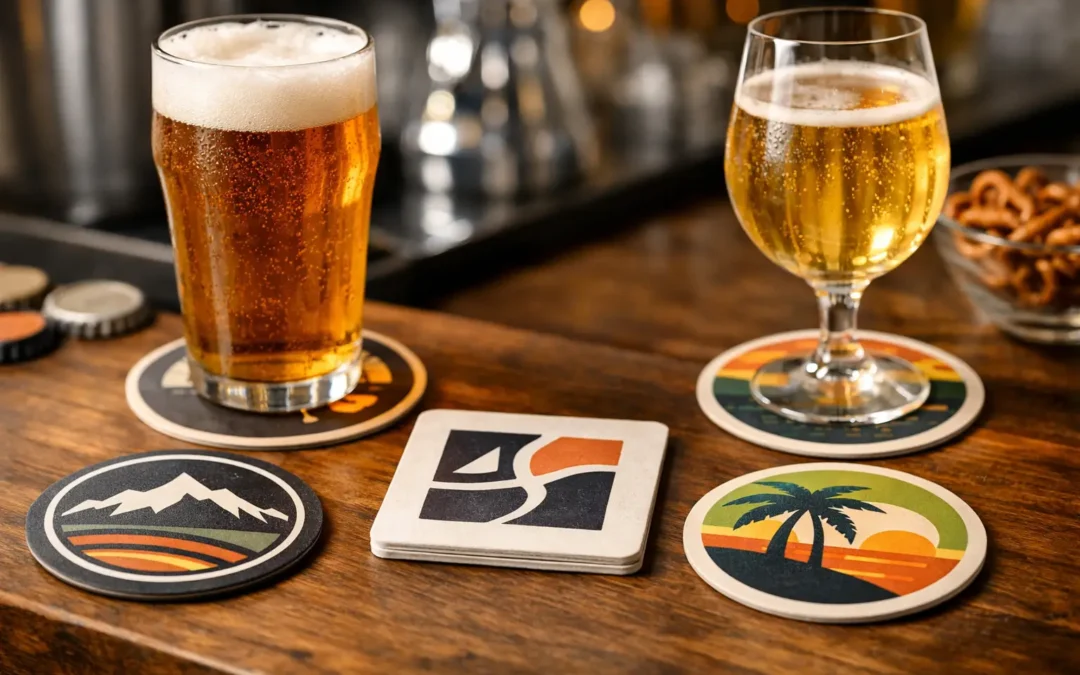
A bar top tells people a lot about your brand before a staff member says a word. If the glassware looks right but the presentation underneath it feels like an afterthought, the whole experience can lose polish. That is why custom beer coasters remain one of the most practical branding tools for pubs, breweries, clubs, events and promotional campaigns across Australia.
They do a simple job well. They protect surfaces, help manage moisture and keep drinks service tidy. At the same time, they give your logo, message or event branding a place right in front of the customer. Few promotional items get handled as often during a single sitting, and fewer still can work just as well at a corporate launch as they do at a local taproom.
Why custom beer coasters still work
Some branded products are easy to hand out and just as easy to forget. Coasters are different because they are part of the drinking experience itself. In hospitality settings, they are used in real time, in full view, and often across every table in the venue. At events, they help tie the look of the room together while giving sponsors or hosts a smart, low-profile place to reinforce branding.
That practical value matters. Buyers are not just looking for something with a logo on it. They want an item that supports service standards, holds up during use and presents the brand professionally. A well-made coaster does all three.
There is also flexibility in how custom beer coasters can be used. A brewery might want a large-volume run of cardboard coasters for venue distribution and tasting events. A club may need more durable PVC rubber or cork options for regular use. A wedding or private celebration might call for a personalised design in acrylic, bamboo or leather to match the styling of the day. The best choice depends on where they will be used, how often, and what impression you want to create.
Choosing the right custom beer coasters
Material is usually the first decision, and it shapes both the cost and the overall feel of the finished product. Cardboard is the classic option for bars, beer launches and promotions where strong print quality and broad distribution matter most. It is cost-effective, easy to customise and ideal for high-volume campaigns.
If durability is higher on the list, cork offers a natural look with good absorbency, while PVC rubber gives a more hard-wearing finish suited to busy hospitality environments. Acrylic, glass and resin can create a sharper premium effect for branded gifting, boardrooms or special events. Stainless steel and aluminium lean more corporate and modern, while bamboo and leather work well when the brief calls for a warmer, more refined presentation.
There is no single best material for every project. It depends on the setting, your budget and the life span you need from the product. For a short campaign in multiple venues, cardboard often makes sense. For repeat use in-house, spending more on a durable material can be better value over time.
Print, shape and finish matter
Good artwork can lift even a straightforward coaster, but the production method needs to match the material. Fine detail may reproduce differently on cardboard than it does on acrylic or metal, and bold branding often works better than trying to fit too much information into a small space.
Shape also plays a part. Round coasters suit many beer brands naturally, but square and custom shapes can help a design stand out. That said, unusual shapes should still be practical for stacking, packing and everyday use. If a coaster looks interesting but becomes awkward for service staff, it may not be the right fit.
Finish is where many buyers either sharpen the presentation or miss an opportunity. Matte, gloss, textured or natural finishes each change the result. A premium event may need a cleaner, more polished look. A brewery with an established craft identity may prefer a more tactile finish that feels less corporate. This is where a free digital proof becomes especially useful, because small design decisions can make a noticeable difference in the final product.
Where custom beer coasters deliver the most value
Hospitality is the obvious setting, but it is far from the only one. Pubs, breweries, bars and clubs use coasters daily because they serve a clear operational purpose while keeping branding visible across tables and service areas. They can also support seasonal promotions, limited releases and sponsored events without requiring major setup.
For corporate events and expos, coasters help create a more complete branded environment. They work at networking functions, product launches and client hospitality settings where detail matters. In these situations, a coaster may seem minor, but minor details are often what make an event feel properly organised.
Wedding and private event buyers look at coasters differently. Here, the focus is often on styling, personalisation and giving guests something functional that still feels considered. Names, dates, monograms or themed graphics can turn a simple coaster into part of the table setting rather than just an accessory.
Promotional campaigns sit somewhere in the middle. The item needs enough quality to reflect the brand well, but it also has to fit the campaign budget. This is why access to a broad material range is valuable. It gives buyers room to match the product to the purpose instead of forcing every project into the same template.
What buyers should ask before ordering
The smoothest custom jobs usually start with a few practical questions. How will the coasters be used? How many are needed? Is this for one-off event use or ongoing service? Does the branding need to be subtle, premium, high-impact or purely functional?
Turnaround is another key factor. If you are ordering for a scheduled event, venue opening or campaign launch, production timing should be discussed early. Fast turnaround is important, but so is allowing enough time for artwork approval, digital proofs and any adjustments before production begins.
Artwork quality can affect the result just as much as the material choice. A reliable supplier should guide you on file setup, sizing and print expectations so there are no surprises once the order is underway. This is particularly important for logos with fine detail, gradients or specific brand colours.
Quantity can influence pricing and production methods too. Large runs may suit some materials better than others, while smaller premium orders may open up different finishing options. A quote-based approach is often the most efficient way to align the product with both the budget and the intended use.
Why supplier experience makes a difference
Custom promotional products look simple from the outside, but consistency matters. The right supplier helps you avoid the common issues – unclear artwork, unsuitable material selection, unrealistic timing and products that look good on screen but underperform in practice.
That is where experience counts. An Australian-owned and operated supplier with strong production knowledge can guide the process properly, from recommending materials through to digital proofing and delivery. For buyers juggling deadlines, approvals and brand standards, responsive service is not a bonus. It is part of getting the order right.
Drink Coaster works with businesses, venues, clubs, event organisers and individual customers who need that mix of flexibility and support. Whether the job calls for economical cardboard coasters in volume or a more premium finish for presentation and gifting, the value is in making the process straightforward and the final product fit for purpose.
Custom beer coasters are small, but not minor
There is a reason coasters have stayed relevant in hospitality and promotions for so long. They are useful, visible and easy to tailor to different settings without making the buying process complicated. When they are produced well, they support service, strengthen presentation and give your branding a place where people will actually see it.
If you are planning a venue rollout, event, campaign or private function, it is worth treating coasters as part of the overall experience rather than an add-on. The right material, design and production support can turn a basic item into a polished detail that quietly does a lot of work.