A coaster gets handled more often than almost any other branded item on a café table. It sits beneath long blacks, iced lattes, sparkling water and cocktails, catches condensation, protects furniture and stays in view while customers talk, eat and decide whether to order another round. That is why choosing the best coasters for cafes is not simply a design decision. It is an operational and brand presentation decision.
A good café coaster needs to look right on day one, cope with busy service, suit the venue’s tables and reinforce the identity customers should remember. The right choice depends on whether it is intended for daily use, a short-term promotion, takeaway sampling, an event activation or a premium table service setting.
What separates the best coasters for cafes?
The best option is rarely the most expensive material or the one with the biggest print area. It is the coaster that matches the way your venue actually trades. A high-volume breakfast café needs something easy to clear, wipe and replace. A wine bar or boutique venue may place more value on texture, weight and a refined finish. A club running weekly promotions may need an economical coaster with room for changing offers.
Start with four practical questions: Will the coaster be reused or disposed of after service? How often will staff clean tables? Are drinks mainly hot, cold or both? And does your branding need detailed colour artwork, a simple logo, or a premium engraved finish?
These answers narrow the material choices quickly and help avoid a common mistake: ordering a coaster that photographs well but does not suit the pace of service.
Choose the material around the job
Cardboard coasters for campaigns and busy turnover
Cardboard coasters remain a strong choice for cafés, pubs, breweries and event spaces. They are lightweight, absorbent and cost-effective when ordered in volume. They work particularly well for seasonal menus, loyalty promotions, new product launches and sponsored events where a fresh coaster can be placed at every setting.
The trade-off is longevity. Cardboard is designed to absorb moisture, so it will eventually show wear during extended use. For many venues, that is exactly the point: a clean, branded coaster can be replaced regularly without a large upfront cost. It also gives you generous print space for menus, QR instructions where relevant, social messaging or a limited-time offer.
Cork and bamboo for natural café styling
Cork and bamboo suit venues with a warm, natural or sustainability-focused fit-out. Cork has a soft, practical surface and handles everyday drinkware well, while bamboo brings a firmer, more structured look. Both can complement timber tables, indoor plants and minimal branding without making the tabletop feel overly promotional.
These materials are best when the brand mark is simple and confident. Fine photographic detail may not reproduce as sharply as it does on a smooth printed surface, but a clean logo, line artwork or engraved design can look considered and premium. They are also a sensible option for cafés that want a reusable alternative to single-use paper products.
Recycled tyre rubber for high-use hospitality spaces
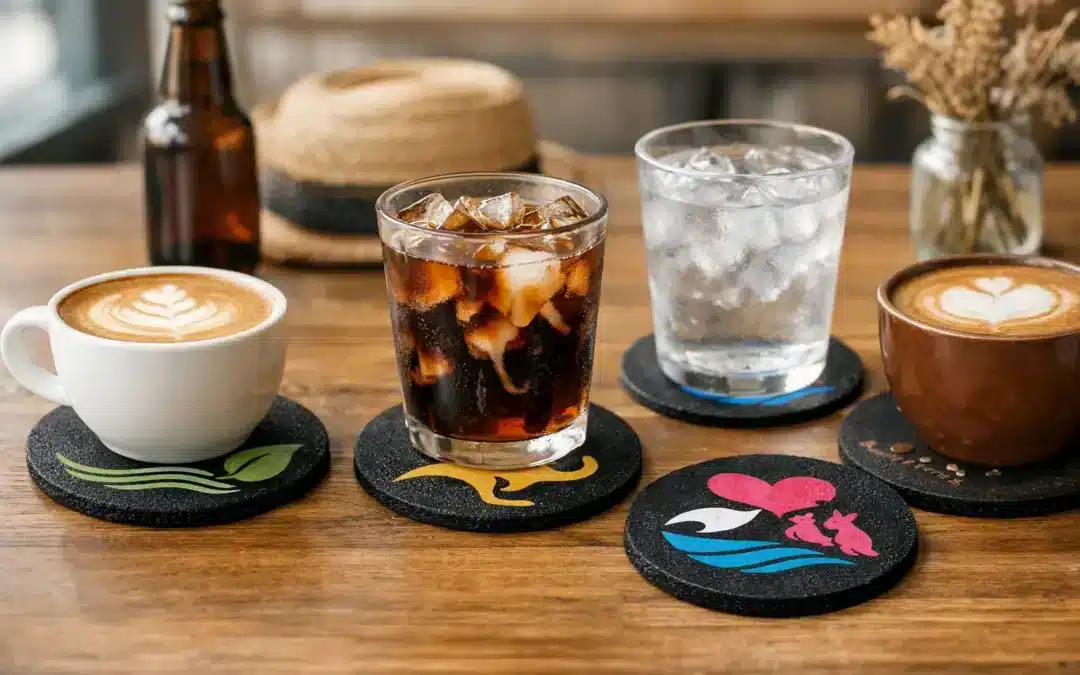
For venues where coasters take a beating, recycled tyre rubber is one of the most practical materials available. It grips the table, resists moisture and is easy to clean between services. Its weight also helps it stay in place outdoors, which makes it suitable for courtyard tables, beer gardens and windy pavement dining areas.
The recycled material adds a useful story for businesses looking to make a more considered product choice. It has a more industrial appearance than cork or cardboard, so it is especially effective for breweries, casual bars, sports clubs, automotive brands and cafés with a modern, hard-wearing aesthetic.
Acrylic, glass and resin for a premium statement
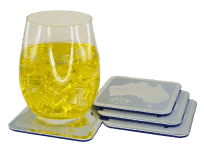
Acrylic, glass and resin coasters suit venues where table presentation is part of the experience. They can be produced with striking colour, clear finishes or a more decorative look that works well for hotel lounges, cocktail bars, corporate hospitality and high-end café settings.
These options need a little more consideration in day-to-day service. Glass can be heavier and more breakable, while acrylic may show scratches over time if it is constantly stacked or dragged across rough tabletops. Resin can provide a distinctive finish, but production timing and artwork requirements should be discussed early. These are not usually the lowest-cost choices, yet they can make sense when fewer tables need a more polished, lasting presentation.
Metal and leather for branded table service
Stainless steel, aluminium and leather coasters bring a premium, durable feel. Metal works well for engraving, bold branding and venues with a contemporary or industrial interior. Leather offers warmth and a more elevated finish for private dining, members’ clubs, whisky service or corporate venues.
Neither is automatically right for every café. Metal can feel less absorbent than fibre-based options, and leather needs appropriate care to maintain its appearance. However, for a venue seeking reusable coasters that support a premium price point, both can create a strong impression.
Match the coaster to your drinks and tables
Coffee-focused cafés should prioritise heat resistance and a surface that handles drips from takeaway lids and ceramic cups. If iced drinks are a major part of the menu, absorbency matters more because condensation can build quickly in warmer weather. Cardboard and cork can help manage moisture, while rubber is ideal where frequent wiping is preferred.
Look closely at your tables as well. On polished timber, a coaster should protect against rings without trapping moisture underneath. On outdoor metal furniture, grip becomes more important. On pale stone or laminate surfaces, consider how dark rubber, ink-heavy cardboard or coloured materials will visually sit with the fit-out.
Size matters too. A standard round coaster is familiar and efficient, but square, hexagonal or custom-shaped designs can give a brand more presence. The shape should still allow staff to stack, carry and reset tables easily. An unusual silhouette is only worthwhile if it remains practical during a busy rush.
Make branding useful, not crowded
The most effective café coaster designs are readable at a glance. A logo, short message, website address or campaign line may be all you need. When customers are seated, the coaster is viewed close-up, so there is no need to squeeze every service, menu category and social handle into one small space.
Use contrast that holds up in real conditions. Pale ink on a light coaster may look subtle in a digital mock-up but disappear under café lighting. Fine type can also be lost on textured surfaces. If your artwork includes small details, a smooth printed material such as cardboard, acrylic or PVC rubber may be a better fit than engraved cork or bamboo.
Consider printing both sides when there is a clear purpose. One side can carry your core brand, while the other promotes a weekday special, event, loyalty offer or partner product. This approach adds value without changing the customer experience or requiring another piece of table collateral.
Order for service, not just unit price
The lowest unit price can be misleading if the coaster does not last long enough, does not fit your service style or arrives too late for a campaign. Work backwards from your opening date, event date or menu launch, then allow time for artwork preparation, a digital proof and production.
A free digital proof is particularly valuable for checking logo placement, spelling, colour direction and the visual balance of the design before manufacturing begins. It is far easier to adjust artwork at proof stage than after a full order has been produced.
Quantity should reflect realistic turnover. For reusable coasters, allow for washing, loss, breakages and tables that may be in use at the same time. For disposable cardboard coasters, estimate covers across the campaign period and include a buffer for busy weekends. Ordering too few creates an inconsistent table presentation; ordering vastly too many can tie up budget and storage space.
At Drink Coaster, material choice, artwork guidance and production timing can be tailored to the way your venue operates, rather than forcing every café into the same stock option.
A better final check before approving artwork
Before you approve a proof, place the design in context. Picture it under a cappuccino cup, beside a share plate, on your darkest table and in your brightest window seat. Ask whether staff can clear it quickly, whether customers can read the key message, and whether it still looks like your venue after a full lunch service.
The best café coaster is a small piece of branded equipment: useful to staff, comfortable for customers and consistent with the standard your venue wants to set. Choose the material for the work it must do, then let the branding do its job quietly and well.