A coaster is a small detail that does a very public job. On a café table, at a corporate function or across a wedding bar, it protects the surface while keeping your logo, message or event design directly in front of guests. The choice between acrylic vs cork coasters changes more than the look. It affects how your artwork prints, how the coaster handles moisture, the impression it gives and the budget required for your order.
For Australian businesses and event organisers, neither material is automatically the better choice. Acrylic is polished, durable and highly visual. Cork is warm, natural and practical for relaxed venues or sustainability-led campaigns. The right option comes down to where the coasters will be used, how often they will be handled and what your branding needs to say.
Acrylic vs Cork Coasters: The Practical Difference
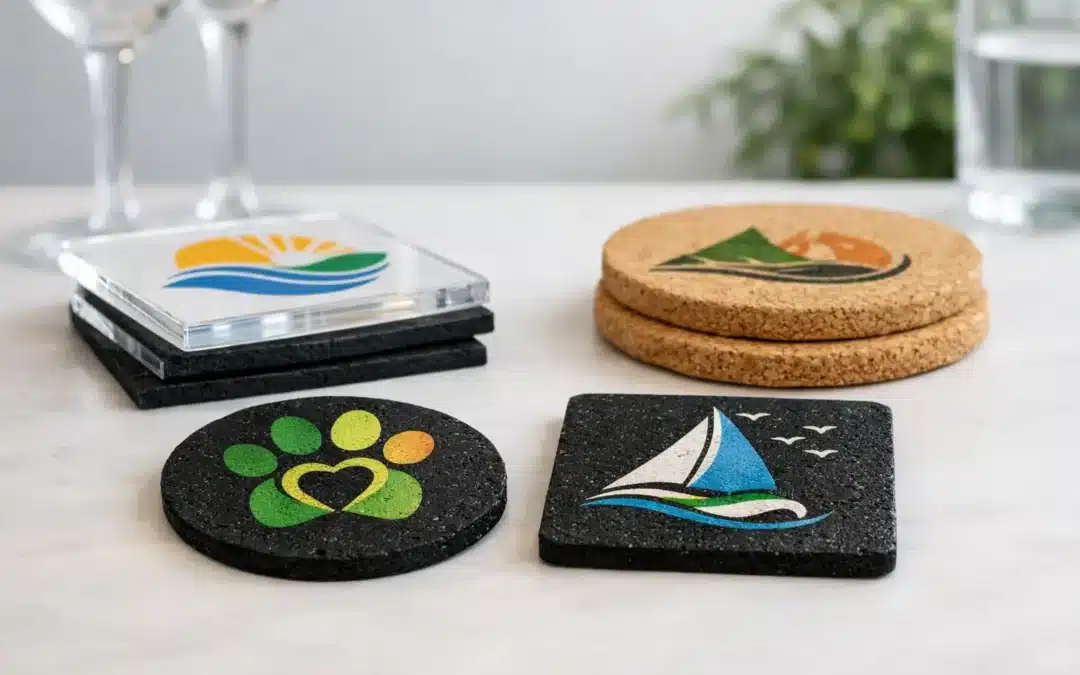
Acrylic coasters have a clean, contemporary finish that suits corporate branding, bars, product launches and retail-style promotions. They can be made in clear, frosted or coloured finishes, giving designers room to create a sharp visual result. Clear acrylic can be especially effective when a logo is designed to appear as though it is floating on the tabletop.
Cork coasters bring a more natural texture to the setting. Their earthy colour and lightweight feel work well for breweries, wineries, cafés, clubs, eco-conscious organisations and rustic event styling. Rather than looking manufactured, cork feels tactile and understated, which can make a simple logo or engraved design feel more considered.
The key difference is that acrylic presents your artwork with precision, while cork gives it character. A detailed full-colour brand campaign may need the smooth consistency of acrylic. A venue promoting local produce, outdoor hospitality or environmental values may find cork better aligned with its story.
Appearance and branding impact
Acrylic offers a smooth, non-porous surface, so it is well suited to fine lines, bold colour blocks, photographic images and logos with small details. It is a strong choice where brand colours must remain accurate and the coaster is expected to look premium in photographs, display areas or client meeting rooms.
Cork has visible grain and natural variation. That is part of its appeal, but it also means very fine artwork can lose some definition. Strong, uncomplicated logos, bold type and single-colour artwork generally achieve the best result. Laser engraving is particularly effective on cork because it creates a permanent, tonal mark that feels integrated with the material rather than added on top.
If visual consistency across every unit is the priority, acrylic usually has the edge. If a little variation makes the product feel more authentic, cork is often the more appealing option.
Moisture, heat and everyday handling
Both materials are designed to sit under drinks, but they manage day-to-day use differently. Acrylic creates a firm barrier between the glass and table. It is easy to wipe clean after spills and does not readily absorb moisture, making it suitable for busy indoor service, boardrooms and promotional packs intended to be kept for repeat use.
The trade-off is that acrylic can show fingerprints, fine scratches and water marks if it is not cleaned regularly. It is durable, but it should still be treated as a finished promotional item rather than a piece of hospitality equipment to be scrubbed aggressively at the end of every shift.
Cork naturally absorbs some condensation and provides useful insulation under cold or hot drinks. It also has a softer, quieter contact with tabletops, which is welcome in cafés, homes and function spaces. However, cork can stain over time, especially where dark drinks or food spills are common. It is best for settings where a natural patina is acceptable, or where coasters can be replaced periodically as part of ongoing venue branding.
Budget and order requirements
Price depends on size, thickness, print method, artwork, quantity and finishing requirements, so the most useful comparison is based on the purpose of the order rather than a single unit price. Cork is often a sensible choice for large giveaways, casual events and campaigns where a natural material supports the message. Its simple construction and branding options can make it a practical fit for cost-conscious orders.
Acrylic can involve a higher investment, particularly where custom shapes, layered printing or premium finishes are required. In return, it offers a more polished presentation and a perceived value that can suit client gifts, hospitality tables and branded merchandise packs.
For short-run occasions such as weddings or milestone celebrations, the decision often rests on styling. For national promotions, venues and corporate procurement, expected lifespan and artwork requirements tend to matter more than the initial cost alone.
When Acrylic Coasters Are the Better Fit
Choose acrylic when your coasters need to look crisp, structured and brand-forward. A professional services firm may use them in reception areas and meeting rooms, where the coaster needs to match a refined interior and reproduce a precise logo. A product launch may use them to carry campaign artwork that is too detailed for a textured surface.
They are also a good option for venues wanting a cleaner, more modern table presentation. A clear or frosted acrylic coaster can complement a cocktail bar, hotel function room or restaurant without competing with the décor. Because the surface is wipeable, it can remain presentable through repeated use when staff have a straightforward cleaning routine.
Acrylic is not always the best choice for every high-volume bar. If coasters will be dropped, stacked roughly or replaced constantly, a lower-cost material may be more practical. But where presentation is part of the experience, acrylic gives a branded item the finish of a permanent tabletop accessory rather than a disposable giveaway.
When Cork Coasters Make More Sense
Cork is a strong fit when warmth, texture and natural material cues matter to the brand. Think cellar doors, breweries, artisan food businesses, community clubs, outdoor events and weddings with a relaxed or rustic theme. It feels appropriate in these environments before anyone even reads the logo.
It can also support a sustainability conversation, particularly when compared with conventional plastic-based alternatives. That said, material choice should be communicated honestly. Cork is a natural material, but the environmental outcome of any promotional product also depends on how long it is kept, how it is decorated and whether it is likely to be reused. A well-designed cork coaster that guests take home and use for years can deliver more value than a cheaper item that is quickly discarded.
For branding, keep the design clear and confident. A bold logo, venue name, event date or short message will generally look better than intricate artwork. Cork works especially well for one-colour printing and engraving, where the contrast and natural surface can do most of the visual work.
Choose by the Setting, Not Just the Material
The most reliable way to decide is to picture the coaster in use. A corporate conference table needs a different product from a Sunday brewery session, even if both orders carry the same logo.
For a client-facing office, acrylic often provides the more polished result. For a café with timber tables and a house-made menu, cork can feel more at home. For a wedding, acrylic suits contemporary colour palettes, monograms and formal styling, while cork complements native florals, garden venues and relaxed reception spaces.
Hospitality operators should also consider replacement cycles. If the coasters are likely to be heavily used, stained or lost, cork can be an economical option for regular reorders. If they are part of a controlled setting such as VIP lounges, hotel suites or event tables, acrylic may justify the added spend through its visual impact and longer useful life.
Artwork and Production Details That Affect the Result
The material is only half the decision. The other half is how your artwork translates onto it. Before production, check that the logo files are high resolution or supplied in a suitable vector format, and consider whether the design relies on fine text, gradients, transparency or exact colour matching.
Acrylic gives more freedom for detailed, colourful layouts, but contrast still matters. A pale logo on clear acrylic may disappear against a light tablecloth. Cork benefits from bolder artwork and sufficient spacing around text, particularly when the coaster will be engraved.
Size and shape deserve attention too. Standard round and square coasters are versatile and economical, while custom shapes can strengthen a campaign when they relate directly to a logo, product or event theme. A brewery may choose a coaster shaped around a badge-style logo, while a property brand may prefer a clean square acrylic design that suits its signage.
At Drink Coaster, a free digital proof helps confirm artwork placement, size and production details before the order proceeds. This is particularly useful when comparing materials, because a proof can reveal whether a detailed design needs the smooth finish of acrylic or will work more effectively as a simpler cork treatment.
Make the Coaster Earn Its Place on the Table
Acrylic and cork both have a place in effective promotional merchandise. The best choice is the one that suits the environment, carries your artwork clearly and feels worth keeping after the drink is finished. Start with the impression you want guests to take away, then select the material that makes that impression feel natural.