A coaster has only a few seconds to make an impression: it lands beneath a coffee at a client meeting, a schooner at the local, or a cocktail at a product launch. The strongest drink coaster design trends recognise that this small format is both a practical surface protector and a highly visible piece of brand presentation. For Australian businesses and event organisers, the goal is not simply to add a logo. It is to create something people notice, use and remember.
Drink coaster design trends shaping custom orders
Material-led design with a purpose
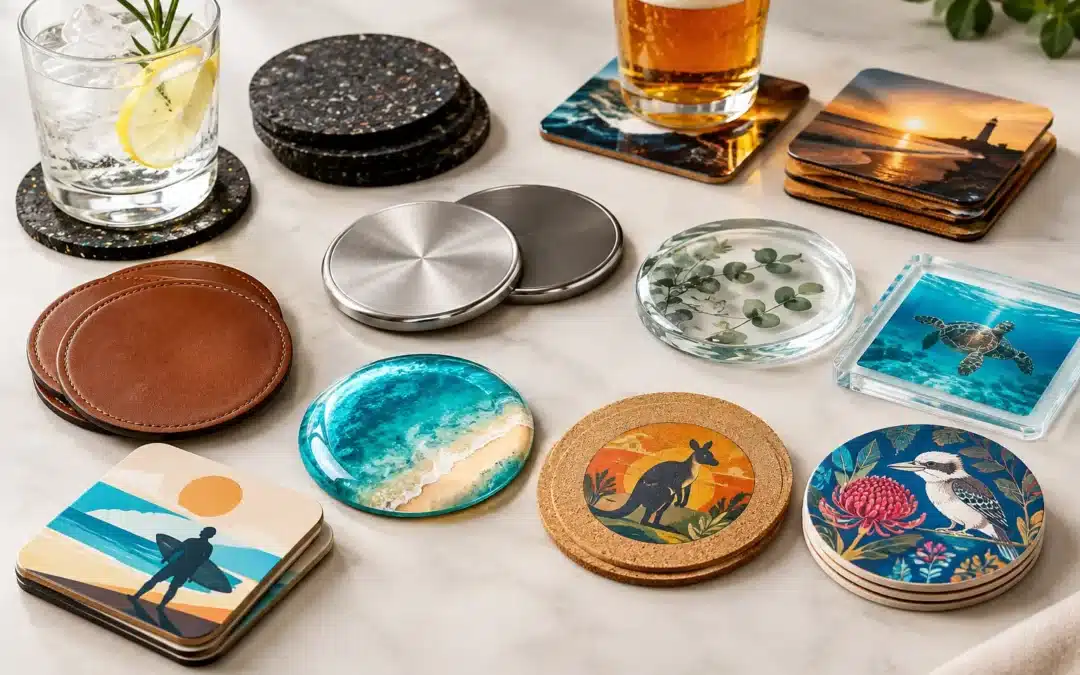
Material is now part of the message. A coaster’s texture, weight and finish can say as much about a business as its printed artwork. Cork, bamboo and recycled tyre rubber are popular where a natural, grounded or sustainability-focused look suits the brand. They feel tactile in the hand and work particularly well for cafés, cellar doors, breweries, accommodation venues and organisations with environmental commitments.
Recycled tyre rubber brings a more industrial, hard-wearing character. It is a sensible option for busy bars, outdoor promotions and trade events where spill resistance and longevity matter. Cork and bamboo offer a warmer finish, although their natural variation means every piece can have slightly different grain or tone. That is often a feature, not a fault, but it should be considered when a highly uniform corporate result is required.
For a cleaner, contemporary look, acrylic, aluminium, stainless steel and glass remain strong choices. These materials suit premium hospitality settings, corporate gifts and brands with a modern visual identity. They can deliver sharp graphics and a polished finish, though they may sit at a higher price point than cardboard or standard rubber styles. The best choice depends on where the coaster will be used, how often it will be handled and what impression it needs to leave.
Confident branding, not crowded artwork
Bold, simple branding continues to outperform busy layouts. Coasters are small, so a logo, business name or event message needs to be readable at a glance. Large type, high contrast and clear spacing are more effective than trying to fit a full brochure onto a round or square surface.
One-colour designs are making a return, especially when paired with textured materials such as cork, leather or recycled rubber. Black on natural cork, white on charcoal rubber, or a deep brand colour on pale bamboo can look considered without becoming over-designed. This approach can also help keep production costs in line for larger runs.
That said, full-colour print has a clear place when brand recognition depends on a distinctive palette, illustration or photographic element. Restaurants might use a signature dish illustration, while a festival could use event artwork that doubles as a keepsake. The practical test is simple: if the design cannot be understood from across a table, it may need simplifying.
Tonal colour and subtle finishes
The shift towards tonal design is giving branded coasters a more premium appearance. Rather than placing a bright logo on a plain background, many buyers are choosing close shades from within their brand palette. A navy logo on a slightly lighter blue base, for example, can feel refined while remaining recognisable.
Subtle finishes create interest without competing with the brand. Frosted acrylic, brushed metal, debossed leather and laser engraving can add depth that printed artwork alone cannot provide. These options are especially effective for executive gifts, boutique accommodation, wedding favours and premium product launches.
There is a trade-off. Low-contrast artwork may look sophisticated in a digital mock-up but become difficult to read in dim venue lighting. Hospitality operators should consider how coasters will look under warm indoor lights, not just on a bright office screen. A free digital proof is valuable here, but it is also worth asking whether the selected material and decoration method will preserve enough contrast in real use.
Designs built for the venue or occasion
Hospitality coasters that work hard
Bars, pubs, cafés and restaurants need coasters that cope with condensation, frequent handling and cleaning routines. Design trends in this space favour durable materials, clear branding and layouts that look good when a glass covers part of the artwork. Placing a logo or icon around the outer edge, rather than in the centre only, keeps it visible throughout service.
Some venues use coasters as part of their table communication. A QR code, rotating special, loyalty message or social handle can be useful, provided it does not overwhelm the main design. QR codes need enough clear space and a suitable size to scan reliably. They should support the guest experience, not create extra effort at the table.
Reusable coasters can provide long-term visibility, while absorbent cardboard coasters are ideal for high-volume promotions, tasting sessions and temporary activations. There is no universal winner. A craft brewery handing out sample paddles may benefit from cost-effective disposable styles, whereas a cocktail bar with a premium fit-out may prefer metal, leather or resin for a lasting presentation.
Event and campaign coasters with a second life
For weddings, milestone celebrations and corporate events, personalised coasters are increasingly designed as keepsakes rather than single-use table items. Names, dates, monograms and custom illustrations give guests a practical memento they can take home. Resin, glass, cork and timber-look materials suit this role well, particularly where the event styling is a priority.
Campaign coasters are also becoming more specific. Instead of generic promotional merchandise, organisations are using a short campaign message, limited-edition artwork or a seasonal theme. A well-designed coaster can create a sense of occasion at a conference dinner, sponsorship activation or staff celebration.
The key is to decide whether the item is meant for immediate use, take-home value or both. A detailed commemorative design may suit a small wedding order, while a punchy message and larger logo will generally perform better for thousands of coasters distributed at a public event.
Shapes that support the artwork
Round coasters remain a dependable choice because they suit most drinkware and feel familiar in hospitality. Square and rounded-square designs offer more usable artwork space and can create a more contemporary, architectural look. Custom shapes are effective when they genuinely connect to the business – think a bottle silhouette, a record shape for a music event, or a simple product-inspired outline.
Custom shapes should be used carefully. They can make a brand more memorable, but they may add production complexity and are not always ideal for stacking, storing or accommodating varied glass sizes. For most commercial orders, standard shapes with strong artwork offer the best balance of impact, budget and turnaround.
How to choose a trend that will still look right later
Trends are useful starting points, not rules. A heritage club may be better served by classic colours, a traditional crest and a durable rubber coaster than a minimal tonal design. A contemporary wellness brand may find that bamboo, soft neutrals and understated engraving reflect its identity perfectly. The right answer comes from matching the material and visual style to the audience, setting and expected lifespan.
Before approving artwork, consider the coaster from several angles: will it look clear under a glass, suit the venue’s lighting, survive the intended use and stay recognisable when viewed quickly? Also consider quantities and lead times early. Premium materials and specialised finishes can require different production processes, while simple printed cardboard options are often well suited to fast, high-volume campaigns.
At Drink Coaster, free digital proofs help customers check logo placement, colour treatment and overall balance before production begins. This is particularly useful when comparing materials, as the same artwork can feel very different on cork, acrylic, metal or recycled rubber.
A well-chosen coaster does not need to chase every new look. Choose a design that fits the hands holding it, the table it sits on and the brand people will associate with it long after the drink is gone.