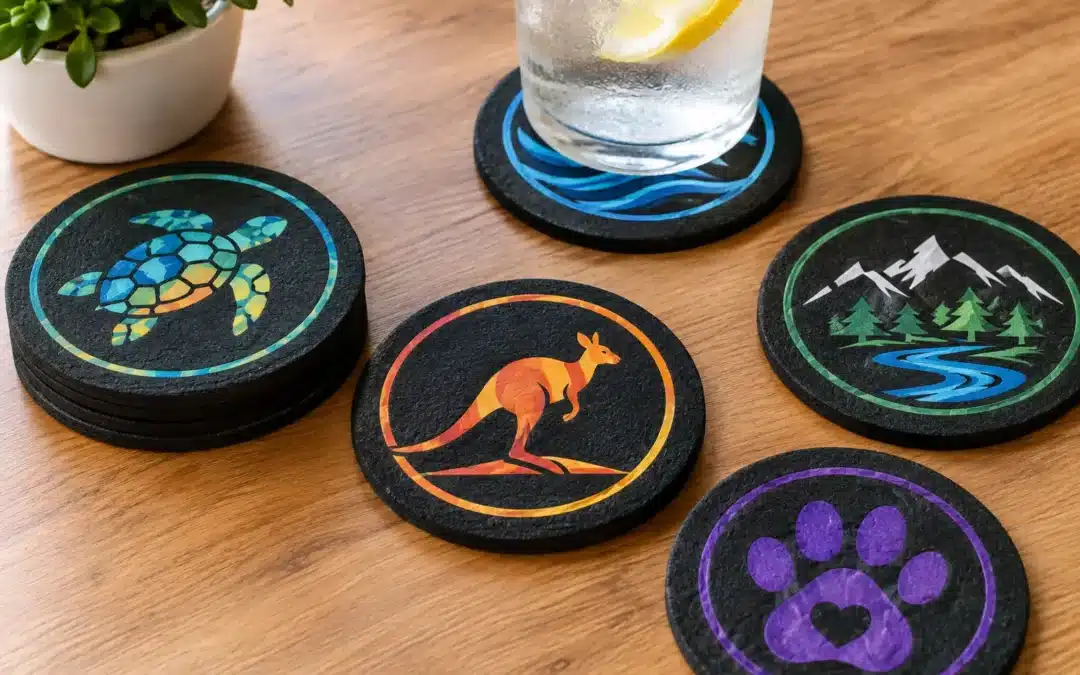
A well-chosen restaurant table coaster example does more than stop condensation rings. It gives every table a cleaner finish, puts your brand directly in front of guests, and can quietly reinforce the standard of service your venue wants to be known for. For cafés, bars, bistros and clubs, that small piece of printed material often works harder than its size suggests.
The best coaster is not simply the one with the largest logo. It needs to suit the drinks you serve, the pace of trade, your table surfaces and the atmosphere of the room. A busy pub with cold schooners has different needs from a wine bar with marble tables, just as a quick-service café has different priorities from a premium restaurant.
What Makes a Good Restaurant Table Coaster Example?
A useful restaurant coaster starts with a practical job: protecting the tabletop from moisture, heat, spills and glass marks. From there, it becomes a low-cost brand touchpoint that guests handle throughout their visit. Unlike a wall sign, it sits under the drink, beside the menu and in photographs of the table.
The strongest designs are clear at a glance. They usually feature a recognisable logo, venue name or visual mark, with enough open space that the coaster does not look crowded once a glass is sitting on it. Fine text, lengthy menus and detailed contact information are rarely effective here. A coaster has limited visible space, so one strong message will generally outperform five small ones.
For a restaurant group, consistency matters. Using the same colour palette, typeface and logo treatment across coasters, menus, takeaway packaging and staff uniforms helps guests recognise the brand wherever they encounter it. For an independent venue, a coaster can express more personality – perhaps through an illustrated local landmark, a house cocktail motif or a short line that reflects the kitchen’s style.
Restaurant Table Coaster Example Ideas by Venue Type
The all-day café
A café coaster often needs to cope with iced coffees, smoothies, cold-pressed juices and takeaway cups. Absorbent cardboard coasters are a practical option for indoor tables because they take on condensation and can be produced with crisp, full-colour artwork.
A simple example could use the café logo on one side and a brief prompt on the other, such as a mention of its house-roasted beans or weekend brunch offering. Keep the language useful rather than overly promotional. Guests are more likely to notice a detail that adds to their visit than a hard sales message.
The neighbourhood pub or sports club
Pubs and clubs generally need coasters that can handle high turnover, regular spills and a broad range of drinks. Recycled tyre rubber coasters provide a hard-wearing, non-slip option with a substantial feel, particularly for venues that want a reusable product behind the bar or in designated dining areas.
A strong restaurant table coaster example for this setting may feature the club crest, a sponsor logo or a promotion for a regular event. If sponsorship is part of the model, reserve a defined area for partner branding from the start. Trying to add a sponsor mark to an already busy design later usually weakens both brands.
The cocktail bar or wine venue
Here, material choice can help signal a more premium experience. Cork, leather-look materials, glass, stainless steel and acrylic coasters can complement a considered drinks list and refined table setting. They are especially suitable when the coaster is intended to be reused and cleaned rather than replaced after each sitting.
For a wine bar, restrained branding usually feels more appropriate than a large promotional graphic. Consider an embossed or single-colour logo on cork, or a clean monochrome mark on acrylic. The goal is to make the coaster feel like part of the tableware, not an afterthought.
The casual restaurant
Restaurants serving families, groups or fast-paced lunch trade often benefit from a coaster that supports both branding and service. A cardboard design could include a QR code for the drinks menu, loyalty programme or online booking page, provided the code is large enough to scan easily and surrounded by clear space.
This approach works best when the digital destination is genuinely helpful. Sending diners straight to a current cocktail list, a specials page or a simple feedback form makes sense. A QR code that leads to a generic homepage adds friction and gives guests little reason to use it.
Choose the Material Before Finalising the Artwork
Artwork should be designed around the coaster material, not applied as an afterthought. Each option creates a different visual result, cost profile and lifespan.
Absorbent cardboard is popular for high-volume service, promotions and events. It is lightweight, economical and well suited to colourful print. It is also disposable, which can be the right choice for busy venues where hygiene and rapid table resets are priorities.
Cork provides a natural finish that suits cafés, wineries and venues with a warm, earthy fit-out. It is reusable and offers good grip, although highly detailed artwork may not reproduce in the same way as it does on smooth printed board.
Recycled tyre rubber is a practical choice for demanding environments. It has weight, grip and a distinctive texture, making it ideal for branded bar coasters that need to last. It may not suit every fine-detail design, but bold logos and simple marks can look excellent.
Acrylic, glass, aluminium and stainless steel create a sharper, more contemporary presentation. These materials suit premium table service, corporate functions and venues aiming for a polished finish. They need considered storage and cleaning procedures, particularly glass, but their reuse can make them worthwhile over time.
Bamboo, resin and PVC rubber offer further options when the brief calls for a particular shape, texture or visual character. The right choice depends on whether your priority is maximum quantity, long-term reuse, sustainability messaging, premium presentation or a specific brand aesthetic.
Design Details That Improve Day-to-Day Use
Start with the size of the glassware. A coaster should comfortably support your most common drink, not only a narrow water glass. Round coasters are a familiar choice, while square and custom-shaped designs can stand out when the silhouette relates to the logo or venue identity.
Contrast is equally important. Dark artwork on a dark coaster can disappear in low restaurant lighting, and pale print can be lost against a busy background. Before production, view the design at actual size and imagine a pint glass, wine glass or tumbler sitting over it. If the logo remains recognisable around the edges, the layout is doing its job.
Avoid putting vital information too close to the edge. Coasters are handled frequently, stacked, wiped and sometimes knocked onto the floor. A sensible safe area helps the finished product keep its professional appearance after regular use.
If you are using a promotional message, give it a timeframe. A coaster advertising a seasonal cocktail, live music night or limited menu can be highly effective, but it should not be ordered in such a large quantity that it becomes outdated before it is used. Evergreen logo coasters are safer for long production runs; campaign coasters suit shorter, planned periods.
How to Order Coasters Without Creating Delays
Before requesting a quote, gather the basics: your preferred material, approximate quantity, coaster size or shape, artwork file and required delivery date. It also helps to explain how the coasters will be used – on dining tables, at the bar, for an event, or as part of a takeaway promotion. That context makes it easier to recommend a suitable product rather than simply the cheapest option.
Supply the best available version of your logo, ideally a vector artwork file. If the design needs adjustment, ask for a free digital proof before production. This is the time to check spelling, colours, logo placement, QR code readability and any sponsor or campaign details. Once the proof is approved, production can proceed with far more confidence.
Budget should be considered alongside lifespan. A lower-cost cardboard coaster may be the right commercial decision for a large event or high-turnover venue. A reusable rubber, cork or acrylic coaster may offer better value where a smaller number can remain in service for months. Neither option is automatically better – it depends on the environment and the experience you want guests to have.
Drink Coaster supports Australian venues, clubs, events and businesses with custom material options, practical artwork guidance, free digital proofs and dependable turnaround planning. The focus should always be on a coaster that looks right on the table and performs properly through service.
A coaster may be one of the smallest branded items in your venue, but guests see it at the exact moment they settle in with a drink. Choose a material that suits the job, keep the design clear, and let that small detail reflect the care behind the rest of the experience.