
A carton of branded coasters can arrive looking premium, or it can arrive scuffed, overwrapped and difficult to distribute. Sustainable coaster packaging is about getting that balance right: protecting the product, presenting the brand professionally and reducing unnecessary material from the packing process.
For Australian venues, marketing teams and event organisers, the best approach is rarely the most elaborate one. It is packaging matched to the coaster material, order size, delivery method and how the coasters will be handed out or stored after arrival.
What sustainable coaster packaging should achieve
Sustainability is not simply a brown box or a recycling symbol. Packaging must first do its primary job. If lightweight cardboard coasters bend in transit, glass coasters chip, or printed surfaces rub against each other, replacement stock creates more waste, cost and freight than sensible protective packaging would have.
A practical pack should use only the protection required for the journey. It should also be easy for staff or recipients to open, separate and dispose of correctly. For hospitality businesses receiving frequent promotional stock, compact cartons that stack neatly in a storeroom can be just as valuable as the material choice itself.
Good packaging decisions usually consider four things at once: product protection, material efficiency, brand presentation and end-of-life options. The priority changes with each project. A large run of cardboard pub coasters being delivered to one venue needs a different solution from personalised wedding coasters packed for individual guests.
Start with the coaster material
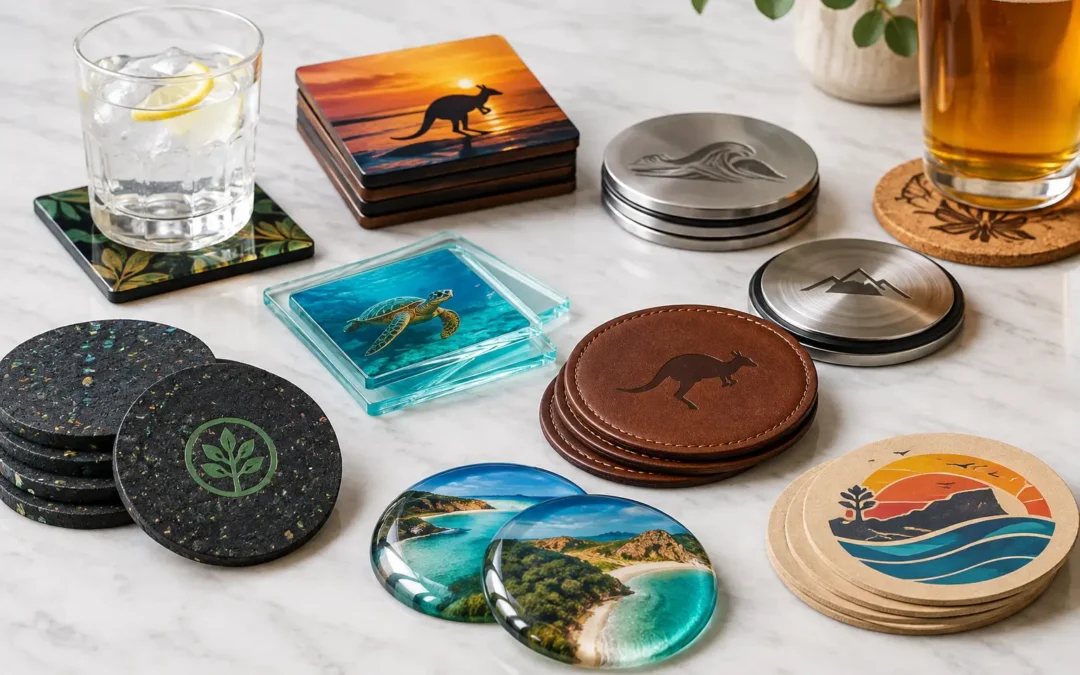
The coaster itself influences the most suitable packaging. There is no single sustainable packaging format that works equally well for every material.
Cardboard, cork and bamboo coasters are relatively light and can often be packed in paper bands, compact sleeves or recycled-content cartons. Their key risk is moisture, crushing and edge damage, particularly when cartons are stored in busy back-of-house areas. A snug outer carton and sensible carton fill can usually provide the protection required without individually wrapping every piece.
Recycled tyre rubber, PVC rubber and silicone-style coasters are durable, but their surfaces can attract dust or mark under pressure. Stacking them in defined quantities with simple dividers may be more efficient than loose packing. The aim is to prevent movement inside the carton, not add layers for the sake of appearance.
Acrylic, glass, resin, stainless steel and aluminium coasters require more care. Hard surfaces can scratch when they rub together, while glass needs reliable impact protection. Paper-based separators, moulded pulp inserts or reusable protective sleeves can be appropriate depending on the finish, quantity and freight distance. In these cases, reducing packaging too aggressively can be a false economy.
Leather coasters also deserve special attention. They may need to stay dry and free from transfer marks, especially where debossing, foil work or detailed printed decoration is involved. Protective tissue or a fitted sleeve may be justified for premium presentation, provided the material and quantity are chosen thoughtfully.
Reduce packaging before choosing greener materials
The most effective sustainability choice is often to remove packaging that has no clear purpose. A custom order may not need individual plastic bags, oversized retail boxes or multiple branded layers if the coasters are being delivered in bulk to a conference, club or bar.
Start by asking how the order will be used. Will coasters go straight into service at tables? Are they being inserted into event welcome packs? Is each set a client gift? These answers determine whether bulk packing, smaller distribution packs or presentation-ready boxes make commercial sense.
Bulk packs are generally the most material-efficient option for venues and high-volume promotions. Coasters can be grouped in manageable quantities, clearly labelled and packed in sturdy outer cartons. Smaller packs can make distribution easier for multi-site campaigns, franchise networks or event registration teams, but should be sized to avoid half-empty cartons and excess void fill.
Individual packaging is best reserved for situations where it genuinely adds value, such as a retail-style gift, a high-end corporate presentation or a personalised keepsake. Even then, a simple recycled board sleeve or paper-based wrap may achieve a polished result without relying on unnecessary plastic components.
Sustainable coaster packaging options to consider
Material claims should be specific and realistic. Recycled content, recyclability and compostability are different attributes, and each depends on the local waste stream, coatings, adhesives and printing used. A package labelled recyclable is only useful when the recipient can reasonably recycle it.
Recycled cardboard cartons are a dependable choice for many bulk coaster orders. They are strong, easy to label and widely understood by recipients. Where print is needed, keeping coverage practical and avoiding heavily laminated finishes can make the packaging easier to recover after use.
Paper bands and uncoated paper sleeves work well when coasters need to be counted into sets or kept tidy for distribution. They use less material than a rigid box and leave more of the coaster design visible. They are particularly suitable for cork, cardboard and bamboo styles, provided the order is protected by an outer shipping carton.
Moulded pulp inserts can be useful for fragile coaster sets, especially glass or resin. They hold products in place without the loose, hard-to-manage feel of some traditional void-fill materials. For premium products, they can also give the unboxing experience a more considered finish.
Reusable packaging can be worthwhile for repeat event programs, staff kits or account-managed hospitality groups. Durable crates, fabric pouches or containers only become the better option when there is a genuine return or repeat-use plan. Sending reusable packaging once, with no practical way to reuse it, can add cost and material without delivering the intended benefit.
Keep artwork and messaging purposeful
Packaging is an extension of the promotion, but it does not need to carry every brand message. For custom coasters, the coaster is usually the hero. A clean carton label with the client name, coaster type, quantity and handling details is often enough for a commercial order.
If packaging will be seen by guests, customers or gift recipients, use it to reinforce a clear message. A short statement about recycled material content or correct disposal can be helpful, but only if it is accurate for the finished packaging. Broad environmental claims can create confusion when different components need different disposal methods.
For event campaigns, consider whether a QR code, campaign copy or sponsor logo belongs on the outer packaging at all. If cartons will be opened backstage and discarded, printing extra promotional content may not justify the additional production. If packs are going directly into attendee bags, a sleeve or card can become part of the event experience.
Freight, storage and order planning matter
A well-designed pack can lose its sustainability advantage when it is too bulky for freight. Oversized cartons increase dimensional weight, use more transport space and create more rubbish at delivery. Right-sized packaging protects the coasters while keeping cartons efficient to ship and store.
Consolidating delivery is another practical consideration. A single planned shipment to one event venue or central office is often simpler than sending multiple small parcels, provided the site has room to receive and store the stock. For national campaigns, smaller cartons may be necessary for onward distribution, so pack quantities should be planned around the recipient network rather than guessed after production.
Timing also matters. Rush orders can limit available material choices and force less efficient packing decisions. Allowing enough lead time for artwork approval, free digital proofs and production planning gives suppliers more scope to recommend an appropriate packaging format. It also reduces the risk of reprints caused by late changes or unclear artwork.
Questions to ask before requesting a quote
A useful quote brief should state the coaster material, size, quantity, print requirements, delivery location and required date. It should also explain how the coasters will be used once delivered. That information lets a supplier recommend a packing method based on the real job rather than defaulting to a generic option.
Ask whether the order can be supplied in bulk packs, whether individual sleeves are necessary, and what protective measures are recommended for the chosen material. If sustainability targets are part of a broader procurement requirement, specify what matters most: recycled content, reduced plastic, recyclability, minimal packaging or reusable formats. These priorities can sometimes conflict, so clarity avoids disappointing compromises later.
At Drink Coaster, material selection and packaging can be considered together from the quoting stage. That is particularly useful when a campaign needs branded coasters that look professional on arrival without adding cost or packaging that does not serve a practical purpose.
The right packaging should feel considered rather than conspicuous. When it protects the coasters, suits the delivery route and leaves recipients with less unnecessary material to manage, it supports both a stronger brand presentation and a more responsible order.