A coaster is one of the few branded items a guest will hold, look at and use repeatedly during a visit. That makes hospitality coaster personalisation trends more than a design detail. For pubs, cafés, restaurants, hotels and clubs, the right coaster can reinforce the venue’s character while protecting tables and keeping service areas looking professional.
The strongest trend is not simply putting a logo on every surface. Hospitality buyers are choosing materials, print methods and designs that suit the way their venue actually operates. A high-turnover sports bar has different needs from a boutique wine bar, just as a resort’s poolside service requires a different solution from a wedding reception or product launch.
Hospitality coaster personalisation trends shaping venues
Personalisation is moving towards considered, venue-specific branding. Rather than treating coasters as a low-cost afterthought, operators are using them as part of a broader table presentation that includes menus, napkins, glassware and signage. The goal is recognisable branding that feels appropriate to the setting, not branding that overwhelms it.
For many venues, this means simplifying the artwork. A clear logo, distinctive icon, short tagline or established colour palette generally works better than a crowded promotion. Coasters have limited space, and artwork needs to remain legible beneath a glass, in lower light and after regular handling. Strong contrast, clean type and an uncluttered layout tend to deliver the best result.
There is also growing interest in designs that prompt a second look. A well-placed QR code can direct guests to a drinks list, loyalty programme, event calendar or social channel, provided it is large enough to scan and does not dominate the design. Variable artwork is another useful option for venues running seasonal cocktails, live music nights, brewery collaborations or sponsor promotions. It lets the coaster carry a timely message while retaining the venue’s core identity.
Material choice is becoming part of the brand story
The material is often the first decision because it affects appearance, durability, budget and environmental positioning. There is no single best choice. The practical answer depends on where the coaster will be used, how often it will be replaced and what guests expect from the venue.
Recycled and natural-look materials
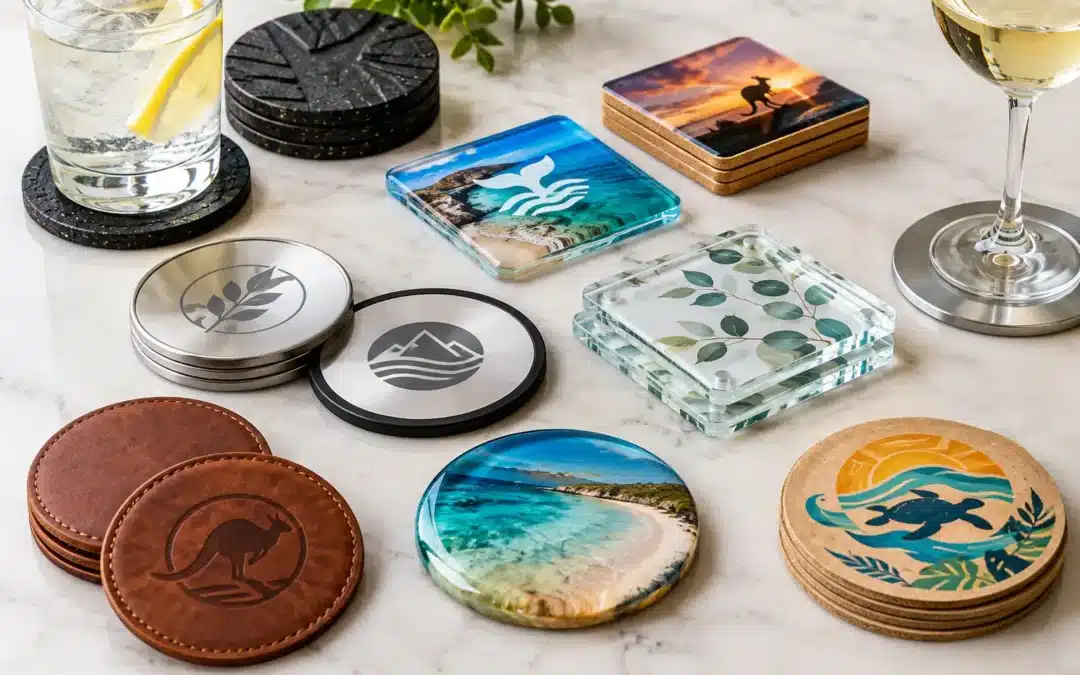
Recycled tyre rubber, cork and bamboo coasters appeal to hospitality businesses that want a tactile, grounded finish. They suit venues with sustainability messaging, outdoor areas, breweries, cellar doors and relaxed dining concepts. Recycled tyre rubber is particularly practical where a more durable, non-slip coaster is needed. Its substantial feel can make a branded design seem more permanent than a disposable alternative.
Cork brings warmth and a natural texture, but the artwork needs to be designed with the surface in mind. Fine detail and very pale colours may not reproduce as strongly as they do on a smooth, coated substrate. Bamboo offers a polished natural look, although the grain means each piece can have slight visual variation. For many buyers, that variation is part of the appeal.
Environmental claims should also be matched to the product and its intended use. A reusable coaster may reduce replacement frequency, while a cardboard coaster can be a sensible choice for a large one-off event. The most responsible option is often the one that fits the job well enough to avoid unnecessary waste.
Durable premium finishes
Acrylic, stainless steel, aluminium, glass, leather and resin coasters are gaining attention in premium hospitality settings and corporate guest areas. These materials can add weight, polish and perceived value at a table. They are well suited to hotels, executive lounges, private dining rooms, members’ clubs and gift packs where the coaster is expected to last.
Metal coasters can create a clean contemporary finish, while glass and resin allow for striking colour, layered artwork or a more decorative look. Leather offers a classic feel for venues with a refined or heritage-led brand. These options cost more than standard cardboard, and they may not be appropriate for a busy outdoor service area where breakage, loss or rapid turnover are concerns. However, used selectively in VIP spaces or as retail merchandise, they can make commercial sense.
Disposable does not have to look generic
Custom cardboard coasters remain a reliable hospitality staple. They are economical for high-volume service, easy to distribute and ideal for promotions with a limited run. The current shift is towards better artwork and more purposeful formats rather than plain, generic stock.
A quality printed cardboard coaster can carry a bold campaign, a sponsor message or a seasonal offer without requiring a long-term commitment. For pubs and clubs that change beer features regularly, this flexibility is valuable. It also gives marketing teams room to test a new message before investing in a more durable product.
Personalisation is becoming more operational
The best hospitality coasters do more than look good on a table. They help the venue operate, promote and communicate. A coaster can identify a reserved section, promote a signature serve or point customers towards an upcoming event. In larger venues, tailored coaster designs can support different bars, function rooms or service areas without creating confusion.
Hotels and event spaces are also using personalised coasters for conferences, weddings and private functions. A couple’s names and wedding date, a company logo, a conference theme or a charity campaign can turn a standard table item into a keepsake. For these applications, the finish matters. Guests are more likely to retain a coaster that feels deliberate and well produced than one that appears to be a last-minute print job.
This does not mean every order needs multiple versions. Variable designs can increase artwork preparation, production complexity and unit cost. If a venue needs a dependable everyday coaster, one strong design with a clear logo may be the smarter investment. Personalisation should solve a business need, not create extra administration for its own sake.
Colour, shape and texture are doing more work
Round coasters remain popular because they suit most glasses and are familiar to customers, but square, rounded-square and custom-shaped options are becoming more common where brand recognition matters. A shape based on a logo, bottle label or simple brand motif can be memorable. It must still sit flat, accommodate common glass sizes and stack efficiently behind the bar.
Colour is also being used more strategically. Dark backgrounds with light artwork can suit moody cocktail venues, while bright colours may work for casual dining, sporting clubs and festivals. The practical consideration is staining and wear. Very light coaster surfaces may show drink marks sooner, while dense ink coverage may be less forgiving if the printing method or material is not suited to frequent moisture.
Texture adds another layer of distinction. Embossing, debossing, laser engraving and raised effects can give a coaster a premium touch without relying on complicated artwork. These finishes work especially well for simple logos and monograms. They are less effective when the design contains tiny text, detailed photographs or multiple messages competing for attention.
Design for the real service environment
A coaster proof can look excellent on a screen and still underperform on a busy Friday night. Hospitality artwork should be assessed in context. Will the logo remain visible under a pint glass? Is the QR code scannable from a guest’s mobile? Will the colour palette still read clearly under warm lighting? Does the material cope with condensation, outdoor tables or repeated wiping?
Artwork setup is where experienced guidance saves time. Vector logo files generally produce the clearest result, particularly for sharp lines and small type. High-resolution images can work for photographic designs, but they need to be supplied at an appropriate size. A Free Digital Proof before production gives buyers the chance to check scale, positioning, spelling and colour direction before an order is committed.
Turnaround should be considered early, especially for event dates, venue openings and campaign launches. Custom manufacturing times vary by material, print process and order quantity. Allowing time for artwork approval and freight is far safer than treating coasters as the final item on an opening checklist.
Choosing a trend that will still work next season
Trends are useful when they support a venue’s identity, but the most effective coaster is rarely the most elaborate one. A durable recycled rubber coaster may be the right choice for a busy beer garden. A sharp cardboard run may suit a month-long festival. A leather or metal finish may belong in a premium suite, private club or client gift set.
Drink Coaster works with Australian hospitality and event buyers across a broad range of custom materials, helping match artwork, quantity, budget and turnaround to the intended use. The aim is straightforward: a coaster that looks right, performs properly and gives the brand more visibility with every drink served.
Before approving a design, place the proof beside the glassware, menus and table finishes it will live with. If the coaster strengthens that whole experience while standing up to real service, it is not following a trend – it is doing its job.