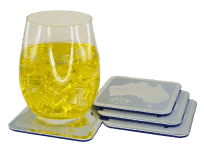

A coaster is often the first branded item a guest touches at a bar table, boardroom meeting or event reception. Knowing how to choose coaster materials means looking beyond appearance: the right choice needs to suit the drink service, artwork, expected lifespan, quantity and budget. A paper coaster that works brilliantly for a packed one-night launch may be the wrong fit for a restaurant that wants its logo in front of customers every day.
For Australian businesses, venues and event organisers, the best material is the one that supports the experience you want people to remember. It should protect the table, present your branding clearly and arrive ready for the occasion without creating unnecessary cost or production complexity.
Start with where and how the coasters will be used
Before selecting colours, shapes or finishes, consider the environment. Hospitality venues need coasters that can handle repeated contact with cold glasses, condensation and regular cleaning. A corporate event may need only a single-use option, but it still needs to look professional in photographs and feel considered in the hand.
Think about the drinks being served as well. Iced beverages create more moisture than a short black coffee, while cocktail service can involve frequent spills and wet glassware. If coasters will sit outdoors, they may also face heat, wind and rain. These practical details narrow the material choices quickly.
The expected lifespan matters just as much. Disposable cardboard is efficient for high-volume promotions, festivals and functions. Cork, bamboo, leather, acrylic, metal and glass are better suited to reusable gifts, premium venues, staff packs and retail-style merchandise. Reusability can lift perceived value, but it also changes the unit cost, print method and lead time.
How to choose coaster materials by purpose
Cardboard for high-volume campaigns and events
Cardboard coasters are a proven choice for pubs, clubs, breweries, trade shows and large events. They are lightweight, absorbent and economical at scale, making them ideal when you need to place a message in front of many people at once. Full-colour artwork, seasonal offers, QR-led campaigns and sponsor branding can all work well on a quality printed cardboard coaster.
Their limitation is longevity. Cardboard is designed for promotional reach rather than years of use. It can soften after prolonged exposure to moisture, so it is best for functions, active bar service and campaigns where turnover is expected. For a venue that changes specials often, that is an advantage rather than a drawback.
Cork and bamboo for a natural, relaxed presentation
Cork offers a warm, natural look with useful grip and insulation. It suits cafés, wineries, eco-conscious brands, accommodation providers and wedding tables where a softer, less corporate finish is wanted. Cork also works well with simpler artwork, including one-colour logos and understated designs.
Bamboo creates a more structured natural finish. It has a premium feel and is well suited to gifting, home entertaining and businesses that want a reusable coaster with organic character. As timber grain varies, the finished appearance can differ slightly from piece to piece. That variation is part of the appeal, but it means intricate artwork and tiny type should be assessed carefully in the digital proof.
Acrylic, glass and resin for colour and visual impact
Acrylic is a versatile option for clean, modern branding. It can deliver bright colour, crisp shapes and a polished appearance, making it suitable for offices, retail promotions, clubs and contemporary events. It is generally easy to wipe clean and can be produced in custom shapes where the design calls for something more distinctive than a standard circle or square.
Glass coasters make a strong impression in premium hospitality, property settlement gifts, executive packs and special occasions. They have weight, clarity and a refined finish, but they need careful handling and suitable packaging. They are not always the most practical option for high-energy venues or large outdoor events.
Resin coasters offer a decorative, substantial feel and can suit gift-focused projects where visual depth is part of the brief. They are usually chosen for impact rather than mass distribution. If your artwork is highly detailed, discuss the intended finish early so the design can be matched to the production method.
Stainless steel and aluminium for durable premium branding
Metal coasters are built for longevity. Stainless steel has a sleek, professional character that suits corporate gifts, premium bars, motoring brands and modern interiors. Aluminium can provide a lighter metal option with a similarly contemporary look. Both work particularly well when branding is simple, confident and designed to complement the material rather than cover it.
Metal is not usually the budget choice for a large giveaway. It is a stronger option when the goal is a keepsake that stays on a desk, coffee table or bar for years. Consider whether the coaster needs a backing layer or non-slip base to protect furniture and improve stability.
Leather and PVC rubber for tactile, practical use
Leather coasters bring a classic, executive feel to boardrooms, accommodation, hospitality and gift sets. They suit debossed or restrained logo treatments especially well. Because leather is associated with quality and longevity, it can make even a simple mark feel more considered. It is best suited to projects where the brand aesthetic supports that premium presentation.
PVC rubber is hard-wearing, flexible and practical around wet drinks. Its raised or moulded details can create a tactile finish that is popular for breweries, sports clubs, outdoor brands and casual venues. It handles regular use well and gives a bolder, more dimensional look than a flat printed coaster. Fine lines and very small text may need simplifying for the cleanest result.
LED coasters for attention at night-time events
LED coasters are designed for visibility. They can add a memorable feature to launches, nightclub activations, VIP functions and promotional displays where lighting is low and the aim is to create a talking point. They are not an everyday coaster for every setting, but for the right event they can turn a table setting into part of the entertainment.
Match the material to your artwork and branding
A material can be practical and still be the wrong choice if it does not show your brand at its best. Detailed photographic artwork and multi-colour campaign designs generally need a surface and print process that can reproduce fine elements clearly. Natural materials, engraving and moulded finishes tend to favour bolder logos, stronger contrast and less text.
Start by checking three things in your design: the smallest type size, the number of colours and the amount of detail. A busy menu-style layout may be suitable for a printed cardboard coaster but lose clarity on cork or a debossed leather finish. Conversely, a simple logo can look more premium when it is engraved into metal or pressed into leather rather than printed in full colour.
Shape is part of the branding decision too. Round coasters feel familiar and efficient, while square, hexagonal or custom-shaped coasters can reinforce a distinctive brand identity. Custom shapes may require more production planning, so they are best confirmed early, especially when an event date is fixed.
Balance budget, quantity and perceived value
The lowest unit price is not always the lowest overall cost. A coaster that lasts through months of customer use may create more repeated brand exposure than a short-lived giveaway. On the other hand, there is little value in selecting a premium reusable material for thousands of attendees at a one-hour function if most will not take it home.
For high quantities, cardboard is often the most cost-effective route. For mid-range quantities, cork, PVC rubber or acrylic can offer a useful balance between price and presentation. Metal, leather, glass, bamboo, resin and LED styles are generally more appropriate when the audience is smaller or the coaster is intended as a gift, reward or premium touchpoint.
Allow for the full project, not just the coaster itself. Packaging, individual presentation, delivery timing and artwork setup can influence the final decision. If you are ordering for multiple venues or a national campaign, consistency of colour and finish across the run also deserves attention.
Plan around turnaround and proofing
A good coaster project starts with a clear deadline, accurate quantity and usable artwork. Standard styles may be faster to produce than fully custom shapes, specialised finishes or complex multi-material designs. If your order is for a wedding, grand opening, conference or sponsorship activation, work backwards from the date and leave time for approval, production and delivery.
Always review a digital proof before production. It is the best opportunity to check logo placement, spelling, colours, bleed areas, orientation and any artwork limitations specific to the material. A professional proof can also reveal when a small design adjustment will produce a cleaner, more durable result.
At Drink Coaster, the material discussion is part of the service, not an afterthought. A free digital proof and practical production guidance can help you compare options with confidence before committing to an order.
The right coaster should feel at home in the hand, on the table and within your brand. Start with the service environment and desired lifespan, then choose the material that gives your artwork the clearest, most useful and most memorable place to perform.