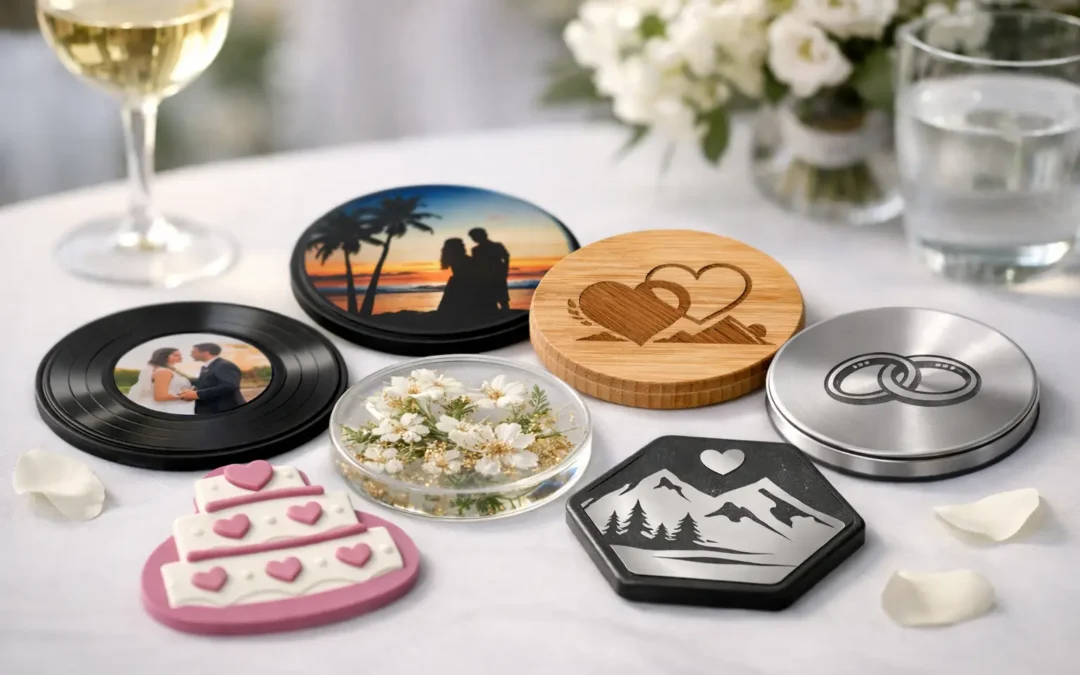
A wedding coaster has a busy job to do. It protects the reception tables, supports the styling of the room and gives guests something practical to take home. When designed well, it feels like a considered part of the celebration rather than a throwaway printed extra. Knowing how to create wedding coasters starts with deciding what you want them to say about the day – elegant, relaxed, modern, rustic or unmistakably personal.
Unlike a place card or a menu, a coaster remains in front of guests throughout the reception. That makes it an ideal place for your names, wedding date, monogram, a short message or even a custom illustration. The key is to balance the visual detail with the simple function of holding a cold drink.
Start with the coaster’s role at your wedding
Before selecting colours or artwork, decide how the coasters will be used. A single-sided cardboard coaster may be perfect for a large cocktail-style reception where budget, quick service and easy replacement matter. A set of engraved cork, bamboo or leather coasters can suit a smaller wedding where each guest receives a more substantial keepsake.
The venue also makes a difference. A formal sit-down dinner often suits a neat round or square coaster placed at each setting. For a brewery, winery or beachside celebration, absorbent pulpboard or cork offers a more relaxed finish and handles condensation well. If the coasters are intended as bonbonniere, durable acrylic, glass, resin or stainless steel options are worth considering.
There is no universal best material. The right choice depends on guest numbers, the drinks being served, the reception styling and whether the item is mainly event stationery, a practical table accessory or a take-home favour.
How to create wedding coasters that match your styling
Begin with the visual elements already chosen for the wedding. Your invitations, menus, florals and signage should provide direction, not restrictions. Repeating one or two colours, a typeface family or a small motif creates a coordinated look without making every item identical.
For a classic design, use a monogram, names and date with a restrained border. For a more contemporary wedding, a simple line drawing of the venue, a clean initial mark or an abstract colour shape can work well. Couples hosting a destination wedding may include a subtle map outline, while a winery reception may use a grapevine or vineyard-inspired illustration. Keep the design relevant to the occasion rather than adding decoration simply because space is available.
The most effective coaster artwork is easy to read at a glance. Coasters have a small printable area, so large names and a clear date generally have more impact than paragraphs of text. If you would like to add a message, keep it short. A line such as Thank you for celebrating with us is enough.
Consider whether the design will be printed on one side or both. One-sided printing is often the sensible choice when coasters will sit flat on tables all evening. Double-sided printing can be worthwhile when guests are likely to pick them up, use them again at home or receive several in a gift pack. The reverse side can hold a thank-you message, a second design variation or a discreet social media tag if that suits your event.
Choose colours for real-world use
Screen colours can look brighter than printed ink, and pale lettering can disappear against a light or textured material. High contrast usually delivers the cleanest result. Dark text on natural cork, white artwork on a deep-coloured background, or a single strong ink colour on absorbent board are dependable options.
If your invitation artwork includes fine watercolour, very thin lines or metallic effects, ask how it will translate to your selected coaster material. Some finishes are better suited to full-colour printing, while engraving and single-colour printing favour bolder artwork. A free digital proof gives you the opportunity to check layout, spacing and legibility before production begins.
Select a material guests will actually use
Material changes both the appearance and the practical life of wedding coasters. Cardboard and pulpboard coasters are cost-effective, absorbent and well suited to larger quantities. They are a strong option for bar service, welcome drinks and casual receptions, particularly when the priority is a polished event detail rather than a permanent favour.
Cork and bamboo bring natural texture to the table. They work especially well with garden, rustic, boho and Australian outdoor weddings. Because each piece may have slight natural variation, they feel warm and individual, though fine artwork should be simplified for the best result.
Acrylic offers sharp colour reproduction and a sleek, modern look. It is reusable and can be cut into distinctive shapes, but it is less absorbent than traditional board or cork. Glass, resin, aluminium and stainless steel create a premium keepsake, particularly for intimate weddings, bridal-party gifts or a paired set for each guest. These options usually require more planning because unit costs, production times and packaging requirements can be higher.
Leather-look materials can add a refined finish to a formal or country wedding, while PVC rubber suits bold, colourful designs and can handle frequent use. The important question is not simply which material looks best in a product photo. Ask how it will feel in the venue, under a drink and in a guest’s home after the celebration.
Get the size, shape and quantity right
Round and square coasters are popular because they fit most glassware and stack easily for venue staff. A standard size is generally the safest choice for a busy reception, but custom shapes can be memorable when they support the design. A subtle arch, scalloped edge, initial silhouette or outline inspired by your venue can add personality. Avoid shapes with narrow points or intricate edges that reduce the usable surface area for drinks.
When calculating quantities, do not order only one coaster per guest. Drinks are moved, tables are reset and some coasters will be used at the bar. For disposable or absorbent coasters, allow enough for at least two per guest, with additional stock for a long reception or multiple service areas. For durable favour coasters placed at each setting, one per guest may be appropriate, but ordering a small overrun protects you against last-minute additions, damage or keepsakes for yourselves.
If you are offering different designs, keep the quantities practical. Two complementary designs can look intentional and are easy to distribute. A separate design for every table may create unnecessary complexity unless the table names or themes are central to your event.
Prepare artwork early and approve the proof carefully
Wedding stationery is often finalised close to the event, but custom coasters should not be left until the final week. Artwork preparation, proof approval, production and delivery all need time, particularly if you have selected a specialty material or custom shape. Build a buffer for changes to guest numbers, postal delays and venue delivery arrangements.
For the best print quality, supply a high-resolution logo or illustration where possible. Vector files are ideal for crisp lines and scalable artwork, although a professional supplier can advise on suitable file formats. If you only have an invitation PDF or a saved image, it may still be usable, but it should be checked before production.
Review the digital proof as if you are a guest holding the coaster. Check spelling, date format, names, spacing and the visibility of any small text. Confirm the print area and orientation, especially if the coaster has a shaped edge. This is also the time to confirm material, quantity and delivery deadline. A clear approval process prevents small artwork issues from becoming costly on the day.
Make the coasters part of the guest experience
Presentation affects whether guests notice the detail. At a seated reception, place a coaster beneath the first glass or alongside the menu. At a bar-focused event, stack them neatly at service points so guests and staff can use them naturally. If they are intended as favours, pair them with a small thank-you card or package them as a set near the exit.
Wedding coasters do not need to compete with the flowers, food or speeches. Their value is quieter: they make the tables feel finished, protect the venue furniture and carry a small reminder of the celebration into everyday life. With the right material, clear artwork and realistic production timing, they become one of those useful wedding details guests genuinely keep.