A branded coaster does more than protect a tabletop. At a busy bar, a trade stand or a wedding reception, it places your name, logo or message directly in front of guests while they are settled in and engaged. Knowing how to order branded coasters properly means making a few practical decisions before production begins – and avoiding costly last-minute changes.
The strongest orders start with the occasion. A single-use cardboard coaster for a product launch has different requirements from a long-life leather coaster for a boardroom, or cork coasters for a café that wants an earth-conscious look. When the material, artwork, quantity and deadline are clear from the outset, the quoting and proofing process is straightforward.
Start with the job the coaster needs to do
Before choosing colours or finishes, consider where and how the coasters will be used. Hospitality venues often need a cost-effective option that can be replaced regularly, while clubs and corporate teams may prefer a durable piece that stays on desks, meeting tables or in client gift packs.
Cardboard coasters are a practical choice for pubs, breweries, restaurants, festivals and high-volume promotions. They are light, absorbent and well suited to bold full-colour branding. If your campaign is short-term or your guest numbers are high, cardboard usually delivers the best balance of impact and unit cost.
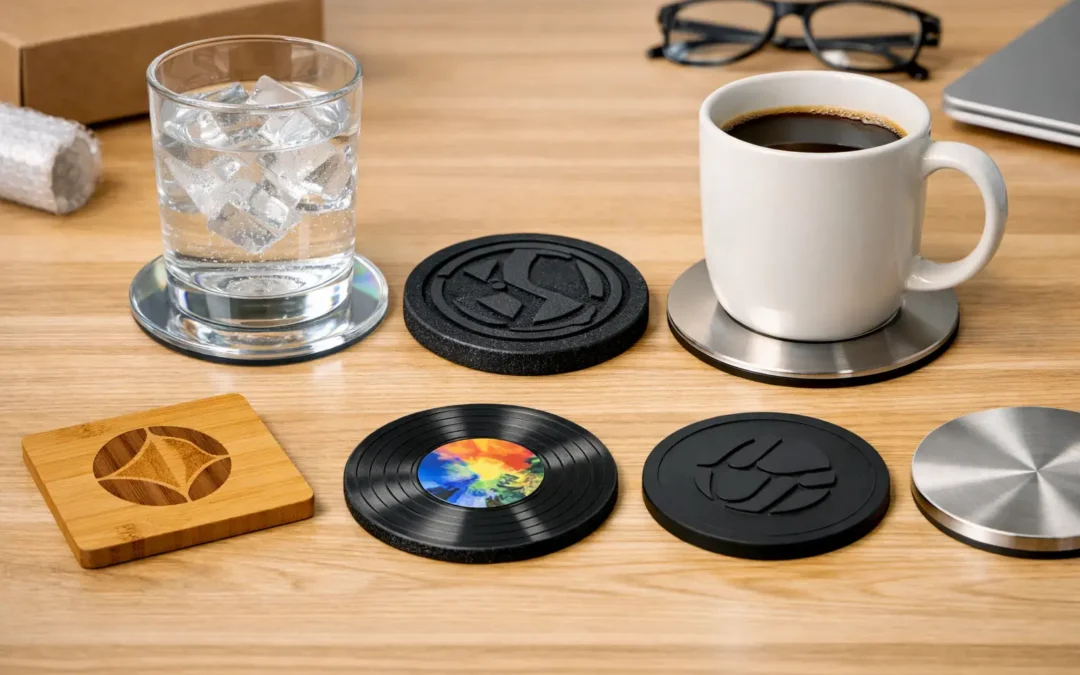
For a more permanent result, consider acrylic, stainless steel, aluminium, glass, cork, bamboo, leather, PVC rubber or resin. These materials give you different visual and tactile qualities. Cork and bamboo can suit natural, wellness or sustainability-led brands. Stainless steel and aluminium create a clean contemporary feel. Leather works well for executive gifts, premium venues and corporate hospitality. PVC rubber is durable, flexible and a good fit for logos with strong shapes or raised details.
There is no universal best material. The right choice depends on whether you need absorbency, long-term use, a premium presentation, a particular finish, or a sharper price point. Sharing the intended use with your supplier early makes the recommendation more accurate.
Decide on quantity before you finalise the design
Coaster pricing is closely tied to quantity, material and decoration method. Ordering too few can push up the unit price, while ordering far more than you can store may not make commercial sense. Estimate the number of tables, attendees, drinks served, locations or mail-out packs involved, then allow a sensible buffer for replacements and future use.
For events, work from realistic attendance rather than ticket capacity alone. A function for 200 people may need more than 200 coasters if tables are reset, drinks are served throughout the day or guests take one home. A venue promotion may need stock for several weeks, especially if the coaster includes a time-sensitive offer or QR code that will remain relevant.
It also helps to think about repeat ordering. If your branding is stable and the coasters will be used year-round, a larger run may provide better value. If you are trialling a new logo, campaign line or seasonal promotion, a smaller order reduces the risk of holding outdated stock.
Prepare artwork that will reproduce clearly
A coaster has a compact print area, so clarity matters more than cramming in every brand element. Your logo should be easy to recognise at a glance, with readable type and enough contrast against the background. Fine lines, tiny text and pale colours can lose definition depending on the material and print method.
Supply your logo in the best available format. Vector artwork, such as AI, EPS or PDF files, is generally preferred because it can be scaled cleanly. High-resolution PNG, JPEG or PDF files may also be suitable for full-colour designs, provided the original is sharp and large enough for print. If you are unsure what you have, send the available file for review rather than trying to rebuild it yourself.
Think carefully about both sides of the coaster. A one-sided design is often ideal when cost is the priority. Double-sided printing can be worthwhile when you have a promotion, menu message, event details, contact information or a second design element to share. For example, a brewery might feature its logo on one side and a limited-release beer message on the reverse.
Avoid placing essential artwork too close to the edge. Production requires a safe area and, for many printed products, bleed around the outside of the design. Your supplier can advise on the template and adjust placement through the proofing process.
Request a quote with the details that affect production
The quickest way to order branded coasters is to provide a clear brief. You do not need to know every technical specification, but the following details allow a supplier to quote accurately:
- preferred material or the intended use if you need advice
- required quantity and whether you expect a repeat order
- coaster shape and approximate size, such as round, square or custom shape
- one-sided or two-sided decoration
- logo, artwork or design concept
- delivery suburb and postcode
- the date you need the coasters in hand.
The delivery date is particularly important. Fast turnaround may be available on selected products and production schedules, but it depends on the material, customisation process, artwork readiness and freight destination. A deadline for an interstate conference, regional event or venue opening should be raised at the first enquiry, not after artwork approval.
A good quote should make it easy to compare options. If budget is tight, ask what changes would reduce the cost without weakening the result. Moving from a premium material to cardboard, simplifying decoration, adjusting quantity or selecting a standard shape can all influence the final price. The aim is not simply to buy the cheapest coaster. It is to choose an option that looks right for your brand and performs for the intended period of use.
Use the digital proof as a quality checkpoint
A free digital proof is one of the most useful stages in a custom order. It shows how your supplied artwork and specifications are expected to appear before production proceeds. Check it carefully, even when the design seems simple.
Confirm the logo version, spelling, mobile numbers, website details, dates, colours, orientation and any promotion terms. If you are ordering for a club, franchise or multi-site business, have the person responsible for brand approval review the proof as well. A quick internal sign-off can prevent delays and ensure the final stock meets your organisation’s standards.
Digital colours can vary between screens, and printed results can differ by material. This is especially relevant for brand colours, metallic finishes, transparent acrylic and natural materials such as cork, bamboo or leather. If precise colour matching is essential, say so early and provide your brand colour references where available. Your supplier can explain the most suitable production approach and any practical limitations.
Do not approve a proof until you are comfortable with every visible detail. Once production begins, changes may mean additional cost and a new production timeframe.
Allow time for approval, production and delivery
The production clock does not start when you first request a quote. It usually starts after the artwork is finalised, the proof is approved and the order requirements are confirmed. This is why a clear brief and timely feedback are so valuable.
For planned events, start the process as soon as the date and guest numbers are reasonably settled. This leaves room to consider samples, refine the artwork or change material if the first option is outside budget. It also gives freight more breathing room, particularly during busy periods such as end-of-year functions, major sporting events and large conference seasons.
If you need coasters urgently, be direct about it. An experienced supplier can identify which materials, decoration methods and quantities are realistic for your deadline. Being flexible on a custom shape, special finish or premium material may open up faster alternatives without compromising the overall presentation.
Match the finish to your brand experience
The small details affect whether a coaster feels like a disposable handout or a considered part of your customer experience. A refined restaurant may favour cork, leather or glass to complement its table setting. A local sports club might choose economical cardboard coasters for match days and sponsor promotions. A technology company could select acrylic or aluminium for a modern event gift.
Shape is another useful branding tool. Round and square coasters are versatile and efficient, while a custom outline can create stronger recall when it suits the logo or product. Custom shapes may involve different production requirements, so they are best considered early rather than added at the final approval stage.
Drink Coaster works with Australian businesses, venues, event organisers and individual customers across a wide range of custom materials. With more than 20 years of promotional product experience, the focus is on clear advice, professional artwork support, free digital proofs and practical options for your budget and deadline.
A well-ordered branded coaster should feel effortless to the person who receives it. Give the ordering process a little care at the beginning, and the finished piece can keep working for your brand long after the first drink is served.