A coaster is one of the few branded items guests will touch repeatedly during an event. It sits under every drink, appears in photos and keeps tables looking considered rather than cluttered. This reusable event coaster guide is designed to help Australian organisers select a practical, polished option that works for the venue, the budget and the brand long after the final guest leaves.
Reusable coasters are particularly effective where presentation matters: corporate functions, hospitality launches, club events, weddings, conferences and promotional activations. Unlike a disposable item, a well-made coaster can be taken home, used at the office or kept behind the bar, extending the life of your message beyond a single service.
Start with the event environment
The best reusable coaster is not always the most expensive one. It is the one that suits how drinks will be served, how often the coaster will be handled and what you want guests to remember.
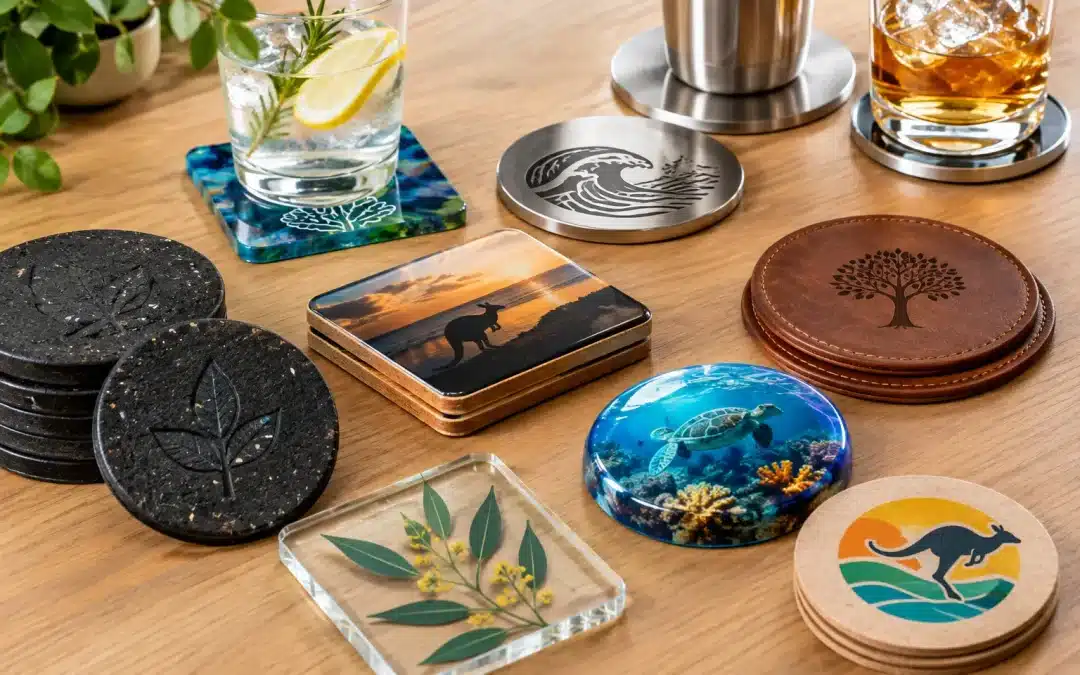
For a busy bar, outdoor event or high-turnover function, durability and easy cleaning should lead the decision. Rubber, PVC and stainless steel coasters can handle regular use and are well suited to venues where spills are expected. For a premium dinner, boardroom event or formal gift, leather, glass, resin or acrylic can create a more elevated finish.
Think about the tables, too. A dark coaster can disappear on dark timber, while a clear acrylic option may suit a contemporary setting but show fingerprints more readily. Cork and bamboo bring warmth to casual, natural or sustainability-focused events, while recycled tyre rubber gives a distinctive, hard-wearing look with a strong practical story.
Outdoor conditions are another deciding factor. Paper-based options can struggle with damp surfaces and condensation, whereas rubber, PVC and metal choices are more dependable in humid weather or around pools. If the event is a one-off but you still want a reusable product, a simple rubber or cork coaster often provides the right balance of cost and longevity.
Choose a material that supports your message
Material affects more than durability. It shapes how your logo prints, how the coaster feels in the hand and the impression it leaves with guests.
Recycled tyre rubber for practical promotion
Recycled tyre rubber coasters are a strong choice for pubs, clubs, sporting groups and businesses wanting a durable promotional item. They are designed for regular use, offer good grip on tables and suit bold logos and straightforward messaging. Their recycled material story can also support businesses that want a more considered alternative to throwaway event merchandise.
Cork and bamboo for warm, natural styling
Cork is lightweight, absorbent and familiar in hospitality settings. It works well for cafés, wineries, weddings and community events where an organic finish suits the overall styling. Bamboo offers a firmer, more refined look and can feel more like a keepsake, particularly when paired with a simple logo or event date.
These materials are not ideal for every full-colour artwork concept. Fine detail and large colour areas may reproduce differently than on acrylic or PVC. A clear digital proof is useful here, allowing you to assess the result before production begins.
Acrylic, resin and glass for a premium finish
Acrylic and resin coasters can deliver crisp colour and a modern, substantial feel. They suit branded launches, corporate gifts and events with strong visual identity. Glass offers an elegant finish for special occasions and high-end hospitality, although it needs more careful handling and may not be the best choice for crowded, fast-moving venues.
Premium materials are worthwhile when the coaster is intended to be retained. For example, a set created for a wedding, milestone celebration or executive event can continue to be used at home well after the occasion.
Metal, PVC and LED for high-impact events
Stainless steel and aluminium coasters create a clean, contemporary look and can be a sensible option for long-term venue use. PVC rubber works well for detailed shapes, raised branding and colourful designs, particularly for sports clubs, festivals and promotional campaigns.
LED coasters are more specialised. They can create a memorable effect in dimly lit bars, night events and product launches, but they require a budget that reflects the added feature. They are best used where the visual impact is central to the event experience, not simply as a drink-resting surface.
Plan quantities around service, not guest numbers alone
Ordering one coaster per attendee can be enough for a seated dinner where each place setting is controlled. It may be nowhere near enough for a cocktail event with multiple drink stations, guests moving between spaces and tables being cleared throughout the night.
For venue stock or repeated use, consider the number of tables, bar positions and service cycles. A hospitality venue may need enough coasters to cover a busy service, plus a practical reserve for washing, misplaced stock and peak trading periods. For an event giveaway, factor in staff, speakers, sponsors and a small buffer rather than ordering only to the exact RSVP count.
It also pays to decide whether the coaster is part of the table setting, a take-home gift or a long-term branded asset. Those three purposes can call for different quantities and materials. A lower-cost reusable coaster may be ideal for hundreds of guests, while a premium coaster might be reserved for VIP packs, sponsors or key clients.
Keep the design clear at coaster size
A coaster has limited real estate. The most effective artwork is usually not the artwork with the most information. A logo, short message, event name or date will often perform better than a crowded layout with multiple contact details.
Use strong contrast between the background and key branding. Fine lines, small type and subtle tonal differences can be lost once a drink is placed on top or condensation appears. If your logo includes intricate elements, simplify the layout rather than reducing everything to an unreadable size.
Consider what happens when the coaster is in use. Branding positioned around the outer edge can remain visible beneath a glass, while a centred logo makes a strong impression when the coaster is picked up or photographed. Double-sided printing may be worthwhile for a keepsake item, but it is not essential for every order. The right choice depends on your budget and whether guests are likely to handle the coaster after the event.
At Drink Coaster, a Free Digital Proof helps customers check layout, colour direction and artwork placement before production. This step is especially valuable for event dates, sponsor logos and designs that need to align with other printed materials.
Match the coaster to the rest of the event
Coasters work hardest when they feel like part of the event rather than an afterthought. Match colours to menus, signage, table numbers, lanyards or product packaging where possible. For corporate events, a clean logo and restrained colour palette can look more professional than a heavily promotional design. For weddings and celebrations, initials, a meaningful illustration or a simple date can turn the coaster into a useful memento.
Sponsor recognition needs a little care. If several sponsors must appear, avoid treating the coaster like a billboard. Use one side for the event brand and the other for supporting partners, or create a hierarchy so the principal message remains clear. Guests are more likely to keep an item that looks well designed.
Allow time for artwork, proofs and delivery
Fast turnaround is valuable, but event merchandise should not be left to the final week if it can be avoided. Artwork approvals, material selection and production schedules all need time, particularly for larger quantities or custom shapes.
Start with the event date, then work backwards from the date you need the coasters delivered. Allow room for a digital proof, internal approvals and any changes to sponsor details or event branding. If your artwork is not ready, a supplier can often advise on suitable file preparation and simple design approaches, but early communication gives you more options.
For recurring events or venues, ordering ahead can also improve consistency. Using the same material, dimensions and artwork across multiple functions builds brand recognition and makes replenishment easier for staff.
A reusable coaster should earn its place on the table: it needs to protect the surface, support service and represent your organisation well. Choose a material guests will want to keep, give the design room to breathe and allow enough lead time to approve it properly. The result is a small, useful branded item that keeps working well after the glasses are cleared.