A coaster earns its place when it does more than carry a logo. The best top coaster ideas for branding put your name, message or event detail in front of people at the exact moment they are relaxing, meeting, celebrating or making a purchasing decision. Unlike a flyer that gets put aside, a well-made coaster stays on the table and keeps working throughout the visit.
For Australian venues, marketing teams, clubs and event organisers, the strongest choice depends on where the coaster will be used, how often it will be handled, and what you need the branding to communicate. Material, shape, print method and artwork all affect the final result. A sharp design on the wrong substrate can feel out of place, while a practical material with the right finish can make even a simple logo look considered and professional.
Top coaster ideas for branding by purpose
Start with the setting rather than the product. A busy pub needs durability and grip. A corporate boardroom may call for a refined finish. A wedding or launch event can carry more personality because the coaster is part of the occasion styling as well as a practical table item.
1. Recycled tyre rubber for high-traffic venues
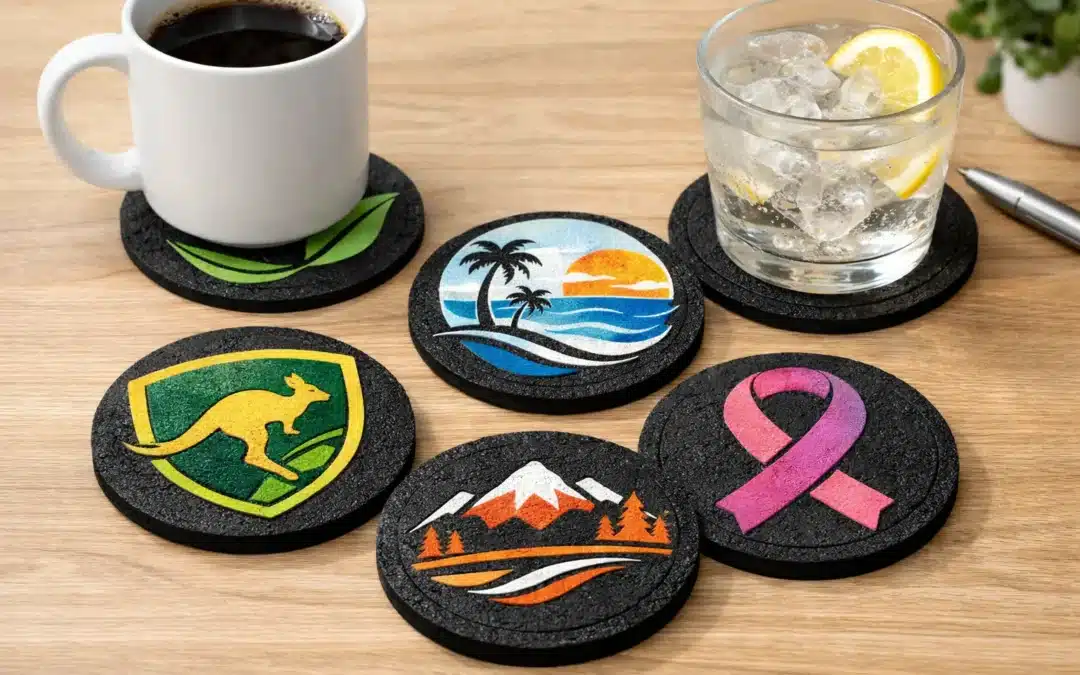
Recycled tyre rubber coasters are a practical choice for pubs, clubs, breweries, cafes and outdoor hospitality areas. They are hard-wearing, water-resistant and substantial in the hand, helping them stay put on tables where drinks are constantly being served and cleared.
This material also gives sustainability messaging a credible place in the design. Rather than printing a vague environmental claim, use a small recycled-material note on the reverse side or incorporate it into a campaign message. Keep the front clean with a bold logo, venue name or beer branding. Fine details can be lost on heavily textured designs, so strong type and clear contrast generally produce the best result.
2. Cardboard coasters for promotions and events
Cardboard remains one of the most effective options for large-scale promotions, festivals, product launches and hospitality campaigns. It is lightweight, economical and ideal for full-colour artwork, QR codes, special offers and changing seasonal messages.
The main trade-off is lifespan. Cardboard is designed for repeat use over a sitting or short campaign, not for years of service. That is often an advantage when you need to promote a limited-time menu, a new beverage, an upcoming event or a competition. Consider a two-sided layout: brand identity on one side, then a clear offer, booking prompt or campaign detail on the other.
3. Cork for natural, relaxed brand presentation
Cork coasters suit wineries, accommodation providers, wellness businesses, artisan food brands and organisations that want a warm, natural look. The texture feels less corporate than glossy materials, and it works particularly well with simple black, dark brown or single-colour artwork.
Cork rewards restraint. A large logo, monogram, venue illustration or short line of copy looks more premium than a crowded design. If your branding relies on photographic images, gradients or very small text, another material may represent it more accurately. For brands built around handcrafted products or regional experiences, however, cork can feel like a natural extension of the offer.
4. Acrylic, glass and resin for a polished finish
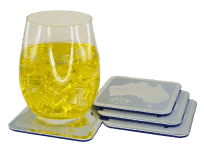
Acrylic, glass and resin coasters help create a more permanent, premium impression. They are suited to executive gifting, property settlements, hotel suites, boardrooms, milestone events and retail merchandise where presentation matters as much as utility.
Clear acrylic can frame a logo or full-colour insert neatly, while glass brings weight and a crisp, refined surface. Resin offers greater creative freedom for embedded artwork, colour effects or distinctive shapes. These options usually require more careful handling and a higher unit investment than cardboard or cork, but they can remain on desks and coffee tables for a long time. That extended exposure can make them valuable for relationship-based marketing.
5. Stainless steel and aluminium for modern corporate gifts
Metal coasters make sense when your brand is clean, contemporary and built around quality. Stainless steel is durable and polished, while aluminium provides a lighter option with a modern industrial character. Both are well suited to engraved or etched logo treatments, especially for professional services, automotive businesses, technology firms and premium client gifts.
The design should match the material. Fine-line marks, simple typography and minimal layouts often look strongest on metal. Full-colour artwork is possible on selected products and processes, but a large, busy graphic may compete with the surface rather than enhance it. Ask for a digital proof before production so you can assess line weight, spacing and logo placement at the actual coaster scale.
6. Bamboo and leather for warmer client gifting
Bamboo and leather-style coasters are useful where the goal is to create a personal, lasting impression. They suit real estate settlement packs, staff recognition, accommodation welcome gifts, wineries and professional service firms. A set of coasters can also work well in a larger gift pack without feeling like throwaway merchandise.
Bamboo provides a clean timber look and suits laser-engraved branding. Leather offers a more traditional executive finish, particularly with debossed or subtle printed marks. Neither material is the best choice for dense full-colour promotional artwork. They perform best when the brand can be recognised through a confident logo, initials, a tagline or a small event motif.
7. PVC rubber and LED styles for memorable campaigns
For brands that need immediate visual impact, PVC rubber and LED coasters create a different kind of interaction. PVC can be moulded into custom shapes and raised details, making it useful for mascot-led promotions, sporting clubs, beverage brands and youth-focused events. LED coasters can bring atmosphere to night-time launches, bars, entertainment venues and branded functions.
These are specialist choices, not default choices. They can generate attention, but their production requirements, artwork limitations and budget differ from a standard printed coaster. They work best when the design concept genuinely benefits from shape, texture or light rather than using novelty for its own sake.
Make the artwork work at coaster size
A coaster is a small format with a large job. It needs to be recognisable from across a table, survive being partly covered by a glass, and still look intentional after condensation and handling. This is why the best branded coaster artwork is usually simpler than a brochure, poster or social media tile.
Prioritise one key message. For a venue, that may be the logo and a signature product. For an event, it could be a date, hashtag or sponsor name. For a sales campaign, the primary message may be an offer with a QR code. Trying to carry all three equally often leads to a cluttered result.
Use strong contrast between the background and artwork, particularly for logos with fine detail. Leave a clear margin around the outer edge so important copy is not lost to cutting tolerances or hidden by a drink. If you include a QR code, allow enough space around it and test it from a printed proof at the final size. A code that scans on a computer screen may not scan well once reduced or placed on a textured surface.
Shape also influences recognition. Round coasters are familiar and efficient for many hospitality applications. Square and rounded-square styles give more room for copy or graphic layouts. Custom shapes can be effective for a distinctive product silhouette or emblem, but the practical surface area still needs to support a glass properly.
Match your budget to the campaign lifespan
A lower unit price is not always the lowest cost per impression. If a cardboard coaster supports a one-night promotion for hundreds of guests, it may be exactly right. If you need something to sit on a client desk for several years, a premium bamboo, acrylic or metal option may offer better long-term value.
Think about quantity, delivery timing and whether the coaster is part of a broader campaign. A hospitality group may choose durable rubber coasters for everyday service, then add cardboard versions for seasonal promotions. An event organiser might select affordable printed coasters for tables and reserve glass or resin pieces for speakers, sponsors or VIP gift bags.
It also helps to plan for reorderability. Campaign dates and offers will change, but core brand coasters may need repeat production. Keeping the base artwork organised and using a consistent logo treatment makes future orders faster and reduces avoidable design changes.
Use professional support before production
Custom products should not be a guessing game. Before approving an order, check the artwork requirements, confirm the intended print or engraving method, and review a free digital proof carefully. This is the stage to spot a logo that needs more contrast, text that is too small, or a layout that would be stronger on the reverse side.
At Drink Coaster, material choice and artwork guidance are part of helping customers select a product that suits the actual use case, not simply the first option they see. Clear communication early on is particularly valuable when you are coordinating an event deadline, a multi-location venue rollout or a branded gift program.
A coaster may be a small item, but it sits at the centre of a table, conversation and customer experience. Choose one that fits the setting, give the artwork room to breathe, and it can become one of the most practical pieces of branding your audience sees all day.