A coaster is usually noticed when a drink arrives, a table is cleared or a customer takes a photo. That makes its outline more than a production detail. This guide to custom coaster shapes explains how to choose a profile that supports your logo, suits the setting and remains practical through real service.
For hospitality venues, branded coasters can reinforce a polished table presentation while protecting surfaces. For marketing teams, clubs and event organisers, the right shape gives a familiar promotional item a stronger point of difference. The best choice is rarely the most unusual shape available. It is the one that makes the brand easy to recognise, accommodates the glassware and can be produced consistently within budget and deadline.
Start with the job the coaster needs to do
Before selecting an outline, consider where and how the coaster will be used. A busy pub needs a shape that stacks neatly, sits flat and handles frequent replacement. A wedding or product launch may place more value on a distinctive silhouette that ties into an invitation, campaign or event theme. Corporate gifts often need a refined profile and durable material that people will keep on a desk or coffee table.
Glassware matters just as much. Standard round coasters comfortably support most schooner, wine and tumbler bases. Larger formats may be needed for oversized mugs, cocktail glasses or share-table service. If the coaster is too small, condensation can reach the tabletop and the design can look out of proportion. If it is too large, it may crowd a compact café table or increase material costs without adding much value.
Think about the full customer experience. Will staff place drinks quickly during peak service? Will guests take coasters home? Is the design intended to promote a QR code, a menu message or a campaign offer? Those answers should guide the shape before artwork is finalised.
Guide to custom coaster shapes: the proven options
Round coasters
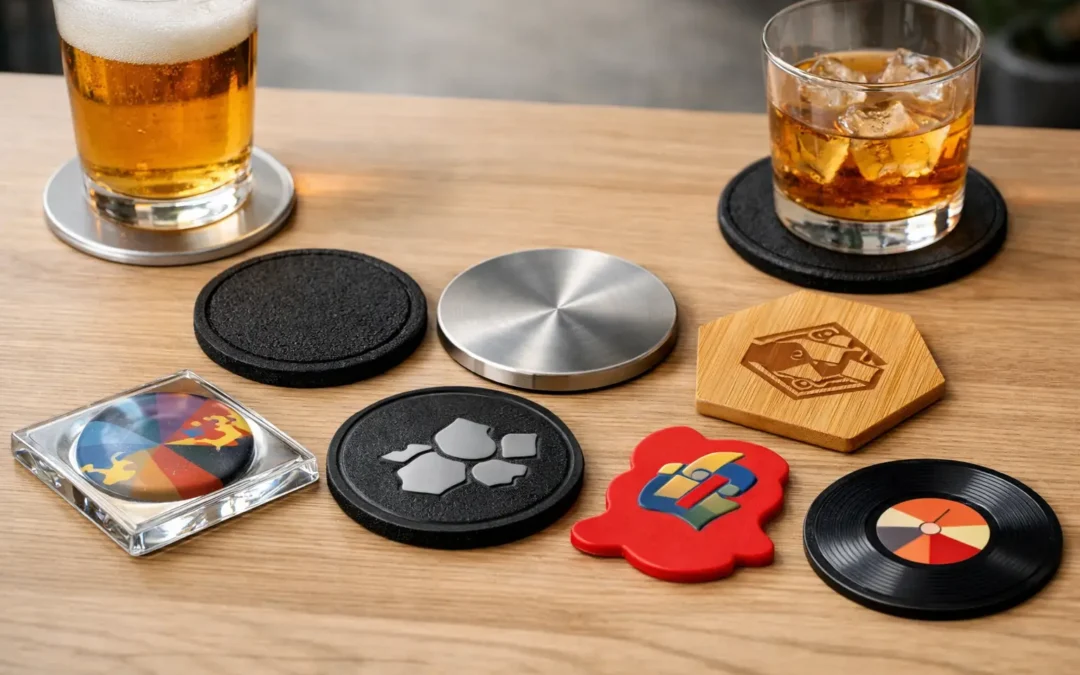
Round is the most versatile custom coaster shape. It suits circular drink bases naturally, works across cardboard, cork, acrylic, rubber, metal and many other materials, and gives logos a balanced presentation. It is a dependable choice for cafés, breweries, restaurants, corporate campaigns and personal celebrations.
A round profile is particularly useful when the artwork includes a centred logo, badge or emblem. There are no corners competing for attention, so the mark remains the focal point. The trade-off is familiarity. If your brand needs an immediate visual point of difference, a standard circle may feel less distinctive than a custom contour.
Square and rounded-square coasters
Square coasters offer generous printable space, which makes them a strong option for logos with taglines, event details, product imagery or a call to action. They also stack efficiently and provide a neat, modern look in hospitality settings. A square can suit almost any brand, from a professional services firm to a local venue with a strong graphic identity.
Rounded corners soften the appearance and reduce wear at the edges, particularly on reusable materials. This small adjustment can make a coaster feel more premium while keeping the production and storage advantages of a square format. For artwork with text close to the edge, allow a safe margin so essential details are not lost during trimming.
Rectangular and panoramic shapes
Rectangular coasters are practical when the message needs more room than a circle or square allows. They work well for bar menus, seasonal promotions, sponsorship messages and landscape logos. A long format can also suit a venue name paired with a web address, social handle or short offer, provided the design stays uncluttered.
The main consideration is stability. A very narrow rectangle may not suit round glassware as well as a broader format, and it can look awkward if the drink base extends beyond the edges. Keep the proportions sensible and match the shape to the drinks most often served.
Hexagons, arches and other geometric profiles
Geometric shapes are a good middle ground between standard and fully bespoke. Hexagons can feel contemporary and work well for breweries, property brands, technology businesses and clubs. Arched shapes can echo architectural features, labels or signage. Octagons and ticket-style profiles can add personality without making the artwork difficult to position.
These options still need to function as coasters first. Fine points, tight angles and very narrow sections are more vulnerable to bending in disposable board or may not be suitable for every material. A practical geometric outline with broad edges will usually deliver a better result than an intricate shape chosen purely for novelty.
Custom die-cut and contour shapes
A custom die-cut follows the outline of an object, logo or recognisable brand element. Think of a bottle, leaf, vehicle, mascot, product pack, shield or map outline. When executed well, it can make the coaster feel like part of the campaign rather than an add-on. This is especially effective for launches, festivals, sporting clubs, tourism promotions and themed events.
Custom contours require more planning than standard shapes. Artwork needs clean edges, adequate support around the drink area and enough space for logos or print details to remain legible. Highly detailed outlines may need simplifying, particularly for cardboard coasters or small production sizes. There can also be additional tooling considerations, so a tailored quote and a free digital proof are valuable before production begins.
Match the shape to the material
The same outline can behave differently depending on the material. Cardboard and pulpboard are cost-effective for high-volume promotions, hospitality service and short campaigns. They suit round, square and uncomplicated die-cut shapes particularly well. Cork and bamboo bring a natural finish that works beautifully with organic brands, wineries, cafés and eco-conscious event styling, though very fine details may not translate as sharply as they do in acrylic.
Acrylic, glass, stainless steel and aluminium can support crisp geometric forms and provide a more durable, premium feel. They are suited to corporate gifts, bar merchandise and reusable venue coasters. PVC rubber is excellent for grip and water resistance, making it a practical option for active environments, outdoor events and brands wanting raised detail or bold colour. Leather and resin offer a more considered finish for boardrooms, hospitality gifts and special occasions.
Material choice affects thickness, edge finish, printing method and cost, so it should be discussed alongside the shape rather than after it. A design that looks ideal as a printed cardboard circle may need adjustment to work as an engraved leather square or a moulded rubber contour.
Keep artwork clear inside the outline
A custom shape should make the artwork stronger, not harder to read. Start by identifying the visual element that must be seen first: usually the logo, venue name or event monogram. Position it where a drink will not hide it completely. On round coasters, that may mean using a centred design with supporting information around the perimeter. On a custom contour, it may mean reserving the widest central area for the key message.
Avoid placing fine type, QR codes or borders too close to the cut edge. Coaster production needs a trim tolerance, and drinks create a natural visual obstruction. High contrast colours, clear type and simple composition generally outperform crowded layouts. If your logo is horizontal, a rectangle or landscape format may give it more room than forcing it into a circle.
A professional digital proof gives you the chance to assess proportions, safe areas and the relationship between the glass base and the design. It is also the right time to check spelling, phone numbers, dates and colours. Changes are easier before manufacturing begins than after a large event order has been produced.
Balance impact with quantity, budget and turnaround
Standard round and square formats are often the most efficient choice when you need larger quantities or a fast turnaround. They use familiar production processes and are easy to pack, store and distribute. A custom die-cut can create greater campaign impact, but it may involve extra setup and needs enough lead time for artwork approval and production.
There is no single best shape for every order. A national campaign may benefit from a distinctive contour that becomes instantly recognisable. A suburban venue replacing coasters regularly may get better value from a durable round or square option with a strong printed logo. For weddings and milestone events, a shape that reflects the theme can be worth the extra detail because guests are more likely to keep it.
Drink Coaster can help match the format, material and print approach to your brief, with free digital proofs to confirm the finished direction before production. Bring a clear idea if you have one, but do not feel you need to solve every technical detail first. The most effective coaster shape is the one that looks unmistakably yours, supports the drink properly and arrives ready to make every table setting work harder.