A coaster is a small item with a very public job. It sits beneath every coffee, beer, wine or cocktail a guest receives, protecting tables while keeping your brand in clear view. The choice between disposable vs reusable coasters affects more than unit price: it influences presentation, waste, service flow and how long your branding remains with the customer.
For a one-night launch event, a custom cardboard coaster may be the most sensible choice. For a busy bar, hotel lounge or corporate boardroom, a durable coaster can provide years of practical brand exposure. The right answer depends on where the coaster will be used, how often it will be handled and what you need it to achieve.
Disposable vs Reusable Coasters: The Core Difference
Disposable coasters are designed for short-term use. They are usually made from absorbent cardboard, pulpboard or paper-based stock and are commonly supplied for events, promotions, cafés, bars and high-volume hospitality service. Their main strength is efficiency: they are economical at scale, easy to distribute and simple to replace once marked, wet or worn.
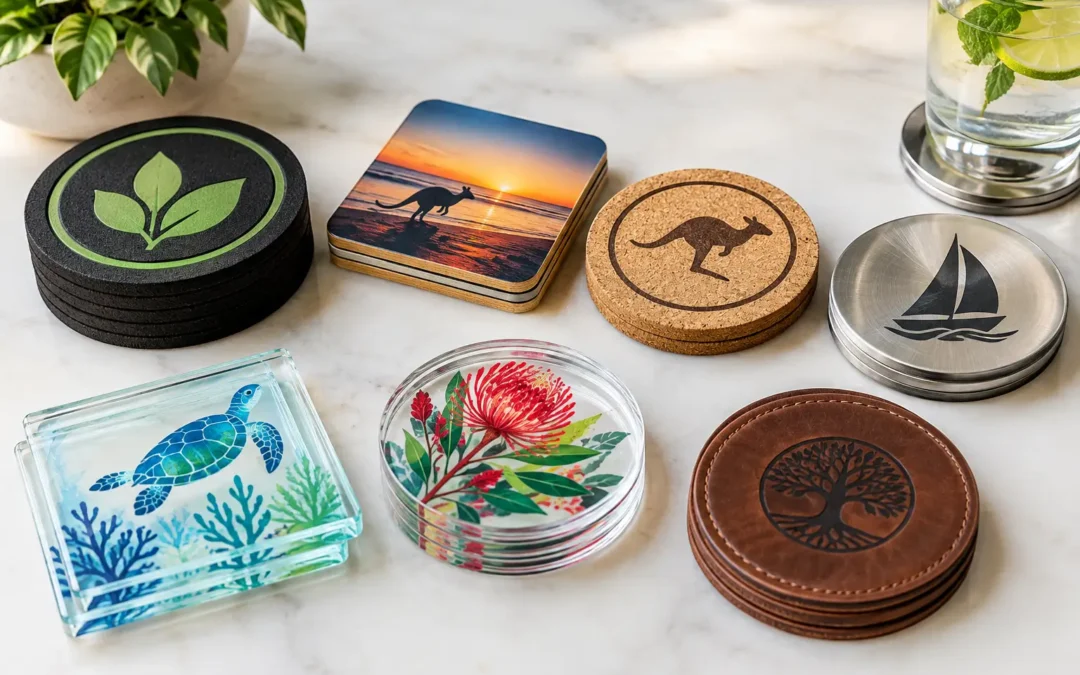
Reusable coasters are made for repeat use over a much longer period. Materials such as recycled tyre rubber, cork, bamboo, acrylic, PVC rubber, leather, aluminium, stainless steel, glass and resin offer greater durability and a more substantial feel. They suit venues, offices, clubs, client gifts, retail merchandise, weddings and premium promotional campaigns.
Neither option is automatically better. A disposable coaster can be the more responsible commercial decision when it prevents costly washing, storage and loss at a large event. A reusable coaster can be the stronger choice when quality, longevity and a lasting brand impression matter most.
When Disposable Coasters Make Commercial Sense
Disposable cardboard coasters work particularly well where speed and volume drive the decision. A festival bar serving thousands of drinks has different needs from a boutique restaurant setting its tables for dinner service. Staff can place a fresh coaster with each drink, maintain a clean look and keep service moving without collecting, washing or sorting stock later.
They also give marketers a large, affordable print area. A coaster can carry a logo, campaign line, event date, QR code, promotion or sponsor message without adding another handout to the table. Because the unit cost is lower, businesses can use different designs for separate activations, seasonal menus or sponsor partnerships.
For events, disposable coasters offer a practical level of control. You can order close to expected attendance, distribute them freely and avoid the familiar problem of reusable items walking out the door. They are especially useful for trade shows, product launches, sporting events, charity fundraisers, pub promotions and temporary hospitality installations.
The trade-off is lifespan. Once cardboard becomes saturated or heavily marked, it no longer presents well. That is not necessarily a drawback if the intended use is a single sitting or one event, but it makes disposable coasters less suitable for permanent table settings.
Best uses for disposable coasters
Disposable options are generally a strong fit for high-volume functions, short promotional periods, busy bars, tasting events and campaigns with a fixed message. They are also a sensible choice where a venue needs branded protection for tables but does not have the time or facilities to manage reusable stock.
Where Reusable Coasters Earn Their Keep
Reusable coasters shift the focus from immediate distribution to long-term value. A quality rubber, cork, bamboo or acrylic coaster feels intentional in the hand. It can make a reception desk, meeting room, hotel bar or restaurant table look more considered, while keeping surfaces protected through repeated use.
For branded merchandise, durability matters. A coaster that stays on a customer’s desk or coffee table continues to do its job long after an event finishes. That makes reusable styles particularly effective for client thank-yous, staff packs, club merchandise, settlement gifts, premium retail items and corporate hospitality.
Material selection lets you match the item to your setting. Recycled tyre rubber offers grip, resilience and a practical sustainability story. Cork brings natural texture and works well with earthy or minimalist branding. Bamboo suits businesses wanting a warm, contemporary finish, while acrylic, metal and glass can create a sharper, more premium look. PVC rubber is flexible and colourful, making it useful for bold logos and shaped designs.
The upfront cost is usually higher than cardboard, and durable coasters need more consideration around storage, cleaning and replacement. In a venue environment, some may be damaged or taken by guests. However, where a coaster will be used hundreds of times, the cost per use can become very competitive.
Best uses for reusable coasters
Reusable coasters are well suited to permanent hospitality venues, offices, meeting rooms, clubs, premium events, wedding keepsakes and gift-focused promotions. They are the better option when the product itself is part of the brand experience rather than simply a one-use promotional surface.
Comparing Cost, Waste and Brand Impact
The most useful comparison is not the purchase price alone. Consider total use, expected loss and the impression each coaster creates.
A low-cost cardboard coaster may be ideal for a venue that needs 5,000 units for a weekend activation. Paying more for reusable stock in that situation may not deliver a return, particularly if guests are likely to take it home or leave it behind. On the other hand, supplying a boardroom with thin disposable coasters can look temporary and may lead to frequent replacement.
Waste should also be assessed honestly. Disposable does not always mean careless, and reusable does not always mean low-impact. A responsibly chosen cardboard coaster used for a defined event may be an efficient option. A reusable coaster has the strongest environmental case when it is genuinely retained and used repeatedly. Material, production method, transport, cleaning and product lifespan all matter.
Brand impact follows the same principle. Cardboard offers excellent campaign visibility at scale, especially where every guest receives one. Reusable materials create a stronger sense of value and can position a business as established, detail-focused and quality-led. The better choice is the one that matches your audience’s expectations.
Choose Material Around the Actual Setting
Start with the drink service and table surface. Absorbent cardboard is effective for cold drinks where condensation is expected. Rubber provides grip and handles frequent use well. Cork is naturally appealing for cafés, wineries and relaxed hospitality spaces, while hard materials such as acrylic, glass and metal suit controlled indoor environments where presentation is the priority.
Then consider your artwork. Fine detail, photographic artwork and complex colour treatments may suit some materials better than others. A simple logo can look excellent on cork, bamboo or leather, while a vivid campaign identity may benefit from full-colour printed cardboard or a custom PVC rubber design. The shape matters too: squares, circles and custom outlines can all change how the branding reads on a table.
Finally, think about turnaround and quantity early. Large event runs often need production planning, while custom reusable materials can involve specific decoration methods and finishing requirements. A clear brief covering quantity, deadline, logo files, intended use and budget will make it easier to select a product that performs properly.
A Practical Buying Decision
If your priority is wide distribution, a short campaign or simple event logistics, disposable coasters are usually the efficient choice. If you need a durable branded item that supports everyday service or has gift value, reusable coasters are likely to justify the higher initial spend.
For businesses that need help narrowing the range, Drink Coaster can prepare a free digital proof before production, making it easier to check layout, branding and overall presentation. This is particularly useful when choosing between materials with very different finishes.
A coaster may be small, but it is part of the moment your customer pauses, puts down a drink and notices the details. Choose the version that suits that moment, and let the material work as hard as the branding printed on it.