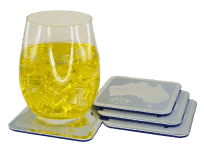
A freshly poured long black, a pot of tea or a hot chocolate can put more heat into a tabletop than many people expect. So, are silicone coasters heatproof? For ordinary hot drink service, quality silicone coasters are generally highly heat-resistant and a practical choice. However, heatproof is not the same as suitable for every hot item that leaves a kitchen.
For businesses, venues and event organisers, that distinction matters. The right coaster needs to protect the table surface, look professional and suit the way it will actually be used. A coaster designed for a coffee cup is not automatically the right protection for a cast-iron pan, baking tray or sizzling serving dish.
What “heatproof” means for silicone coasters
Silicone is valued because it remains stable at temperatures that would warp, soften or discolour many common plastics. Depending on the grade, formulation and manufacturer, silicone products can often tolerate temperatures in the range of roughly 200°C to 230°C. Some specialist silicone is rated higher.
That figure is useful, but it should not be treated as a blanket promise. A coaster’s real-world performance also depends on its thickness, the quality of the silicone, its shape, any backing material and the print or decoration method used. The manufacturer’s stated temperature rating is always the figure to rely on for a particular product.
For a ceramic mug, glass tea cup or insulated tumbler containing a hot drink, a well-made silicone coaster is usually more than capable of handling the heat. It helps reduce direct contact between the vessel and the table while giving a non-slip base that is useful on polished café tables, boardroom surfaces and event furniture.
Hot drinks and hot cookware are different jobs
The temperature of the drink inside a mug and the temperature of its outer base are not the same. By the time a barista-made coffee or tea reaches the table, the outside of the cup is normally far cooler than boiling water. That is well within the comfortable working range of a quality silicone coaster.
Cookware is another matter. A pan taken from an oven, a saucepan lifted from a gas cooktop or a hot baking dish can have a base temperature far beyond normal beverage service. Even if the silicone itself does not immediately fail, heat can still travel through a thin coaster and affect the timber, laminate, veneer or painted surface underneath.
There is also the question of pressure and contact time. A heavy pot concentrates heat over a larger area and may sit in place for much longer than a coffee cup. Steam, oil and rough pan bases can add to the risk. For these applications, use a purpose-designed trivet or heat mat with a clear cookware temperature rating, rather than relying on drink coasters.
A practical rule for venues
Silicone coasters are an excellent fit for hot and cold beverages. They are not a substitute for commercial-grade trivets in kitchens, buffet lines or table-service situations where hot plates and cookware are placed directly on furniture.
This simple distinction can prevent damage claims and avoid an awkward mismatch between an otherwise polished branded presentation and the product’s intended use.
Why silicone performs well under cups and glasses
Silicone has low thermal conductivity compared with metal. In plain terms, it does not pass heat through as quickly as a stainless steel or aluminium coaster. This helps protect the surface below, especially when the coaster has enough thickness to create a meaningful barrier.
Its flexible, grippy texture is another advantage. Cups are less likely to slide, while condensation is contained rather than spreading across the table. Silicone is also water-resistant, easy to wipe down and less likely to crack if dropped, which suits busy hospitality environments and outdoor functions.
For promotional use, the material can create a modern, tactile feel. Raised details, moulded logos and bold colour matching can make a branded coaster feel purposeful rather than disposable. That durability is particularly useful for clubs, breweries, cafés, corporate kitchens and welcome packs intended for regular use.
The trade-off is that silicone can attract lint and dust more readily than hard, smooth materials. It may also retain odours if it is poorly made or not cleaned properly. A quality material selection and a design suited to the setting make a noticeable difference.
Are silicone coasters heatproof when printed or branded?
The silicone base may tolerate significant heat, but branded coasters should be assessed as a finished product. Printing inks, coatings, adhesives, coloured layers and bonded backing materials can have different heat limits from the silicone itself.
For that reason, a logo that looks perfect under normal drink service should not be assumed to withstand direct contact with cookware or repeated dishwasher-level heat unless that performance has been specifically confirmed. This is especially relevant for detailed printed artwork, metallic effects and multi-material constructions.
When ordering custom coasters, explain how and where they will be used. A restaurant needing reusable coasters for hot coffees has a different brief from a company ordering giveaways for home use, or an event team styling tables for a winter function. Sharing the intended application early allows the supplier to recommend a suitable material, thickness and decoration method.
At Drink Coaster, a clear brief and Free Digital Proof help customers check the visual result before production. The practical conversation should also cover the product’s end use, not just logo placement and colour.
Thickness, texture and the surface below
A thin silicone coaster can still be heat-resistant, but it may offer less insulation than a thicker design. If tabletop protection is a priority, thickness matters. Raised patterns or air channels can also reduce the contact area between the cup and the table, helping manage heat and moisture.
Consider the furniture as well. A solid stone bench is far less sensitive than a lacquered timber table, acrylic reception counter or antique veneer surface. In a venue with valuable timber furniture, choose a coaster with adequate thickness and test a sample with the hottest beverages you routinely serve.
Texture affects cleaning and branding. Deeply moulded patterns offer strong visual interest and grip, but may need more attention after spills. Smooth styles are quick to wipe clean and often suit crisp printed graphics. Neither option is universally better – the right choice comes down to presentation, cleaning routines and the amount of daily handling expected.
When another coaster material may be better
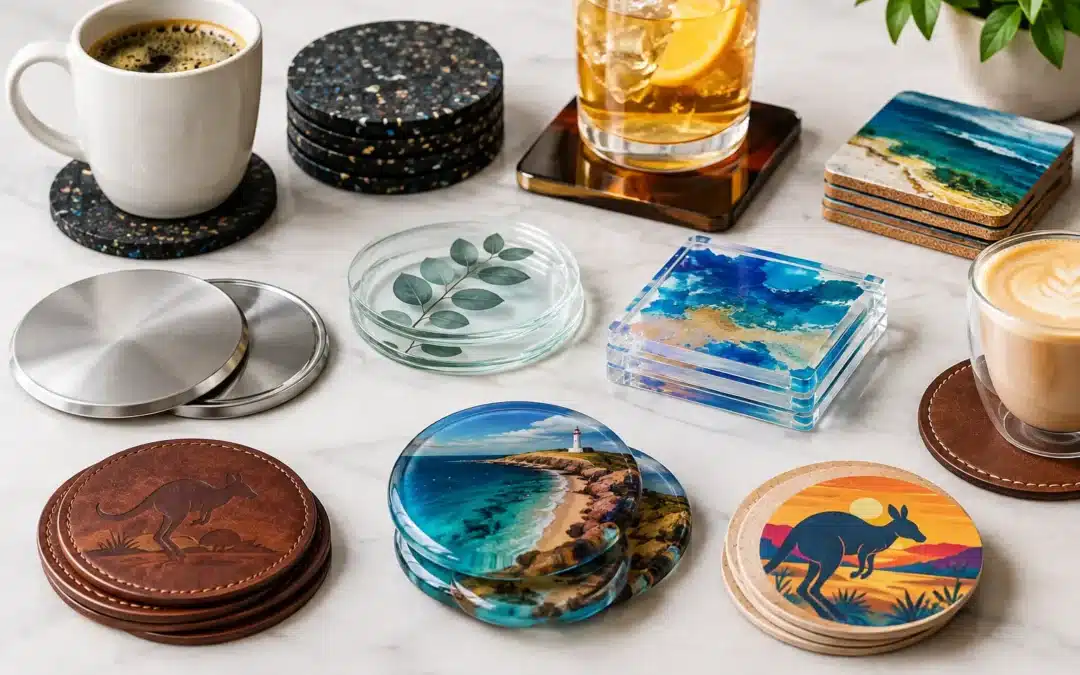
Silicone is not the only practical choice for hot drinks. Cork naturally insulates well and gives a warm, relaxed finish for cafés, wineries and eco-focused campaigns. Recycled tyre rubber offers excellent grip and durability for high-use settings, with a more industrial look that suits breweries, workshops and outdoor areas.
Stainless steel, aluminium, glass and acrylic can produce a premium branded appearance, but they conduct heat more readily than silicone or cork. They are often best selected for their finish, durability or visual impact, with the expected drink temperatures and table surfaces taken into account. Cardboard coasters suit short-term events and high-volume promotions, although they are not intended for long-term washing and reuse.
The strongest choice is rarely about a single material claim. It is about matching the coaster to the drink service, table finish, budget, artwork and desired lifespan.
Care tips that protect performance
Silicone coasters are straightforward to maintain. Wipe them with warm, soapy water after use, particularly after sugary drinks, milk-based beverages or spills around the rim. Dry them before stacking so moisture does not sit between coasters.
Avoid exposing them to open flame, placing them directly on a cooktop or using them as a pan rest unless the product is specifically rated for that purpose. Do not use harsh abrasives on decorated surfaces, as these may damage branding even where the silicone itself remains intact.
For hospitality buyers, it is worth keeping a small number of spare coasters. Rotation makes cleaning easier and helps maintain a consistent presentation across tables, meeting rooms or function spaces.
Choosing with confidence
If your requirement is reliable protection under coffee cups, tea pots, mulled wine glasses or other hot beverages, silicone is a sensible and durable option. Ask for the temperature specification of the finished coaster, confirm the decoration method and be clear about whether use is limited to drinkware.
For hot dishes and cookware, specify a trivet or heat mat instead. Choosing the product for the heat it will genuinely encounter keeps tables protected, branding looking sharp and your guests focused on the experience rather than the furniture.