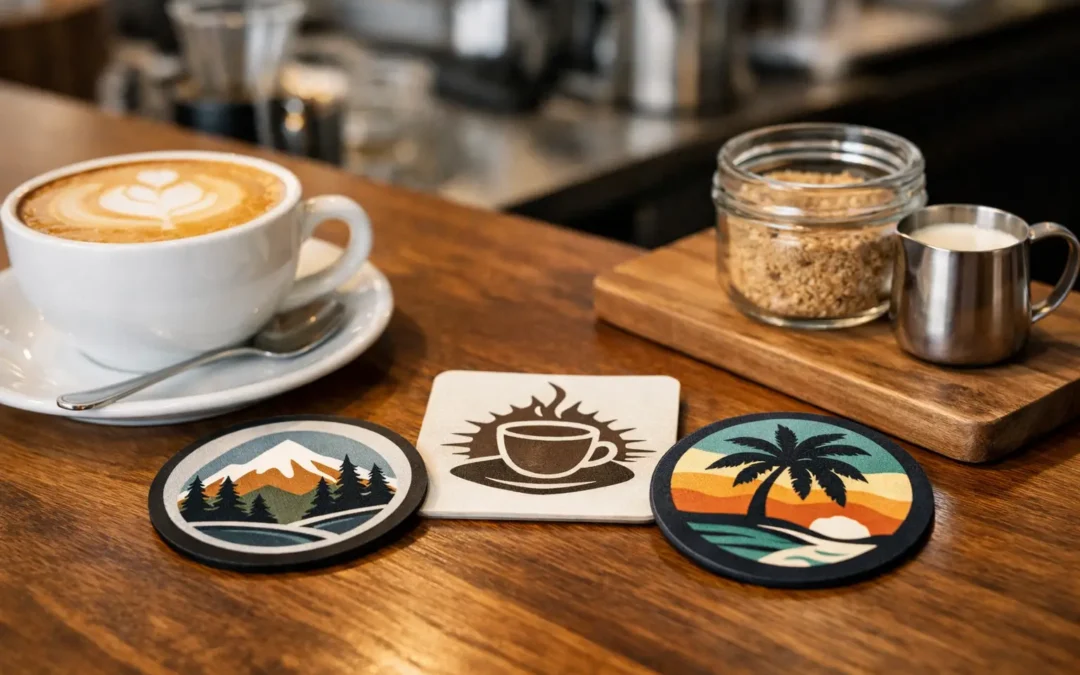
The flat white lands on the table, the cup leaves a ring, and your customer notices the little details before they notice anything else. That is why branded coasters for cafes are more than a finishing touch. They help protect furniture, sharpen presentation, and keep your brand in front of customers through every round of service.
For cafe owners, venue managers, and hospitality buyers, the appeal is practical first. A coaster has a job to do. It needs to sit neatly under a hot or cold drink, handle moisture, suit your service style, and still look professional by the time the customer stands up to leave. When it also carries your logo, campaign message, or visual identity well, it becomes one of the most cost-effective branded items on the table.
Why branded coasters for cafes make commercial sense
Cafes run on repeat impressions. Customers see your menu board, your takeaway cups, your napkins, your staff aprons, and your table presentation. Coasters fit naturally into that environment because they are already part of the service experience. You are not asking customers to engage with a promotional item that feels out of place. You are putting your branding on something useful.
That matters because utility changes how branding is received. A coaster does not feel forced. It supports the drink, keeps condensation off the table, and adds a more polished look to dine-in service. If your venue serves specialty coffee, cocktails, juices, or premium desserts, that extra layer of presentation can help reinforce quality.
There is also a practical cost argument. Replacing or maintaining tabletops, bar tops, and furniture can be expensive over time. Coasters help reduce moisture marks, heat effects, and general wear. Even simple cardboard options can make a difference in high-turnover environments. More durable materials can go further in venues that want a longer-lasting branded asset.
Choosing the right coaster material for your cafe
Not every cafe needs the same coaster. The right choice depends on how you serve, how busy you are, and what image you want to present.
Cardboard coasters remain a strong option for many cafes because they are affordable, lightweight, and well suited to large volumes. They work especially well for promotions, events, product launches, seasonal campaigns, and everyday table service where replacement is expected. If your priority is broad brand visibility at a sharp price point, cardboard often makes sense.
Cork, bamboo, and leather-style finishes tend to suit cafes that want a warmer, more tactile look. These materials can complement natural interiors, artisan food presentation, and premium coffee branding. They feel considered rather than disposable, which can be a good fit for venues investing heavily in ambience.
Acrylic, stainless steel, aluminium, resin, and glass can create a more striking visual result, but they are not right for every setting. They are better suited to premium venues, bars within cafes, tasting rooms, or spaces where durability and visual impact matter more than low replacement cost. They can also work well where the coaster itself is intended to be part of the decor.
PVC rubber can be useful in venues that need something tougher and more casual. It handles busy service well and offers a distinct look, though it may not suit every brand style. If your cafe leans more relaxed, family-friendly, or event-focused, it can be a practical option.
The trade-off is simple. Lower-cost materials are ideal for scale and flexibility. Higher-end materials can improve presentation and lifespan, but the upfront spend is higher. The best result usually comes from matching the material to the way your venue actually operates, not just the way you want it to look in a photo.
Design matters more than most cafes expect
A coaster gives you limited space, so design discipline matters. The strongest cafe coaster designs are usually clear rather than crowded. A well-placed logo, readable type, and a colour palette that matches your wider brand can outperform a busier design trying to say too much.
In most cases, the logo should be instantly recognisable from a seated position. If the coaster includes a tagline, social handle, QR-led campaign element, or offer, it has to remain legible without overwhelming the design. Good artwork should support the table setting, not fight with the cup, saucer, plate, and menu.
Print method and finish also affect the outcome. Some materials hold fine detail better than others. Some finishes create a more premium look, while others are better for absorbing moisture or handling regular use. This is where digital proofs are valuable. They remove guesswork before production and help you see whether the artwork suits the selected material.
For cafes with multiple locations, consistency is important. A coaster should align with the rest of your printed material so the brand feels established across the venue. If your takeaway packaging looks refined but your table presentation feels generic, the overall impression can slip.
Where cafes get the best return from custom coasters
Branded coasters often perform best when they are tied to a specific service goal. Everyday dine-in branding is the obvious use, but there are several situations where they can do more heavy lifting.
Seasonal menus are one. If you are launching winter drinks, Christmas specials, or limited-edition desserts, short-run coasters can support the promotion directly at the table. New product campaigns are another. If you are introducing a new roast, house blend, cocktail list, or local collaboration, coasters give you direct visibility at the point of consumption.
Events are also a natural fit. Cafes hosting tastings, community nights, private functions, wedding breakfasts, or local business events can use custom coasters to create a more complete branded setup. In these cases, the coaster becomes part of the event styling as much as a practical service item.
Some venues also use them to support supplier partnerships. If you stock a local distillery, brewery, roastery, or beverage brand, co-branded coaster runs can help share costs and strengthen promotional value. It depends on your agreements and your brand priorities, but it can be a smart use of table space.
What to consider before you order
Before requesting a quote, it helps to be clear on four things: quantity, material, artwork, and timing. These shape the production approach and the final price more than anything else.
Quantity affects unit cost, but bigger is not always better. A high-volume order may reduce the cost per piece, yet if your cafe rotates campaigns regularly or updates branding often, a smaller run can be the smarter choice. It depends on whether you need flexibility or scale.
Material should reflect service conditions. Hot drinks, cold drinks, table turnover, cleaning methods, and storage all matter. A busy cafe with constant turnover may prioritise practicality and easy replacement. A premium venue with slower service may prefer a more durable statement piece.
Artwork needs to be production-ready, or at least close to it. A reliable supplier should be able to guide you here, especially if you need help refining layout, sizing, or print suitability. Free digital proofs are particularly useful because they let you check the design before approval.
Timing matters because hospitality rarely has much slack. If you need coasters for an opening, promotion, relaunch, or event, build in enough lead time to approve artwork and final production. Fast turnaround is valuable, but clear communication is what keeps the process moving.
Working with an Australian supplier
For many Australian cafes, local service is not just a preference. It reduces friction. When you are managing stock, staffing, menu changes, and venue operations, you want clear answers, realistic lead times, and support that matches local expectations.
An Australian owned and operated supplier can often make the process more straightforward, particularly when you need tailored advice on materials, branding options, and order quantities. That is part of the value in working with an experienced specialist such as Drink Coaster. It is not only about making coasters. It is about helping venues choose a product that suits budget, branding, and service realities without unnecessary complexity.
The best supplier relationship is practical. You should be able to explain what your cafe needs, review a digital proof, confirm the details, and move ahead with confidence. That level of responsiveness matters just as much as the finished product.
A small product that changes table presentation
Cafe branding is built through repetition, not grand gestures. Customers remember how a venue feels as much as what it serves, and the small details often carry more weight than expected. A well-made coaster can protect your tables, support your service style, and keep your brand visible in a way that feels natural.
If you are reviewing your dine-in presentation, this is one of the simplest upgrades to get right. Start with the way your cafe operates, choose a material that matches your service, and make sure the design is clean enough to do its job well. The best branded coasters do not ask for attention. They earn it.