A coaster has a simple job: keep condensation, spills and glass rings off the table. In busy venues, offices and event spaces, it also has to stay put, look professional and carry a brand without becoming another disposable item. This recycled rubber coaster review looks at where recycled tyre rubber performs well, where it asks for compromise, and whether it is the right fit for a custom promotional order.
Recycled rubber coasters are made using reclaimed tyre rubber, giving discarded material a useful second life. Their dense, tactile surface makes them noticeably different from cardboard, cork or acrylic options. For businesses that want a practical branded item with a more industrial, substantial feel, that difference can be a real advantage.
Recycled rubber coaster review: the practical verdict
For high-use settings, recycled rubber is one of the strongest all-round coaster materials available. It grips tables well, helps reduce the sound of glasses being put down, handles moisture confidently and is far less likely to bend, tear or become unusable after one wet drink.
The trade-off is appearance. Recycled tyre rubber generally has a dark, textured finish rather than the crisp, smooth face of acrylic, glass or coated board. That makes it particularly effective for bold logos, simple linework and high-contrast branding. It can be less suitable where the artwork relies on tiny text, delicate gradients or precise photographic detail.
Its material story also needs to suit the brand. A recycled rubber coaster feels purposeful for automotive businesses, breweries, outdoor brands, sporting clubs, construction firms and organisations with sustainability goals. It may feel less aligned with a formal fine-dining setting, luxury wedding or campaign built around a bright, refined colour palette. The right choice depends on the environment and the impression the coaster needs to create.
How recycled rubber performs in daily use
Grip is its standout feature
A glass coaster that slides across a polished bar or meeting-room table quickly becomes frustrating. Rubber naturally creates friction against most flat surfaces, helping coasters remain in place when drinks are lifted and returned. This is especially useful in pubs, clubs, cafés and offices where tables see frequent use throughout the day.
The same grip helps protect surfaces from accidental scuffs. While no coaster can prevent every spill or impact, a stable base gives drinkware a more secure resting point than many rigid, smooth materials.
It handles moisture without becoming throwaway
Cardboard coasters work well for short campaigns, tastings and high-volume events, but they are intended to have a limited life once wet. Recycled rubber has a different role. It does not absorb moisture in the same way, so it can be wiped down and reused repeatedly.
That makes it a sensible option for venues wanting a longer-lasting branded accessory, or businesses distributing a promotional item that recipients will keep on a desk, coffee table or home bar. Reusability can extend brand exposure well beyond the day it is handed out.
It softens noise and feels substantial
The weight and flexibility of rubber create a quieter landing surface for glassware, mugs and bottles. In a hospitality setting, this small detail can improve the feel of a table service area. In boardrooms and reception spaces, it helps the presentation feel considered rather than makeshift.
Recycled rubber also feels more substantial in the hand than a thin disposable coaster. That tactile quality supports brands that want their merchandise to communicate durability and practical value.
Heat resistance should be checked for your use
Rubber coasters are generally well suited to cold drinks, bottled beverages and everyday mugs. If your intended use includes very hot cups, outdoor heat exposure or unusual service conditions, confirm the recommended specification before ordering. Thickness, rubber blend and decoration method can affect the finished product’s suitability.
Branding results: bold designs work best
The strongest recycled rubber coaster designs are uncomplicated and confident. A clear logo, short business name, event date or recognisable icon can look excellent against a dark rubber base. The material’s texture adds character without competing with a well-prepared design.
For best results, use artwork with strong contrast and allow enough space around key elements. Fine lines can lose definition when reproduced on a textured surface, while very small text may be difficult to read at coaster size. A good design team will flag these issues before production and provide a digital proof so you can assess layout, scale and legibility.
Colour choice matters. Light ink on black or charcoal recycled rubber often produces the clearest visual impact, although the available decoration options should be discussed with your supplier. If exact brand colour matching is essential, a smoother material such as acrylic, aluminium or printed cardboard may offer more control.
This does not make rubber a lesser branding choice. It simply means the product should be designed for the material instead of forcing detailed artwork onto a surface that suits a bolder approach.
Where recycled rubber coasters make the most sense
Recycled rubber coasters are particularly well suited to venues and campaigns where longevity, grip and a practical sustainability message carry more weight than a glossy finish. They work well for branded pub tables, brewery merchandise, automotive promotions, clubrooms, trade displays, staff gifts and corporate welcome packs.
They are also useful for businesses wanting an alternative to single-use promotional products. A reusable coaster is a small item, but it has a clear everyday purpose. When it remains useful, it is more likely to stay visible.
For private events, consider the overall styling. A recycled rubber coaster can be an excellent choice for a modern industrial wedding, milestone birthday, outdoor celebration or car-themed event. For a formal reception with delicate florals, metallic detailing or personalised artwork in multiple colours, cork, glass, resin or acrylic may better suit the look.
Comparing rubber with other coaster materials
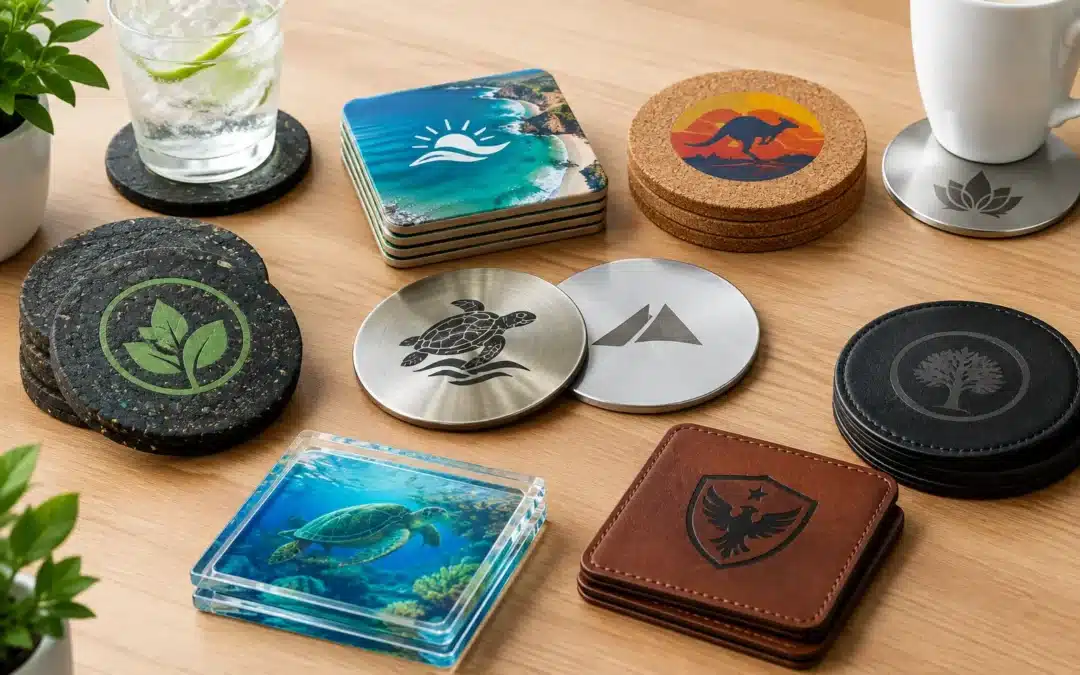
Every material solves a slightly different problem. Cardboard is economical for large quantities and one-off activations. Cork brings a warm, natural appearance and suits earthy or artisan branding. Acrylic provides a clean modern finish with sharp print potential, while metal and glass can create a premium corporate or retail presentation.
Recycled rubber sits in the durable, functional end of the range. It is less formal than metal or glass, but more resilient than cardboard. It is less natural-looking than cork, yet usually offers stronger grip and a more hard-wearing feel. That balance makes it valuable for buyers who need a coaster to work hard rather than simply look good in a photograph.
What to confirm before placing a custom order
A successful order starts with the intended use, not just the logo. Consider where the coasters will be used, how often they will be handled, whether they need to support hot drinks, and how closely the final colour needs to match your brand guidelines.
You should also discuss quantity, coaster shape, thickness, artwork format and required delivery date early. A round coaster is familiar and versatile, but custom shapes can add impact when they reflect a logo or campaign theme. Keep in mind that unusual shapes and highly detailed artwork may affect production time and pricing.
Ask for a free digital proof before approval. It is the best opportunity to check that text is readable, the artwork is correctly positioned and the overall design looks balanced on the chosen coaster size. It also avoids costly surprises once production begins.
For Australian businesses managing an event deadline or venue rollout, clear communication is as important as material selection. A supplier should be able to explain the available options, recommend a practical specification and provide realistic turnaround expectations rather than leaving you to guess.
Care and expected lifespan
Recycled rubber coasters are straightforward to maintain. Wipe them with a damp cloth after use and allow them to dry before stacking or storing. Avoid harsh solvents unless the supplier confirms they are suitable for the decoration method used.
Their usable life will depend on traffic, cleaning routines and exposure to sun or heat. In normal indoor use, rubber’s resistance to bending and moisture gives it a meaningful advantage over disposable alternatives. For outdoor settings, store coasters away from prolonged direct sunlight when possible to help maintain their appearance over time.
A recycled rubber coaster is not the answer for every brand or occasion, but it is a dependable choice when performance matters as much as presentation. If your artwork is bold, your setting is busy and you want a reusable branded item with genuine day-to-day value, it is worth requesting a tailored quote and proof before deciding.