A coaster can sit under a drink for hours, directly in front of a customer, guest or client. That makes the printing choice more than a production detail. The right finish keeps your branding clear, suits the material and holds up in the setting where it will be used. This guide to coaster printing methods helps Australian buyers compare the most common options before requesting a quote or preparing artwork.
For a busy pub, a short-run wedding or a national promotional campaign, the best method depends on the coaster material, design detail, order quantity, budget and expected lifespan. A crisp full-colour logo on cardboard calls for a different approach from a one-colour mark on cork or an engraved name on stainless steel.
Guide to coaster printing methods: start with the coaster
Printing cannot be separated from the surface beneath it. Cardboard and pulpboard coasters are absorbent and economical, making them a strong choice for venues, festivals and high-volume promotions. Acrylic, glass and metal provide a more permanent presentation, while cork, bamboo and leather bring natural texture that can become part of the design.
Before choosing a process, consider where the coaster will be used. Disposable or short-term venue coasters need reliable, cost-effective colour reproduction. Corporate gifts, boardroom sets and premium hospitality pieces may justify a more durable print or engraving method. Outdoor events also need careful material and ink selection, particularly where moisture, sunlight and frequent handling are expected.
Artwork matters too. Fine lines, small type, photographic images and colour gradients each place different demands on production. Supplying a clean vector logo where possible gives the best starting point for sharp results, especially for screen printing and engraving. A free digital proof should confirm layout, size, colours and print position before production begins.
Digital printing for detailed, full-colour artwork
Digital printing applies artwork directly from a digital file, making it particularly useful for full-colour designs, photos, gradients and variable information. It is often a practical choice for personalised coasters, where each item may carry a different name, table number, date or message.
This method suits shorter to medium runs and designs with several colours because there is no need to create separate screens for each colour. Wedding coasters, event promotions, branded artwork with illustrations and campaign-specific designs can all benefit from digital print flexibility.
The trade-off is that digital printing is not always the most economical route for a very large run with a simple one-colour logo. Results also depend on the coating and texture of the chosen material. On a smooth acrylic or coated board surface, detail can look especially clean. On heavily textured cork or bamboo, a simpler design may produce a stronger, more consistent result.
Screen printing for bold branding and volume
Screen printing uses a prepared mesh screen to apply ink to the coaster surface. Each colour is printed separately, which makes the method well suited to logos with solid colours, strong shapes and clear typography. It is a proven option for branded promotional coasters, particularly when quantities increase.
For hospitality venues, clubs and organisations ordering a larger volume of single- or limited-colour coasters, screen printing can deliver excellent consistency and value. Spot colours can be matched closely to brand guidelines, helping a familiar logo retain its intended appearance across promotional merchandise.
There are practical limits. Complex photographic artwork, subtle tonal gradients and very fine multi-colour detail may be better handled by digital printing. Because screen setup is required, it can also be less cost-effective for very small runs. That does not make it a lesser choice – it simply means the method works best when the artwork and quantity suit it.
UV printing for smooth, durable surfaces
UV printing uses ultraviolet light to cure ink quickly on the surface of materials such as acrylic, PVC rubber, glass, aluminium and some coated products. The process can produce vivid colour and fine detail, with a polished appearance that suits premium branded coasters and corporate merchandise.
It is particularly useful when the design needs to stand out on a non-absorbent surface. A UV print can reproduce a detailed logo, colourful pattern or photographic element with good definition. Depending on the product, it may also create a lightly raised effect that adds tactile interest.
A smooth, hard coaster is not automatically the best option for every venue. Glass and acrylic look refined, but their weight, breakability and care requirements need to suit the intended environment. For a high-turnover bar, absorbent cardboard may be more practical. For executive gifts or presentation packs, UV-printed acrylic or glass can make a stronger impression.
Pad printing for compact logos and simple marks
Pad printing transfers ink using a soft silicone pad, allowing designs to be printed onto surfaces that may not be completely flat or that have shaped areas. On suitable coaster styles, it is effective for straightforward logos, short text and smaller branding elements.
This method is commonly selected when a single-colour or limited-colour design is required on a compact area. It can be a cost-conscious choice for certain plastic, rubber and promotional coaster products, especially where a large, detailed print is not necessary.
Pad printing is less suited to expansive artwork, fine photographic detail or broad blocks of colour. If your logo includes delicate gradients or must cover most of the coaster face, discuss digital or UV printing instead. The goal is not to force artwork into a process, but to select the process that presents it professionally.
Engraving and debossing for a premium finish
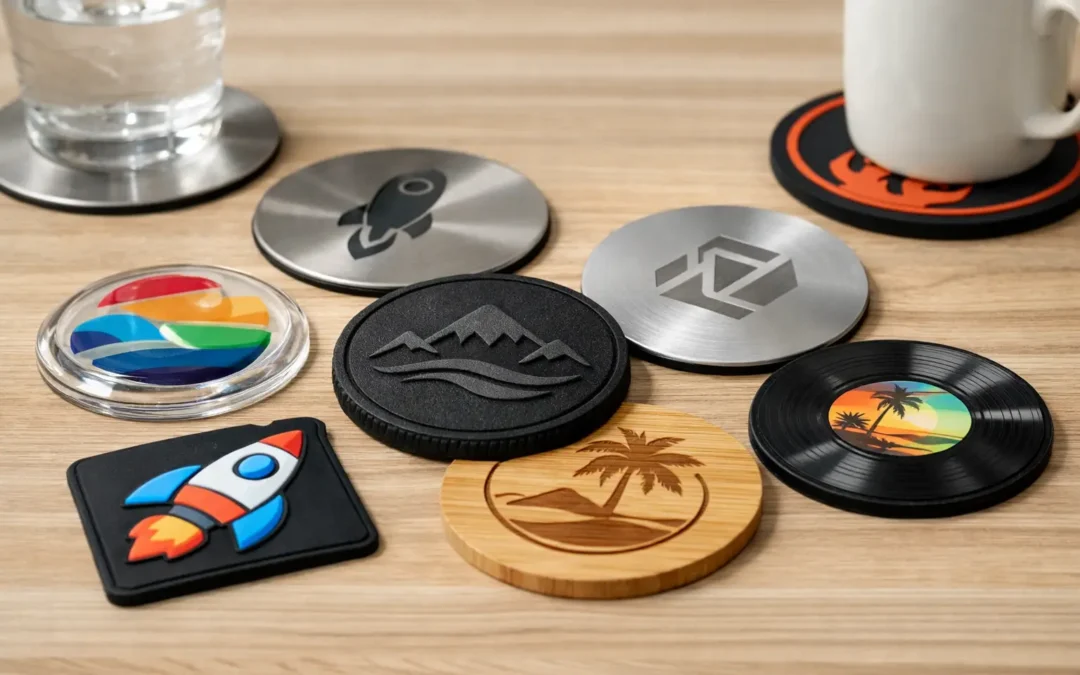
Not every coaster needs printed ink. Laser engraving removes or alters the top surface of a material to create a permanent mark. It is an excellent fit for stainless steel, aluminium, bamboo, cork, leather and selected timber-style products. The result is often understated, tactile and highly durable.
Engraved coasters work well for premium client gifts, staff recognition, clubs, wineries and businesses that prefer a refined presentation over bright colour. On bamboo and cork, the natural variation in the material means each piece can have a slightly individual character. That is part of the appeal, although it also means exact tonal consistency should not be expected.
Debossing presses a design into materials such as leather or leather-look finishes. It creates depth without adding colour and can give a distinctive, crafted look. Both engraving and debossing are best for bold logos and readable type. They cannot reproduce a full-colour brand palette, so they are most effective when the logo remains recognisable in a single-tone treatment.
How to choose the right method for your order
A practical decision starts with the use case. For a café promotion, pub activation or trade event where coasters will be used once or over a short period, printed cardboard is usually the sensible choice. For an event that needs names, dates or individual artwork, digital printing offers useful flexibility. For a long-lasting gift, select a durable material and consider UV print or engraving.
Then assess the artwork honestly. A simple one-colour logo gives you broad choice and can keep costs controlled. A design with multiple colours, photographs or intricate illustrations needs a method capable of preserving those details. Avoid shrinking important copy to fit every available space. A coaster is a small format, and clear branding is usually more effective than a crowded layout.
Quantity and turnaround should be discussed early. Larger orders may benefit from methods with setup costs that become more economical across the run. Shorter deadlines can influence available material and production choices. Providing final artwork promptly and approving the digital proof without delay helps keep the job moving.
Prepare artwork for a better finished coaster
For logos, vector files such as AI, EPS or print-ready PDF are preferred because they can be scaled cleanly. High-resolution image files may be suitable for photographic digital prints, but low-resolution screenshots and images copied from social media often do not reproduce well.
Keep essential text and logos away from the edge, particularly on round coaster shapes. Consider the background colour of the material and whether the design needs white ink beneath it to remain visible. If brand colour accuracy is critical, provide the relevant Pantone references and raise that requirement before production.
At Drink Coaster, the most useful next step is a clear brief: coaster material, quantity, artwork, delivery deadline and intended use. That gives the production team the information needed to recommend a method that balances presentation, durability and budget, then provide a free digital proof for approval.
A well-chosen coaster does quiet work long after the first drink is served. Choose a printing method that respects the material, gives your artwork room to breathe and leaves customers with a brand they can see clearly every time they set down their glass.